About the Authors

Aleema Omotoni is a British-Nigerian author. She writes novels that centre Black teens coming of age, falling in love, and navigating all kinds of contemporary and fantasy worlds. She loves musical theatre, astrophysics and rainy Autumn days.
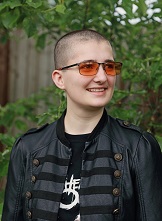
Finn Longman is a queer disabled writer and medievalist, currently based in Cambridge. By day, they’re a library assistant; by night, they kill (fictional) people in their YA and Adult novels. With a degree in Anglo-Saxon, Norse and Celtic and an MA in Early and Medieval Irish, they spend the rest of their time having extremely niche opinions on the internet.
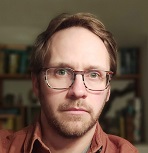
Luke Palmer is a poet and YA author. His debut novel, Grow (2021), was longlisted for the YOTO Carnegie Medal and shortlisted for the Branford Boase Award. His second book, Play, will be released in October 2023.
About Their Books:
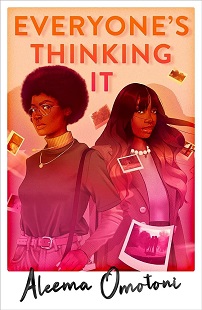
Title: EVERYONE’S THINKING IT
Author: Aleema Omotoni
Pitch: Nigerian cousins Iyanu and Kitan face chaos at their elite English boarding school when everyone’s secrets are released the week before the Valentine’s Day Ball.
Find on Goodreads.

Title: THE HUMMINGBIRD KILLER
Author: Finn Longman
Pitch: Sequel to THE BUTTERFLY ASSASSIN. A traumatised teenage assassin continues to try and continues to fail at living a normal life in a closed city in Yorkshire. Murder ensues.
Find on Goodreads.
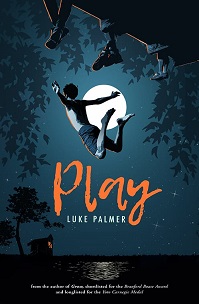
Title: PLAY
Author: Luke Palmer
Pitch: When Marks breaks a rule in the exciting game he’s found, he realises it’s not a game at all. Will his friends get him out?
Find on Goodreads.
What do you love most about writing for the YA audience?
Aleema Omotoni: The scope of it. Whether that’s the big feelings, the breadth of experiences, or the all encompassing nature of even the “smallest” thing. There’s just something so real about it, I really enjoy exploring that.
Finn Longman: YA is perfect for exploring dystopian worlds and questions of autonomy and control, because being a teenager is fundamentally a dystopian experience. You’re trying to make huge decisions about your life and your future, while also being denied autonomy over those decisions. You’re striving for independence, but lack control over your everyday life. Teenagers feel that tension every day, subconsciously even if they haven’t yet articulated it out loud, and writing dystopian YA really taps into that experience on a deep, innate level.
Luke Palmer: The range of topics and ideas you can explore.
How has writing YA changed your perspective on the world?
Aleema Omotoni: Through the stories I write, I get to process things/feelings/experiences in the world. The stories become like a microcosm, so I learn new things about the world through the process and vice versa. The more I write, the more I hope I can continue to learn.
Finn Longman: I’ll be honest, I’ve been writing YA since I was about thirteen, so I didn’t really have a perspective on the world *before* I started writing YA, and therefore there was no noticeable change. It’s more that as I’ve got older, I’ve begun to realise what it is I was trying to express in my teenage writings — the themes and ideas that unconsciously supported every story I told — and that’s given me insight as an adult writer into what teen readers are looking for, because teen me was trying to write it. I find all writing (YA or otherwise) helps me explore and articulate ideas about the world around me, which I might not have been able to voice otherwise.
Luke Palmer: I am an English teacher, so my writing and my perspective on the world have always been closely linked.
What trends are you most excited about in UKYA at the moment and to come?
Aleema Omotoni: It’s hard to predict trends so I’m not really sure, but whatever it is, I hope it’s fresh and innovative like the amazing things that have come before!
Finn Longman: I am not massively led by trends, because I am usually a couple of years behind the times reading books when they arrive in my local library rather than having my finger on the pulse of every new release. So my observations here are more big-picture thematic stuff. Over the last ten years, I’ve loved watching LGBTQ+ YA go from an extreme minority, to a very specific set of Coming Out Stories, to something so normal that you can find queer characters in books of all genres and moods. I like how many more identities we’re getting on page, and how authors now don’t feel the need always to explain everything, because LGBTQ+ characters are allowed to just Be, and aren’t Inherently Educational. And I like seeing a growing awareness of the need for more diversity of all kinds, especially when it comes to disability, which is often overlooked in conversations about diverse reading. In the future, I’d like to see more casually disabled characters, and more friendship-led (rather than romance-led) books for older YA readers, since this is still fairly uncommon. But I’m enjoying seeing more… I guess you’d call them “issue” books, books that get political and grapple with tough topics like racism and toxic masculinity and so on, but the term seems dismissive, because what they are, first and foremost, is really good stories that also have something political to say. I hope we see more of that, more engagement with and subversion of the unexamined biases and assumptions that often underlie a lot of fiction (especially high fantasy, with its monarchies and chosen bloodlines and all of that).
Luke Palmer: I love how diverse and open issues of representation have become.
What do you think is special about UKYA? (Books and/or community)
Aleema Omotoni: With regards to UKYA books, I love the familiarity of the locations, the way the communities feel, the people and the way characters speak (whether that’s the slang used or the sentence structures). There’s a shorthand to UKYA books that just feels like home, and that’s really special. In terms of the community, everyone is so talented, brilliant and supportive. I hope the community continues to grow and we continue to champion all the amazing stories.
Finn Longman: I wasn’t a fan of contemporary YA when I was a teenager, because all the contemporary YA books I encountered were US-based, and I couldn’t relate to their school experiences at all; I found them alienating. I like that UK authors are able to put their own spin on things, bringing them home to UK readers, and I particularly like the regional variety and diversity that’s beginning to show up. In the past, I think there’s been a real London/SE bias (because that’s where publishers are), but more recently, I’ve loved reading books set elsewhere in the UK and in Ireland: I’ve really enjoyed Sue Divin’s books, which are set in Northern Ireland, for example. It gives me a chance to see the familiar-unfamiliar world around us, the experiences that are recognisable but just ever so slightly different, and I think that’s valuable. A globalised world isn’t a bad thing, but I think sometimes we’re exposed to so much US-led media that we know more about the American school system than, say, the Scottish school system, which is different from the English one (a lot of English people don’t even realise that!). So UKYA is a chance to live the unfamiliar without losing the familiar aspects that give us a connection to it — to understand our own geographical and social world better. And those regional voices are a strength. The UK and Ireland are both small places, but when it comes to literary output, they’re punching way above their weight, and I love how many different stories and different voices can come out of this place. Plus, it contributes to a sense of community; it’s easier to form real-life connections with people when they’re never too far away.
Luke Palmer: It seems plugged straight into young people’s lives; they’re navigating such a large and expansive world, and they move so quickly through it, that UKYA is constantly having to be on top of its game and reinvent itself if necessary.
 #UKYASpotlight
Leave a comment