
#UKYASpotlight is a month-long event across social media to promote YA books by British and Irish authors (resident and national). For more information, click here.
About the Authors

Zeena Gosrani is a dyslexic writer who loves oxymorons so much, she thought she’d become one. She has always been a dreamer but never thought she could write until she challenged herself one day when she was between jobs, and she’s never looked back. She lives in London with her imaginary cat because she can’t have a real one (they had a meeting).

Born in Sweden and now living in Bristol, Anika Hussain writes young adult novels with South Asian characters at the centre of the story. In her spare time, she rewatches Love Island, listens to too many true-crime podcasts and pretends she’s an athlete (she’s really not).

Nicholas Bowling is an author from London. He writes scary and strange stories with a heart. He writes them for kids, adults, grown-up children and childlike grown-ups.
About Their Books:
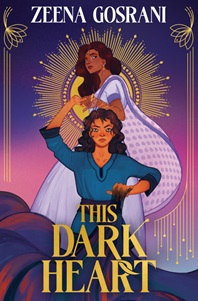
Title: THIS DARK HEART
Author: Zeena Gosrani
Pitch: A princess must rescue her girlfriend from demons
Find on Goodreads.

Title: DESI GIRL SPEAKING
Author: Anika Hussain
Pitch: Battling depression and feeling alienated from her parents and friends, Tweety feels alone. Then she finds Desi Girl Speaking, a podcast by someone with similar issues, and someone she connects with through emails. As Tweety’s depression deepens, she faces a choice: stay silent or muster the courage to express herself.
Find on Goodreads.

Title: THE UNDYING OF OBEDIENCE WELLREST
Author: Nicholas Bowling
Pitch: Gothic romp set in Regency England – a teenage gravedigger and teenage scientist join forces to overcome an arranged marriage and DEATH ITSELF.
Find on Goodreads.
What do you think is special about UKYA?
Zeena Gosrani: I think the myriad of different cultures is what makes UKYA special. A book set in London is going to vastly different from one set in Birmingham or Manchester. There is so much history and diversity across such a small space, and it came make for some very interesting stories.
Anika Hussain: UKYA is so special because it offers teenagers a safe space to explore difficult emotions or enter into worlds that are completely unknown to them. If they have questions about a topic, whether it’s taboo or something they don’t know enough about, there is a book out there for them that will allow them to learn without feeling like they are judged.
Nicholas Bowling: There’s something down-to-earth and self-deprecating about UK YA titles that I think you don’t get elsewhere. I think they’re funnier, too – probably for the same reason.
What distinguishes a YA book from middle grade or adult? Why do you think it’s so popular at the moment?
Zeena Gosrani: YA is coming of age. It’s that period in life where people are starting to gain their own independence and figuring out what they want in life. But it’s also a time when people still have the support of adults around them, where they don’t have to worry about bills and rent. I think there are two reasons why YA is so popular at the moment. One is nostalgia. I know so many instances during my teenage years where I wished I had done something different, where I had the courage to say yes instead of no, or even stood up for myself. Reading/writing a YA is our chance to do things differently. The other reason I think it’s popular is because it’s safe. Even in an epic fantasy where so many characters are being killed, you know the MC is going to make it out alive. Because that is a promise of YA. And in a world that seems to be spiralling further and further into hell every day, sometimes we want safe.
Anika Hussain: I think it’s all the emotions. Teenagers feel absolutely everything without any filter and that’s what so beautiful about it. As adults, we become so restrained but teenagers are unapologetically themselves – which is exactly why I think it’s so popular.
Nicholas Bowling: A directness of voice, particularly when it comes to addressing feelings, anxieties, relationships; a willingness to blur genres; a taste for the fantastical or speculative without the (undeserved) stigma of fantasy or sci-fi. I think these are precisely the same things that make it popular. Perhaps readers – not just teenagers but everyone – are generally a more anxious and it’s refreshing and therapeutic to have a book that addresses anxieties head-on AND offers escapism AND doesn’t feel like work.
There has been a lot of talk about the adultification of YA and what that means for teen readers. What sort of balance do you think UKYA strikes between teens and older readers? Do you think this balance needs to shift in a particular direction and how?
Zeena Gosrani: This is something I thought a lot about when I was writing and editing my book, because I think the adultification of YA is happening more often in fantasy books where the MC’s world and life experiences are very different from our own and the stakes are much higher than in a contemporary book where shenanigans happen within a school setting. I really had to think about how far I was willing to go/let my characters go in romantic scenes between my MC and her girlfriend. I think teenagers deserve sex scenes in books, but I think it’s very important as a writer to make sure you’re writing for your teenage audience and not your adult audience, so the scenes need to be approached in a different way. I think UKYA in general does remember its audience, but I also think there is a push to write older YA because it can bring in that adult audience. This has left a gap in the market for 12 to 14-year-olds that I think really needs its own ‘teen’ category.
Anika Hussain: There’s definitely a lot of discussion about violence and how there may be too much of it in fantasy along with conversations about how romance and sex is portrayed in YA but I’m not sure how the balance needs to shift or if it necessarily does need to shift. It’s a wider discussion about age rangers and how we categorize fiction as a whole and whether we need further sub-categories.
Nicholas Bowling: Firstly I’m not even sure that YA counts as an “age bracket” anymore – I think it’s more of a genre thing, that anyone can jump into if they want. But I also don’t worry about it. I think teens can and should grapple with all kinds of adult themes and situations – we shouldn’t patronise them. I don’t think we can expect them to read Romeo and Juliet for the curriculum but then deny them something like Sarah J. Maas in their leisure time. If they find their way into MG bookshelves then things start to get problematic – but troubling books have always been available for younger readers. I remember reading Jurassic Park when I was about 12 or something. There are some pretty gruesome bits in that book. And I loved it.
How do you think UKYA will evolve in the coming five years?
Zeena Gosrani: I think we’re already seeing some of the ways UKYA will evolve. Growing up, there was never anyone in a book that resembled me. And yet my book, filled with queer brown people exists now. The UK is rich with diversity, and more of us are owning our voices. There is still some pushback within the industry, but I’m hoping with time, that will become less and less.
Anika Hussain: I think we will see a lot more books pushing the boundaries and reading stories by communities which have been relatively censored or publicised about.
Nicholas Bowling: More horror. More darkness. Ha.
For more interviews, check here and don’t forget to check instagram (here) for book recommendations from these authors and more!
 #UKYASpotlight
Leave a comment