
#UKYASpotlight is a month-long event across social media to promote YA books by British and Irish authors (resident and national). For more information, click here.
About the Authors

Jess Popplewell is the author of The Dark Within Us, winner of the Chairman’s Prize in the Times/Chicken House 2022 competition. She was raised in the historic city of York, so she absolutely thinks about the Roman Empire more than is normal. And the Danelaw. And the Harrying of the North, which she still hasn’t forgiven the Normans for. Jess got her undergraduate degree in English and Creative Writing from Lancaster University in 2011 and her MA in Creative Writing from York St John University in 2016. She’s also a former gothy emo kid, traits which continually crop up in all her writing. Having experienced insecure housing as a teenager, Jess is passionate about preventing homelessness for young people. She was a host for the York-based charity SASH for three years, offering her spare bedroom to young people in need of emergency accommodation.

From Dublin, Brían Dungan works in film & television by day (with credits including Game Of Thrones, Derry Girls and Black Mirror) and writes YA fiction by whatever time he has left (which isn’t much). Debut YA novel Wintour’s Game published in August through Little Tiger, with follow-ups due to arrive in ’25 & ’26. With writing inspired by the movies he loved as a child and a few of the ones he’s subsequently made, when Brían isn’t working (which isn’t very often) he loves reading, drumming, gaming and long walks on the beach with his family and pesky rescue dog, Joey.
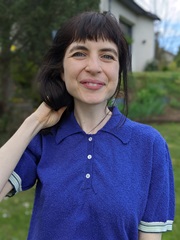
Cecilia Vinesse is the author of the young adult novels The Girl Next Door, The Summer of Us, and Seven Days of You. She was born in France but grew up between Tokyo, Japan, and Greenville, South Carolina. Her obsession with Nora Ephron movies led her to New York City, where she worked in children’s book publishing and lived in an apartment furnished mostly by stacks of novels. Now she’s in a small Victorian cottage in the English countryside, where she spends most of her non-writing time devouring rom-coms and podcasts, baking as many cookies as possible, and holding horror movie marathons with her wife and dog. You can find her at http://www.ceciliavinesse.com.
About Their Books:

Title: THE DARK WITHIN US
Author: Jess Popplewell
Pitch: When homeless sixteen-year-old Jenny meets a distractingly handsome demon at a terrible house party, she discovers she doesn’t have a soul. Convinced that getting hers back will fix her problems, she agrees to go with him into Hell – after all, what could possibly go wrong?
Find on Goodreads.

Title: WINTOUR’S GAME
Author: Brían Dungan
Pitch: Alex Wintour is a teenage thief, who’s ability to see the future brings her to the attention of teen millionaire Colman Reece, who has a heist he thinks only she can pull off. But the sinister Temple are watching too, and the fate of Temporal world hangs in the balance.
Find on Goodreads.

Title: THE GIRL NEXT DOOR
Author: Cecilia Vinesse
Pitch: Cleo dreams of making horror movies with her boyfriend, Daniel, until Daniel dumps Cleo for Kiki, the head cheerleader, while Kiki dumps Marianne, Cleo’s swim-jock next-door-neighbor. Marianne and Cleo start fake-dating to win their exes back until their feelings become way too real in this chaotic, bisexual, fake-dating love square.
Find on Goodreads.
What do you think is special about UKYA?
Jess Popplewell: UKYA as a market is so interesting, and is so much smaller than, for example, the US market so it can be difficult to know how to position a book that is very specific to the experience of being a UK young adult. We are such a diverse and interesting set of islands with a huge range of experiences, cultures and histories, and all of that influences the kinds of stories our authors are able to tell. We might be a relatively small market, but we have a huge amount to offer!
Brían Dungan: I think UKYA occupies a very special place in readership, bridging the gap between middle-grade, which are often books that may be chosen by, but are often bought for children, and adult fiction, which a reader would generally pick for themselves. UKYA offers younger readers maybe their first chance to forge something of their own identity through their reading patterns and discover and project a little more of who they are, through the titles they choose to buy, and perhaps display, for themselves.
Cecilia Vinesse: I love that it’s a vibrant, close-knit community with such a strong sense of voice and character. There’s something so cosy and bright about UKYA books!
What distinguishes a YA book from middle grade or adult? Why do you think it’s so popular at the moment?
Jess Popplewell: Oh I could talk about this for HOURS but I won’t. Not to get all “I’m such a fossil” about it, but back when I was a teenager/young adult (in the early 2000s and 2010s) the idea of “YA” wasn’t really a thing – we had “teen books” but even that was a new-ish idea. As a reader, I used story as a means of escaping times in my life that weren’t much fun, but also to help me develop language to talk about who I was as a person, and who I wanted to be. I personally believe that teenagers are the most interesting people on the planet; they’re on the cusp of adulthood, having so many freedoms and experiences often for the first time, or in less positive cases sometimes experiencing the hardships of life by themselves for the very first time, and that makes stories for that age group compulsive reading. As adults, we very often try to hide our feelings or fake our way through situations to appear “professional” or “mature”, but young adults have less of a shell in most cases, so those experiences (whether real life or fantastical ones) can be viewed through that prism. I can see why that’s exciting for young adult and adult readers.
Brían Dungan: I think what distinguishes a UKYA title from adult or middle grade is also the root cause of its popularity: it has a foot in both camps. As people, we’re caught in a cycle of yearning to be older when we are children, or younger when we are adults! So, advanced teen and pre-teen readers want to glimpse behind the curtain, and I think stepping up to YA titles promises them, safely, a little of that, while many adult readers long for the carefree days of their teenage years, and picking up a YA title can transport them back there in the turn of a page.
Cecilia Vinesse: I think a YA book is one that’s inclusive of the teen experience. It can cover so many topics, but there’s always a sense of warmth and empathy toward what it feels like to be at an age when you’re figuring out who you might want to be someday. I think this warmth and empathy is so powerful and can speak to your heart at any age. I really believe it’s what makes YA timeless!
There has been a lot of talk about the adultification of YA and what that means for teen readers. What sort of balance do you think UKYA strikes between teens and older readers? Do you think this balance needs to shift in a particular direction and how?
Jess Popplewell: Junk by Melvin Burgess was powerful and terrifying when I read it at 14 and I am convinced it wouldn’t be marketed to “teens” now, even though it’s about a group of them. That book didn’t scar me, but it has stuck with me for 10 years, and I think it helped me be more thoughtful and empathetic when discussing tough topics like addiction. I felt similarly when I read Girl in Pieces by Kathleen Glasgow last year; the content is difficult a lot of the time, but does that mean we shouldn’t “trust” young adults with it? On the other hand, I think there’s a difference between that kind of storytelling and an adult demand for books aimed at young adults to be “spicier” or whatever – there are so many spicy books on the market aimed at adults that I don’t think YA needs to go that route – and if it does, I’d argue it stops being YA.
It’s tough – YA, as far as I’m concerned – is not a genre, it’s an audience, and as soon as the content in YA books starts to be dictated by what adult readers want, it stops being YA.
So, yes, we can trust young adults with tricky topics and moral ambiguity but at the same time, we need to remember who those stories are for.
Brían Dungan: As I’ve said, I think part of the allure of a YA title is perhaps, a slightly more mature, slightly more sophisticated view of the world than might be offered by a middle-grade or teen title. I think reading is a wonderful way for younger readers’ to have their eyes opened to some of the realities of the broader world, and YA books can offer a safe, moderated portal with which to do that. That said, there are plenty of books for adults already, and we mustn’t lose sight of the fact that these are books for young people, not adults. So, while I think it’s fine to dip the reader’s toe in the adult world, I wouldn’t want to push them into it head first. That’ll happen to them all too soon anyway.
Cecilia Vinesse: As a teen, I can remember reading between so many different genres and styles of books, so I honestly believe there’s room for as much variety as possible on the shelves. Some YA stories speak to the older years, to even being on the cusp of your twenties, while others are about being a little bit younger. They all have something unique and important to offer and can all be the perfect book for the perfect reader at the perfect time in their life.
How do you think UKYA will evolve in the coming five years?
Jess Popplewell: Gosh what a question! I love it! Well, I can’t make any trend predictions, because if I could do that I’d be a millionaire already, but I love the way young adults are coming back to books with the emergence of booktok and the way some young adults are spending time in bookshops again. What I’d like to see is more focus on youth-focused writing activities, like charities doing workshops and competitions designed to get young people writing – and I think YA authors are natural ambassadors for that. I hope we see a growth of acquisitions of stories from authors from diverse backgrounds or with diverse experiences, and I hope more of those authors are able to tell stories that aren’t always about “issues” e.g. they should be able to tell wild fantasy stories that have no bearing on their diversity if they want to! Those diverse experiences will still influence those stories, after all.
Brían Dungan: I think one of UKYA’s real strengths is its ability to quickly respond to, and cater for, changes in our society. So, while ‘adult’ fiction is a bit more of a tanker that can take a week to turn around, UKYA is like a nippy speedboat that can turn on a dime. It’s been brilliant at tackling issues of diversity and gender equality, while making space for loads of new voices that need to be heard, and I think it will continue to go from strength to strength in this regard in the years to come.
Cecilia Vinesse: I’m just so excited to see what new books of all genres will be popping up on bookshelves. The more UKYA the better!
For more interviews, check here and don’t forget to check instagram (here) for book recommendations from these authors and more!
 #UKYASpotlight
Leave a comment