
#UKYASpotlight is a month-long event across social media to promote YA books by British and Irish authors (resident and national). For more information, click here.
About the Authors
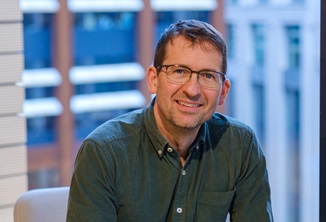
A. Connors is a writer and engineer with a love for character-led speculative fiction and all things SciFi and techie. His first book, The Girl Who Broke The Sea, was nominated for the Yoto Carnegie award, and started when he discovered that over a million square kilometres of the Pacific ocean was already licensed for exploratory deep-sea mining. His new novel, Find Me After, started (in part) when he woke up from an epileptic seizure on the kitchen floor of a holiday rental in Lancashire.

Becky Jerams is a contemporary YA writer from Portsmouth who weaves real life music into her books. Her writing style is pacey and observational with plenty of heart and humour. As a songwriter, her music has been placed on TV shows, movies and with international artists around the world, including K-Pop band Red Velvet. Her debut co-written novel The Songs You’ve Never Heard was shortlisted for The YA Book Prize 2023.
Ayaan Mohamud wrote her first ever book in lockdown and during NaNoWriMo, while also studying as a medical student, and it became her debut novel. It was inspired by her own experiences of Islamophobia and a desire to write about Somali culture, which she hopes to shine more of a light on in YA. She lives in London and can usually be found either writing or complaining about writing.
About Their Books:

Title: FIND ME AFTER
Author: A. Connors
Pitch: Where do you go when you’re not quite gone? Kyle wakes from an epileptic seizure to a world that looks like ours but where nothing feels the same. This is the Stillness: an eerie, liminal alternative reality populated by those who are caught between life and death.
Find on Goodreads.

Title: THE SONGS YOU’VE NEVER HEARD
Author: Becky Jerams and Ellie Wyatt
Pitch: A contemporary YA novel about teen songwriters with real life songs that accompany the story. The Songs You’ve Never Heard is a hopeful, joyful novel that focuses on female friendship, sibling rivalry, body positivity, and the power of finding your own voice.
Find on Goodreads.
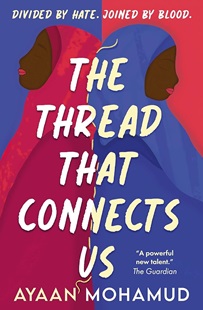
Title: THE THREAD THAT CONNECTS US
Author: Nicholas Bowling
Pitch: A contemporary drama about two stepsisters – London-born Safiya and Somali-born Halima – who are faced with explosive family secrets when their worlds collide. Featuring a sprinkle of first love, an Investigative Hijabi, and budding sisterhood.
Find on Goodreads.
What do you think is special about UKYA?
A. Connors: YA is special because at no other point in life is the world so vivid, containing so many firsts, with so much to figure out about yourself and your world. The books I remember most vividly come from my reading in my teens and my early twenties—lots of Stephen King, lots of Asimov and Heinlein—I remember the worlds and possibilities in them feeling vast. The UK part is important because every culture has unique turns of phrase and unique ways of thinking. If any one place loses its voice the world is smaller because of it. UKYA is important because it attempts to maintain some of that balance.
Becky Jerams: It is a real celebration of UK authors and a wonderful community of people!
Ayaan Mohamud: UKYA is such an exciting space to be writing in – we may be small compared to other markets, but we are mighty! I think what makes UKYA so special is that stories are often written from a UK perspective, and so, naturally, this will strike a stronger chord with readers at home. Great stories will always be great, but feeling connected to a story because of setting is always going to be the extra cherry on top. Though obviously, this doesn’t apply to all genres.
What distinguishes a YA book from middle grade or adult? Why do you think it’s so popular at the moment?
A. Connors: In general I think the boundaries are artificial and we should probably think about it all differently. But I know why I like writing and reading YA. Middle-grade, whilst brilliant, is necessarily constrained by the need to engage younger children. There’s more room in YA to hit big, nuanced topics, whether it’s science as I am drawn to or social issues, or anything else. But I think YA doesn’t take itself so seriously as similar styles of book in adult writing. I like that I can take on serious subjects, but that there’s still room for things that are there just because they’re cool or exciting.
Becky Jerams: YA really hits that emotional point where young people are exploring more about themselves and the world, but perhaps don’t have the life experience to tackle issues from an adult novel perspective yet. I think teenagers can handle so much more than they are often given credit for, and YA books gives them the chance to explore more grown up topics in a safe environment, as well as find characters that relate to them and their lives.
Ayaan Mohamud: The biggest difference would have to be the weight of emotion that carries in YA stories. As a teen/young adult, life often feels even more intensely emotional and overwhelming; you’re starting to have so many new experiences and beginning to question and learn more about who you are, the world, and your place in it. I think YA has always been popular – though there have definitely been waves in its popularity. There’s always going to be a draw to the teen/YA experience.
There has been a lot of talk about the adultification of YA and what that means for teen readers. What sort of balance do you think UKYA strikes between teens and older readers? Do you think this balance needs to shift in a particular direction and how?
A. Connors: Like I said [above], I think the definition is kind of artificial. Movies don’t seem to make a distinction in the same way—if the Avengers franchise was a series of books it would be YA, but as films they merrily straddle both. The sweet-spot for me is a book that doesn’t hold back on the size or the complexity of the topics being covered, but is still well enough written with clearly drawn characters and a compelling story that it’ll be engaging to younger readers as well. I don’t think these things need to be in conflict. I also don’t think you need to make a distinction until you reach topics that younger readers just won’t be interested in (like midlife crises, divorce, and prostate trouble…) In fact, I propose a new categorisation of books: Middle-grade → YA → Middle-age. What do you think?
Becky Jerams: I think the lines between YA and adult are becoming more blurry as time goes on, especially as so many adults enjoy YA. I think it’s important as an author to always keep your teen reader at the front of your mind and think about what will resonate/what you can bring to a school reading setting etc. and not veer into scenes that are perhaps too graphic or unrelatable to a teen. That said, teens are very mature and their tastes are changing all the time. I think right now the balance is pretty good, but I do also feel there are a lot of heavy books in UKYA at the moment, and it would great to bring the joy back to give some different genre options! (Eg. Books like Geek Girl or Heartstopper).
Ayaan Mohamud: There has definitely been a notable shift in YA content being less ‘teen-friendly’. I think this is probably for a couple of reasons: there’s huge adult interest in YA books, and the teen experience is very different to what it would have been a decade or two ago. I do think that the shift is welcome, and necessary, but it’s also left a vacuum for teens who aren’t ready to make that jump and read YA books with greater adult content. The balance needs to come with more UKYA books being published into a very clear ‘teen’ space, with less YA overlap.
How do you think UKYA will evolve in the coming five years?
A. Connors: How do I think it will evolve or how do I wish it would evolve? Right now I feel like publishers are throwing things at the wall and hoping for a BookTok jackpot—I really wish we could get back to my (imagined) past of publishers investing in writing careers and having a more active role in guiding writers to develop their craft and brand, and find and build an audience over several books… That’s probably not specific to UKYA though, publishers need to change the way they acquire books for that to happen. Maybe a bigger issue is that we really need to face the fact that mobile phones and short-form video content are eating the YA book market. Maybe I’m self-referencing too much, but I have two smart teenage boys who love reading… if they can be persuaded to pick up a book. When they read, they devour a book, but the minute they put it down they go back to their phones and it’s a devil to tear them off. Maybe that means writers need to become much more mixed-media, but … that thought scares me.
Becky Jerams: I think we will see more adult trends reflected for teens, and as I mentioned before, hopefully more humour and joyful books coming to the forefront!
Ayaan Mohamud: Ooh, this is a good question – and hard! I’ve never thought about predictions, but if I had to guess then: more dystopia, more vampires, and maybe more retellings.
For more interviews, check here and don’t forget to check instagram (here) for book recommendations from these authors and more!
 #UKYASpotlight
Leave a comment