
#UKYASpotlight is a month-long event across social media to promote YA books by British and Irish authors (resident and national). For more information, click here.
About the Authors

Chris Vick writes books for young people about the sea, danger and the wonder of magic and stories. He spent years working in whale conservation and a lot of time surfing before enrolling on the Bath Spa MA in Writing for Young People, which transformed his writing. He has written five books, published in several countries. Girl.Boy.Sea. was shortlisted for the Carnegie medal and Kook for the Andersen Prize in Italy. When he’s not not-writing, he does a few festivals and school visits. He loves to meet readers, and more importantly to help young people discover the magic of writing and stories.
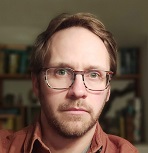
Luke Palmer is a YA author and poet. His debut, Grow, was longlisted for the YOTO Carnegie Medal in 2022 and shortlisted for the Branford Boase Award. The follow-up, Play, was released in 2023. Luke won the Winchester Prize for poetry in 2023 and is a Pushcart and Best of the Net nominee.
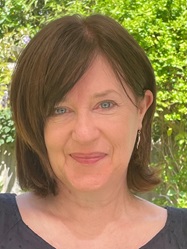
Sophie McKenzie is the award-winning author of over thirty books, including teen thrillers Girl, Missing, Split Second and Blood Ties – all of which have won the Red House Children’s Book Award. In addition to sequels to the above titles, Sophie has written a number of teen standalone novels, most recently Secret Sister, plus two short books for World Book Day, the six-book Medusa Project series and two teen romance series – as well as several stories for younger children and four psychological thrillers for adult readers. Sophie was born in London, where she still lives, and worked as a journalist and editor before her first novel was published in 2006. Married with a grown-up son, Sophie loves good food and great stories in all their forms. Her latest book, teen thriller Storm of Lies, publishes Summer 2024.
About Their Books:

Title: SHADOW CREATURES
Author: Chris Vick
Pitch: Norway 1940. The Nazis arrive in Liva’s village. Change is slow, but then rules and fear creep in. The children’s beloved island, once a place of picnics under the midnight sun, is turned into a prisoner camp. Friendships are made and broken, trust turned upside down and lives changed forever.
Find on Goodreads.
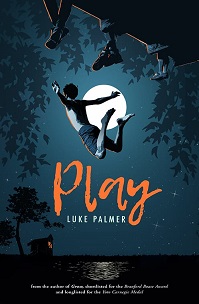
Title: PLAY
Author: Luke Palmer
Pitch: Mark thinks he’s found the perfect game to escape his small-town life and impress his friends with his big-money prizes, but when he breaks a rule, he finds out that smuggling drugs across county lines isn’t a game at all. Can his friends help before it’s too late?
Find on Goodreads.
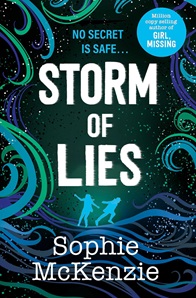
Title: STORM OF LIES
Author: Nicholas Bowling
Pitch: Hollie lives in a small town by the sea. When she and her friend, Parker start a research project on the local sea-wall defences, the last thing she expects is to uncover a trail of lies that leads her and those she loves into an oncoming storm and terrible danger.
Find on Goodreads.
What do you think is special about UKYA?
Chris Vick: It’s not afraid. It experiments. It’s raw and real and fresh.
Luke Palmer: Since my first book came out a few years ago, I’ve been staggered by how close and friendly the whole UKYA community is, and how voracious it’s readers. They keep demanding more challenging and wider ranging books, and UKYA keeps on delivering.
Sophie McKenzie: The readers!
What distinguishes a YA book from middle grade or adult? Why do you think it’s so popular at the moment?
Chris Vick: Subject matter perhaps, but otherwise hard to pin down. Sometimes it’s about subject matter and depth and exploration of subject that are more ‘adult’, or at least not for ‘children’, but which young people experience every day.
Luke Palmer: YA is where readers really start to grow their own wings, and want to read about characters who are doing this, too. They want a world reflected back at them which feels like their own, but they’re more and more willing to take risks and to see themselves in stories they might not have tried at middle grade. The themes, the ideas, the characters, the language; everything steps up a gear in YA. (And not just the swears!) I think my own style of YA is quite ‘literary’, but I’m also writing stories which (I hope) appeal to reluctant readers who don’t see books as something they enjoy – or haven’t enjoyed since primary school. When I visit schools to talk about my books, there’s a real buzz in the room about reading. I guess that’s translating beyond the classroom, hence the rise and rise of UKYA.
Sophie McKenzie: Often the distinction is to do with the age of the main characters and how the themes of the book are handled, but it’s quite subjective. There are fashions in YA books just like there are in other areas of publishing, but it’s always hard to predict (or explain!) when or which different genres or types of books will become popular at any given moment.
There has been a lot of talk about the adultification of YA and what that means for teen readers. What sort of balance do you think UKYA strikes between teens and older readers? Do you think this balance needs to shift in a particular direction and how?
Chris Vick: The balance is maintained by a healthy and diverse range of writers, topics, stories and styles. The only way this needs to shift at all is perhaps to fill more of the space between Middle Grade and YA (which is where some of my work sits).
Luke Palmer: Despite how we fusty old grown ups might try to hold them back, young people are growing up fast. My nine-year-old is currently devouring Judy Blume’s books, which feel about right for her at the moment despite who they were written for. But if young people’s literature is getting more adult, it’s nothing compared to the world they’re inhabiting. A lot of the adult themes in my books – grief and radicalisation in Grow, and drug abuse, grooming, toxic masculinity and sexual abuse in Play – are reactions to the present realities of young people rather than trying to push them into an adult sphere that they’re not ready for. I guess that’s just it – young people often aren’t ready for the situations they find themselves in – but one of the great things about reading is that reading gives us the chance to develop that empathy and experience those experiences without the dangers of it being a real-life situation. I don’t think YA has to shift from the line its drawing at the moment, from helping young people, be they teens or older readers, to navigate the increasingly fraught world outside their windows.
Sophie McKenzie: I’d love to see a return to a clearer identity for the younger end of YA, with books for 11 – 14 year old readers given their own space.
How do you think UKYA will evolve in the coming five years?
Chris Vick: If I knew that, I’d tell my publisher and they’d make a mint! 🙂 Seriously, no idea. Probably best not to think about how the market might evolve and focus on white the story in my head tells me to write.
Luke Palmer: It will evolve with its readers. They’ll tell it what they want. I hope they’ll continue to want complexity, challenge, escapism and fun!
Sophie McKenzie: Hopefully in the direction indicated [in the] above !
For more interviews, check here and don’t forget to check instagram (here) for book recommendations from these authors and more!
 #UKYASpotlight
Leave a comment