
#UKYASpotlight is a month-long event across social media to promote YA books by British and Irish authors (resident and national). For more information, click here.
About the Author

Dr Alexia Casale is a novelist, script consultant and academic. As Reader in Writing for Young People, she leads the renowned MA in Writing for Young People at Bath Spa University. Her YA debut, The Bone Dragon (Faber& Faber), was shortlisted for the Waterstones Children’s Book Prize and Jugendliteraturpreis; it was a book of the year for the FT and Independent. House of Windows was part of the NHS/Wellcome Trust ‘books on prescription’ scheme to support young people’s mental health. Her YA romcom, Sing If You Can’t Dance, is an Empathy Lab 2024 title and shortlisted for the Southern Schools Book Award 2024/2025. Her adult crime debut, The Best Way to Bury Your Husband, is out now in hardback; she is loving the move from amateur murderer to professional and is busy killing even more people for her second book with Viking.
About the Book:
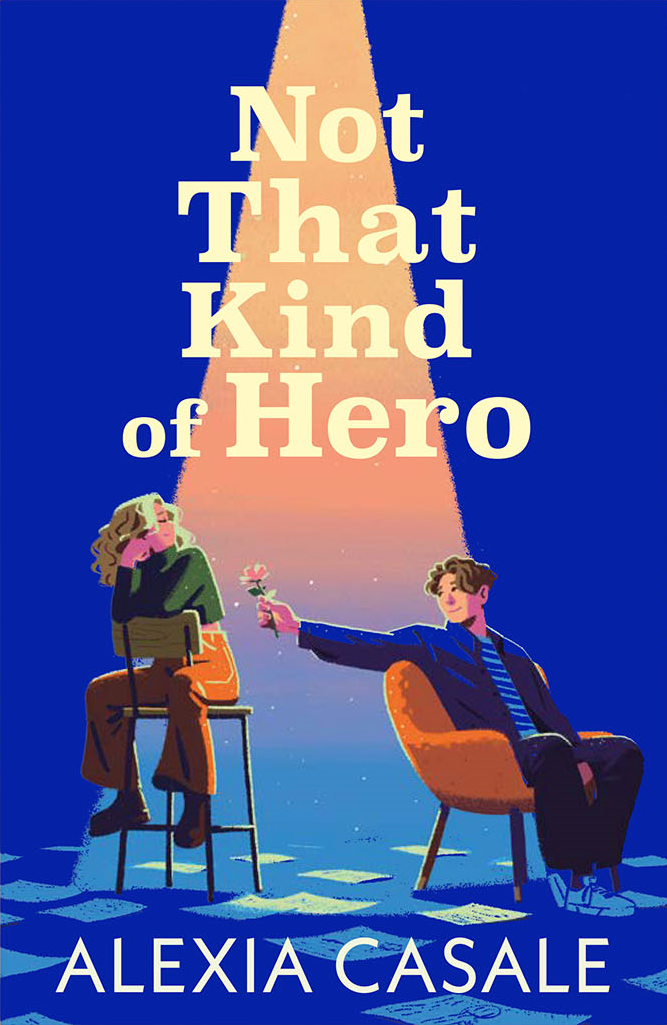
Orla has always been the sidekick, never the hero . . .
Until, that is, she secures a funded place at an elite drama course and puts her own dreams first for once in her life. Suddenly, Orla is centre-stage and loving it! But the drama crowd are experienced performers and their parents have shelled out a fortune for them to be on the course. Orla can’t help but feel left out – she has to earn her pocket money and her responsibilities at home can’t just be ignored.
Then again, doesn’t she deserve to want things for herself? Especially when beautiful and funny drama boy, Cass, starts flirting with her . . .
With life-changing auditions around the corner Orla finds herself torn in two by an impossible choice. Should she protect her chosen family, or herself?
Find it on Goodreads.
What do you think is special about UKYA?
So many things! I love that a lot of UKYA includes at least a thread of humour – who doesn’t relish a good dose of British sarcasm and self-deprecating snark? I also find that UKYA tends to ask questions but let readers come to their own answers – leaving ‘space’ for the reader to make what they will of a story is how books best help us to learn, grow and become more empathetic. I also find that UKYA does warmth really well while rarely falling into the trap of mawkishness or sickly sentimentality. And… Well, I could go on for hours. Literally. Ask my students. (To be fair, they can go on for hours about this too so it’s all happy times extolling how much we love UKYA!)
What distinguishes a YA book from middle grade or adult? Why do you think it’s so popular at the moment?
The boundaries between categories are always porous – and obviously even within YA there’s a lot of ground to cover between ages 13 and 18 (we really need a teen/tween category!) – but at its core YA revolves around the particular challenges and joys of the period in the run-up to becoming an adult. For most people, this time is when we start having more control over our lives, not least because the law gradually gives us more powers to make important decisions. Understanding our own values and principles becomes ever more urgent as we struggle to make the ‘right’ choices. We gain autonomy but also many additional responsibilities, and the ability to empathise with others has ever greater impact on how we move through the world.
All this makes the period that YA covers one characterised by huge, varied changes that set at least certain aspects of our adult lives on their path. It’s a period of many new experiences brought about by our own choices, good and bad, so sets the stage for lifelong reflections on whether we’re making the best or worst of the opportunities before us. For young adults reading YA, these books provide a vicarious glimpse into possible choices, possible lives, possible selves, experiences, friendships, loves, loses… For adults, these stories let us consider what other choices we might have made but didn’t, what we and our lives would be like if X, Y, Z had been different… YA is all about potential and how we use it when we don’t fully understand ourselves, others or the world around us.
There has been a lot of talk about the adultification of YA and what that means for teen readers. What sort of balance do you think UKYA strikes between teens and older readers? Do you think this balance needs to shift in a particular direction and how?
We need a teen/tween category as there tend to be few books about 13 and 14 year olds – this was a challenge for my first novel (the protagonist is 14) and even my second (the protagonist is 15). There’s a sense that these stories don’t really fit within Upper Middle Grade while being ‘too young’ to appeal to most YA readers, making such books harder to shelve and to market. This is a pity as it means we’re currently neglecting the readers who need these books.
At the same time ‘New Adult’ never really took off as a category capturing the experiences of 18-24 year olds but rather became ‘YA with extremely graphic sex scenes’; this hasn’t helped with YA tipping to the 16+ end of the spectrum.
Combined with the perception that Fantasy is ‘allowed’ to be more graphic in terms of sex and violence than Contemporary YA since these stories are not set in the real world, the fact that most successful crossover series (i.e. books featuring older teen characters that are written and marketed to both young adults and adults) are Fantasy has furthered the tilt towards the older part of the ’13 to 18′ spectrum.
There should be books that meet the needs of all readers, whereas we’re currently not catering enough to the younger part of the YA category. Books about 13, 14 and 15 year olds, including books that are on the shorter end of the spectrum, are things that librarians and booksellers often say they struggle to find. At the same time, until there’s a shelf for them to sit on, or a category for them to be marketed in, it’s hard for publishers to make a business case for them. Interestingly, this came up in a recent international event for Literature across Borders featuring librarians in the UK, US and India, so it isn’t just a UKYA problem!
How do you think UKYA will evolve in the coming five years?
I’m really enjoying seeing more rom-coms around, as well as a steady if gradual uptick in crime and sci-fi. (Though where is the big sci-fi breakout series? I’m so looking forward to this!) Green themes in the broadest sense are also likely to be increasingly prevalent, though hopeful stories featuring a love of wildlife and nature are where I think the appeal is likely to remain greatest, whereas on the darker end I expect UKYA will tip towards horror rather than dystopia given that the latter feels all too real right now!
Above all, it’s great to see ever more incidental diversity. Sing If You Can’t Dance has a protagonist who just happens to be disabled, but I was so delighted that the book was published and marketed as a rom-com not a ‘disability story’ as if this one aspect of the character’s life is the only thing that matters. Not That Kind of Hero is also a rom-com first and foremost, but with a protagonist whose family is fleeing domestic violence; as result, she’s helping to support her household both financially and in terms of childcare, complicating the question of what ‘pursuing her dreams’ means. I’m really proud that UKYA is now embracing an approach where rounded characterisation can encompass the wonderful diversity of reality. Our stories are so much richer for it.
For more interviews, check here and don’t forget to check instagram (here) for book recommendations from these authors and more!
 #UKYASpotlight
Leave a comment