
#UKYASpotlight is a month-long event across social media to promote YA books by British and Irish authors (resident and national). For more information, click here.
About the Authors
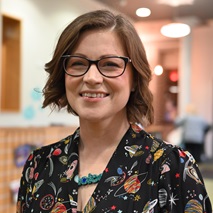
Kelly McCaughrain is a Young Adult writer from Belfast, Northern Ireland. She’s published by Walker Books and was the Queens University Belfast’s Children’s Writing Fellow 2019-2021. She works with disabled adults in further education and mentors teen writers at Fighting Words NI. Her debut novel, Flying Tips for Flightless Birds, won the Children’s Books Ireland Book of the Year as well as the Northern Ireland Book Award and was nominated for the Carnegie Medal. Her second novel, Little Bang, came out this year and was an Eason’s Book of the Month. When not writing, she enjoys the adrenaline rush of driving an extremely old and mechanically unsound VW campervan around countries where she can’t say “fanbelt” in the local language.
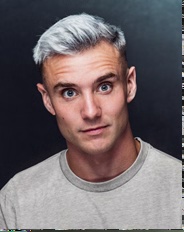
Calum McSwiggan is an award winning LGBT+ journalist, author and content creator with a combined following of over 300,000 people across his social media platforms. Eat, Gay, Love – his autobiographical travel memoir – has been nominated for multiple awards; and Straight Expectations – his debut work of fiction – has been published overseas in both the USA and Brazil. His next book, Masquerade, is set to be released in the summer of 2025.

Rosie Talbot is a graduate of Curtis Brown Creative and Write Mentor. By day she works as a bookseller. By night, she spends time sewing big skirts with outrageously large pockets and wondering why her family has a suspiciously large collection of cauldrons. She currently resides in a mysterious pocket of the Sussex countryside with a very patient spouse and two cats called Tinkerfluff and Captain Haddock.
About Their Books:
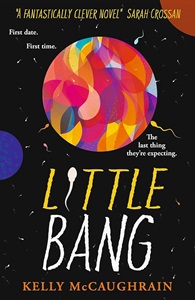
Title: LITTLE BANG
Author: Kelly McCaughrain
Pitch: Belfast’s most unlikely couple, science nerd Mel and bad boy Sid, get pregnant on their first date. In a country where abortion is illegal and EVERYONE has an opinion about it, what do they do now? And will their relationship survive it?
Find on Goodreads.
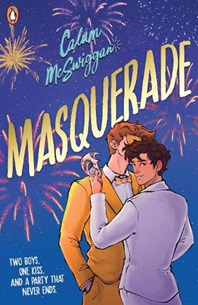
Title: MASQUERADE
Author: Calum McSwiggan
Pitch: Masquerade is a queer romance about 17-year old Zach, stuck in a time-loop on the last day of school. When a mystery person kisses him at their masquerade prom, he believes uncovering their identity must be the way out, but things turn out to be more complicated than they seem.
Find on Goodreads.

Title: PHANTOM HEARTS
Author: Rosie Talbot
Pitch: Blending murder mystery and graphic novel romance, Phantom Hearts follows anxious teenager Malia as she investigates the true motives behind the bus crash that killed four of her fellow students.
Find on Goodreads.
What do you think is special about UKYA?
Kelly McCaughrain: I love that there’s a big focus at the moment on representation of diverse group and people we haven’t traditionally seen in books. I’m particularly enjoying seeing so much YA being written and set in Northern Ireland because when I was young there was practically none, and there was an expectation that anything set in NI would be about The Troubles. But of course NI teens have the same issues as teens anywhere and I’m excited to see NI books exploring issues like disability, sexuality, gender, relationships, class and much more.
Calum McSwiggan: I think what UKYA does especially well is lean into the specifically awkward challenges of being in the middle-ground between being a kid and being an adult, especially when that coincides with challenges around individual identity. For minorities especially, these critical years in early adulthood are some of the most difficult periods we go through as people, but also some of the most exciting. I think it makes for the most tremendously fascinating characters and allows for incredibly important conversations around identity. I don’t think it’s a coincidence that we’re seeing an enormous surge of own-voices stories in the UKYA market, the genre massively lends itself to facilitating these stories, and with the increasing demand for representation in British books, I hope it’s a trend that only continues to grow.
Rosie Talbot: It’s written by people who understand how to make a proper cup of tea. This is more important that some might think. Crucial really.
What distinguishes a YA book from middle grade or adult? Why do you think it’s so popular at the moment?
Kelly McCaughrain: I think YA often has that coming of age moment that means nothing will ever be the same again, which MG and Adult doesn’t necessarily have and which is a really powerful, compelling and relatable journey to write or read about. It’s popular because it’s good! I think there’s a high standard of quality in children’s books that you don’t always get in books for adults because we (writers, publishers, parents, teachers) feel a responsibility to give our kids the best. I sometimes read books for adults and think ‘you just wouldn’t get away with that in a YA. It’s not good enough.’ It’s not about being more literary or serious, it’s about being excellent examples of their genre. So maybe that’s why so many adults are reading YA.
Calum McSwiggan: YA books are the beautiful in-between, they’re able to handle incredibly adult themes but make them a lot more accessible and relatable for younger readers. As an LGBT+ adult, I take enormous joy in both writing and reading these stories because it provides a way for me to live vicariously through the characters. I never got to be an out-and-proud teenager, I never explored my identity in these years, and I never had a high school romance. These stories are a way for me to experience something that I’ve always felt deprived of. I think this is why we’re seeing an increasing demand for LGBT+ YA specifically. It’s not just modern-day teenagers who want to read those books, it’s the previous generations that have never had these stories available to them until now.
Rosie Talbot: YA stories are always, by their nature, coming of age stories. Often there is a romance element, even if it isn’t the main thread of the story. In middle grade the focus is usually on friendships and not on any kind of romantic relationship. The boundary between YA and adult is perhaps a little more blurred but for me I think it’s less about the content and more about how that content is presented on page.
There has been a lot of talk about the adultification of YA and what that means for teen readers. What sort of balance do you think UKYA strikes between teens and older readers? Do you think this balance needs to shift in a particular direction and how?
Kelly McCaughrain: I think, like anything young people are exposed to (internet, TV, films, music etc), books both reflect and shape society. So there’s a responsibility there to hold up a mirror to what’s going on for our teens, showing them they’re not alone, but also to do so in a responsible way. I think it’s important that when we do write about more adult themes or darker themes, we focus on the possibilities for healthy, life affirming choices and opportunities to make the world a better place, and actually I think UKYA does that really well. I decided to write about teen pregnancy and abortion because I was incensed that young people in NI weren’t being properly educated about sex. As a result they were more likely to get into a difficult situation and were often having to make life changing decisions in total ignorance. I don’t think sweeping these things under the rug helps anyone, but we also don’t have to rub anyone’s nose in the rug, and when we do talk about this stuff we should do so in a way that makes readers feel supported and leaves them with hope, not anxiety and despair.
Calum McSwiggan: I think younger readers are often underestimated in both the lifestyles they lead and the ideas they’re exposed to. I think pushing boundaries and exploring more complex adult things is a good thing, as long as there’s a level of safeguarding in place. As a queer teenager, I was pushed into a world of online dating apps that was incredibly adult and mature, and I think the same is true for many young queer people now. I think it would be incredibly inaccurate and inauthentic to write queer YA characters who aren’t exposed to the adult world. For me, the balance is about giving them room to still be teenagers, while acknowledging the very adult experiences they may be having.
Rosie Talbot: Although my personal tastes run dark and more towards upper YA, as a bookseller, I would love to see more titles for younger teen readers. I think there is a gap in the market for stories targeted at strong readers who need a book to challenge them but are perhaps not ready for, or interested in, the more mature themes of romance or violence present in some upper YA titles. I am a huge fan of content warnings at the beginning of books to help guide reader towards titles they will love, and away from content they don’t want to read.
How do you think UKYA will evolve in the coming five years?
Kelly McCaughrain: The thing I love about YA is that it’s completely unpredictable so I’ve no idea! Trends change so fast and spread so quickly. Young people can become suddenly and intensely passionate about just about anything (which is something I love about them) so you just never know!
Calum McSwiggan: My hope is that UKYA will allow more space for own voices works to succeed. We’re seeing a lot of diverse stories being told, but they’re not always being written by the people who have lived those experiences. As a gay man, I’d love to see more gay stories being written by gay men rising to the top.
Rosie Talbot: Five years is a long way to project so I’m going to forecast the next year. I think we’re going to see sharp a rise in dystopia with a dash of magic. I’m hoping sci-fi will grow in popularity because I love a YA sci-fi. Give me gays in space please! And horror is having a boom of course. Okay … now I’m less predicting and more wishing because horror is my fave genre, especially fantasy horror. With ghosts. And witches…
For more interviews, check here and don’t forget to check instagram (here) for book recommendations from these authors and more!
 #UKYASpotlight
Leave a comment