
#UKYASpotlight is a month-long event across social media to promote YA books by British and Irish authors (resident and national). For more information, click here.
About the Authors
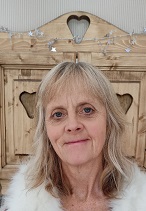
Following a degree in Classics and English, Jennifer Burkinshaw was a drama and English teacher for twenty plus years. Feeling the urge to write, she then did an MA in Creative Writing for Children at MMU, followed by a mentorship with the Golden Egg Academy. Igloo was Jennifer’s debut in 2022 followed by Happiness Seeker in 2023. Jennifer’s currently working on Gone West, a murder-mystery in verse. When she’s not reading, writing or spending time with her fascinating and expanding family, Jennifer can be found in the North Sea or the theatres!

Megan Scott is a Sunday Times bestselling author from the north west, who writes upper YA and adult romance, and loves painting, myths and fantasy worlds.
.
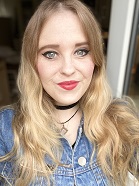
Morgan Owen is a former bookseller from Birmingham. She loves worldbuilding, storytelling in video games, coffee and cats.
.
About Their Books:
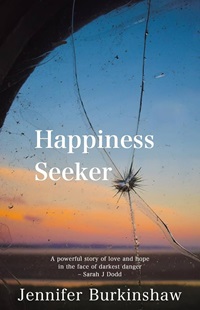
Title: HAPPINESS SEEKER
Author: Jennifer Burkinshaw
Pitch: Happiness Seeker takes place over one week’s school trip to the glorious but lethal Morecambe Bay. On her very first afternoon, Allie meets mysterious Mareno on the shore which changes the lives of everyone involved and leads to two deaths before the week ends.
Find on Goodreads.
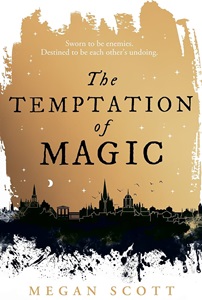
Title: THE TEMPTATION OF MAGIC
Author: Megan Scott
Pitch: It follows an art history student who hides her true abilities from the organisation that rules all supernaturals. But when the organisation sends their best assassin to her town, she risks losing her heart, and being discovered. Because if he figures out what she is, he’ll hunt her next.
Find on Goodreads.

Title: THE BOY WITH THE HAUNTED HEART
Author: Morgan Owen
Pitch: Now in charge of the government they overthrew in The Girl With No Soul, rebel’s daughter Ruby and dictator’s son Oliver attempt to keep peace in Providence, but a faceless assassin drives Oliver to darker forms of soul magic as he tries to prevent a future tragedy.
Find on Goodreads.
What do you think is special about UKYA?
Jennifer Burkinshaw: Across the range of genres, I think it’s the sheer quality of the story telling and editing – a tight focus on the heart of the book and great authenticity of feeling.
Megan Scott: I think there are so many incredibly talented authors in the UK, so it can feel like a bit of a hidden treasure trove!
Morgan Owen: My TBR list never ends because every new release sounds like a must-read! The UKYA community is very engaged and supportive. The time and attention that goes into uplifting writers is immense. UKYA is always innovating and exploring new ideas. It’s also getting more diverse, which means better options for everyone.
What distinguishes a YA book from middle grade or adult? Why do you think it’s so popular at the moment?
Jennifer Burkinshaw: At its simplest, I suppose a YA book is different from older or younger readerships because of its teenage characters. These characters are going through that period of most intense, and emotional change and of first experiences all of us either remember, ARE going through or still have ahead of us. YA books include the whole array of genres and told in the most vivid and dramatic style – what’s not to like?
Megan Scott: Besides the age categories, the ‘coming of age’ storyline is its biggest defining factor.
Morgan Owen: YA has room to delve into complex world issues while still retaining a youthful core of optimism and empowerment. The world grows but the search for identity and belonging stays central to the plot. I love the uniquely creative ways that big themes like fascism and bigotry are interpreted and explored in YA and how they reflect our own reality without being too bleak. A lot of younger readers are looking for a balance between escapism and meaningful reflection and YA has always done that so well. I think most YA is written to make the reader feel like it’s possible to change the world, whereas a lot of adult fiction is rooted in our acceptance of the world as it is.
There has been a lot of talk about the adultification of YA and what that means for teen readers. What sort of balance do you think UKYA strikes between teens and older readers? Do you think this balance needs to shift in a particular direction and how?
Jennifer Burkinshaw: There’s such a massive difference between readers on their early and late teens/early twenties, isn’t there and UKYA caters for all of these? At present there does seem something of a swing towards stories with more adult themes, including some real darkness in myth retellings, for example. I suspect there is still need for more stories suitable for 12 – 14 year old.
Megan Scott: I think there needs to be a huge variety, honestly! Since the age category of the genre includes a range from 13-18 year-olds, what you read at 13 isn’t what you’ll likely be reading at 18. Some teens have experienced great loss, great responsibility and more romantic relationships than others. I don’t think any one way is right. The best thing an author can do is write what *they* wanted to read as a teen, since everyone is so different! I’d also love to see more of an expanse of New Adult in coming years to help this bridge, though, so teen readers who are 17/18+ and getting ready for the likes of university etc can read more of those type of stories before launching into fully adult character/storyline if they’re not ready for that. Leaving your teens and getting into your twenties is still a huge ‘coming of age’ moment and it deals with so much! I’d love to see it explored more, and I’ve heard more younger YA is equally as needed. I think there’s so much room to expand the category!
Morgan Owen: I think there’s room for both younger ‘Teen’ YA and YA that also appeals to adult readers but the priority should be on young readers. The preteen and early teen reader isn’t well catered to, especially those who aren’t interested in romance. The jump between MG and YA can be jarring from a reader perspective although there is some crossover. I’d love to see publishers targeting the Teen end of the market more intentionally, defining it as its own genre and supporting titles to fill that space. At the moment fantasy romance is prioritised (I say this as a fantasy romance author!) but this isn’t necessarily reflective of the wider Teen audience. The book market should support readers consistently throughout their lives so that breadth of choice should be continuous.
How do you think UKYA will evolve in the coming five years?
Jennifer Burkinshaw: I wonder whether there might be more verse and graphic novels and an even greater range of genres.
Megan Scott: I hope it will expand, and that more UKYA authors can find success in the US as well.
Morgan Owen: I’m really interested in interactive storytelling, like the Choose Your Own Adventure books of old. As technology advances and the way we consume stories changes, I think publishing will explore the idea of digital books with multiple endings in which the reader’s choices matter. This could generate lots of interesting discussions about what storytelling is and what purpose it serves. I think UKYA will remain popular as publishing continues to diversify. Young people will keep turning to fiction to make sense of an ever-changing world and to find their place in it.
For more interviews, check here and don’t forget to check instagram (here) for book recommendations from these authors and more!
 #UKYASpotlight
Leave a comment