
#UKYASpotlight is a month-long event across social media to promote YA books by British and Irish authors (resident and national). For more information, click here.
About the Authors

Dawn Kurtagich an award-winning horror and suspense novelist. Some of her books have been Buzz Books, YALSA Top 10 picks, Audie Award nominated, Earphone Award winners and optioned for TV! Six of her seven novels have been pre-empted, which still amazes her! Her novels are gothic, spooky and intriguingly formatted, and you can find out all about them on her website. Her debut adult novel, a chilling Welsh gothic, came out in August 2024.
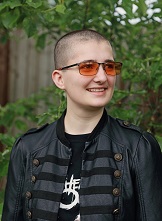
Finn Longman is an author and medievalist, originally from London. They write YA and Adult fiction, with a particular interest in stories that transgress genre boundaries, challenge narrative conventions, and explore difficult moral questions. They live in Cambridge, where they’re a PhD student researching medieval Irish literature.
.

Kate Dylan is a video editor by day, science fiction and fantasy author by night. Her love for creating new worlds is fuelled by a steady diet of coffee, books, and Marvel movies, and when she’s not telling stories, you can find her haunting London cafes like an over-caffeinated ghost.
.
About Their Books:
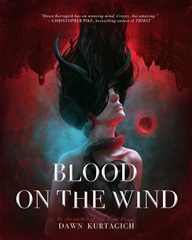
Title: BLOOD ON THE WIND
Author: Dawn Kurtagich
Pitch: Continuing on from where TEETH IN THE MIST left off, Roan must deal with the consequences of her bargain with the devil, Zoey must resist temptation, and Len will be pushed further than she thought to save the girl she loves.
Find on Goodreads.

Title: MOTH TO A FLAME
Author: Finn Longman
Pitch: Traumatised teenage assassin Isabel Ryans has escaped Espera, the closed city she grew up in, and now faces the uncertainty and hope of life outside the guild that trained her to kill. But the city of Espera is changing, and its search for justice won’t stop at the city walls.
Find on Goodreads.
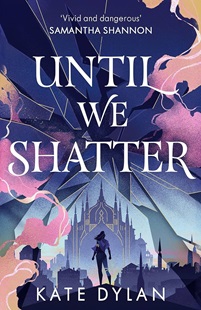
Title: UNTIL WE SHATTER
Author: Kate Dylan
Pitch: Until We Shatter is a witchy fantasy heist across two worlds with colour magic, perfect for fans of Six of Crows, Red Queen, and A Darker Shade of Magic. It’s got messy bi-girls, pretty lying boys, a disastrous found family, and a shadow world that shatters people to pieces.
Find on Goodreads.
What do you think is special about UKYA?
Dawn Kurtagich: There is a particular vibe that UKYA has that feels wholly unique and special.
Finn Longman: When it comes to contemporary fiction, it’s a chance to see compelling, powerful stories framed in terms that UK teenagers can understand and relate to: a world that’s familiar to them, challenges they’re living through, social dynamics they recognise. More broadly across genres, UK authors have their own unique perspectives and approaches (as do writers from all backgrounds) that speak both to readers who share that context and those from elsewhere. English-language media can be very US dominated, and it’s valuable to keep nurturing and sharing other perspectives.
Kate Dylan: The sheer breadth of stories. Despite the adultification we’re seeing in YA across the board, UKYA still makes space for stories aimed at teen readers alongside the older side of the readership. Which is important as teens need and deserve stories written with them in mind.
What distinguishes a YA book from middle grade or adult? Why do you think it’s so popular at the moment?
Dawn Kurtagich: YA is such a wonderful transitional phase in our lives. It’s the borderland between the future self you’ll become and the childhood self you’ve already left behind. There’s magic in transitional places, sort of like fairy circles and Halloween.
Finn Longman: Being a teenager is a constant process of transition and a constant state of contradiction. You’re becoming more independent and on the cusp of making large decisions about your life, but lack control and autonomy on an everyday level. You’re neither a child nor an adult and still finding your footing in that space, taking risks and trying new things as you navigate the currents of your own needs and desires. Good YA speaks to those contradictions and those new experiences in a way that recognises both the growing independence *and* the constant tension of being denied autonomy even by well-meaning people and systems. YA also starts to pose more challenging ethical and moral questions than MG, reflecting and respecting its readers’ capacity to grapple with these issues, but I would say there’s a greater need for answers and guidance on these questions than in adult fiction, which can simply pose them and leave readers to work through them based on their own experience and knowledge. Teenagers are just as capable of exploring difficult topics as adults, but might need more support and guidance to do so, due to a relative lack of life experience and the emotional maturity that comes with time. As someone who writes both YA and Adult, I find myself posing a lot of the same questions in my stories, but taking a somewhat different approach to answering them.
Kate Dylan: For me, it’s pace and themes! YA tends towards pacier stories––especially in the fantasy space––and they’re usually focused on coming of age themes. Then, of course, there’s the obvious signifier, which is that YA stories feature characters who are teens, as opposed to MG, which features younger characters, and adult, which can feature characters of any age, but generally tackles different themes through a different lens.
There has been a lot of talk about the adultification of YA and what that means for teen readers. What sort of balance do you think UKYA strikes between teens and older readers? Do you think this balance needs to shift in a particular direction and how?
Dawn Kurtagich: I don’t necessarily think it’s up to adults or even authors to decide. Teens will pick up what they are drawn to.
Finn Longman: I think UKYA has been less affected by this issue than USYA, which often skews older (in part due to the slight difference between “9-12” as a UK category and “MG” as a US category for what comes before, and the different splits in their schooling system). I still see it a lot, though, particularly in fantasy, whereas characters are teenagers in name only but there’s little about the story that really speaks to the teenage experience. But people often talk about this issue as though the main problem is sex and romance in books, which I find problematic. I do think we need more books for ALL ages which don’t focus on romantic and/or sexual relationships, and stories about friendship shouldn’t be relegated to younger children’s literature only. But sex in YA doesn’t automatically make it “older” than a YA novel without it (I write YA with zero sex, and that doesn’t mean I’m writing primarily for younger readers – far from it). I think a much bigger issue in terms of prioritising adult readers of YA over teenagers is a practical and material one: special hardback editions, book boxes, exclusive collectors’ items, and the ever present drive towards preorders and early sales rather than longer term career-building for authors. Teenagers often don’t have the money for these, or their own debit card to enable online purchases and pre-orders; many are dependent on libraries and secondhand books and gifts. A relentlessly consumerist approach to books as physical items will always favour the audience with buying power: adults with jobs, not teenagers in school. And measuring authors’ careers by how many sprayed edge hardbacks they can sell means the ones who will be successful are the ones whose work appeals to adult YA readers, rather than the ones read by teenagers. So much of this is a marketing and publishing issue. I don’t think UKYA is as bad as USYA on this front, especially as many books do come out in paperback only, but I see a shift towards this culture due to the predominance of social media as a marketing tool, and I think we’re heading in the same direction.
Kate Dylan: I do think the balance should shift back to being a category for teens––or at least for the market to support those stories, and the authors writing them, as well as it supports those writing upper YA. But for that to happen, the adult genres would also need to change. Currently, we’re seeing far too many stories––especially those written by women, about women, or containing romance––get pushed into YA regardless of their content or themes, and I think that’s been a huge contributing factor to the issue.
How do you think UKYA will evolve in the coming five years?
Dawn Kurtagich: That is hard to say, but I look forward to seeing where it goes.
Finn Longman: I hope that we’ll continue to see a growth in diverse stories, especially more stories about disability and more nuanced and interesting approached to other forms of marginalisation. I also hope to see more recognition for the people already writing those stories, and more smaller presses putting out interesting books that challenge the status quo and the big publishers. I fear current marketing and publishing trends will actually result in more celebrity-fronted formulaic stories with little that’s new or innovative to say in the category, but I hope I’m wrong.
For more interviews, check here and don’t forget to check instagram (here) for book recommendations from these authors and more!
 #UKYASpotlight
Leave a comment