
#UKYASpotlight is a month-long event across social media to promote YA books by British and Irish authors (resident and national). For more information, click here.
About the Authors
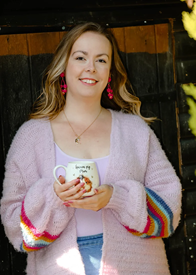
Rebecca Anderson lives in Hertfordshire with her partner and beloved guinea pigs, who she is obsessed with (the guinea pigs, obviously). She is a twin, has a degree in graphic design and is a practising counsellor with too many creative hobbies to list. Her writing explores sex, relationships, friendships and mental health, which she tackles with honesty and humour. By keeping the curtain up during moments of vulnerability, she hopes to empower and validate those who feel alienated by heavily romanticised accounts of sex – especially teenagers who are beginning to learn about consent and what a healthy, intimate relationship looks like.

Jonathan Stroud is the author of three internationally bestselling series: the award-winning Bartimaeus books, which have been published in 36 languages; the critically acclaimed Lockwood & Co., which has been turned into a No. 1 hit Netflix series; and the adventures of the outlaws Scarlett and Browne. His other novels include Buried Fire, The Leap, The Last Siege and Heroes of the Valley. Jonathan lives in Hertfordshire with his wife and three children.

Daniel Tawse is from Tynemouth, near Newcastle. He spent his childhood going on adventures in the wilds of Northumberland, and teenage years writing diaries about how much he didn’t fit in. Nowadays, Daniel spends his time turning those diaries into stories for a wider audience, and is an advocate for queer representation and visibility in the arts. Through his work, Daniel aims to provide authentic queer characters to demonstrate positive and relatable queer voices for all readers. Daniel’s joyfully queer debut YA novel, ALL ABOUT ROMAN(CE), was published by Hachette Children’s Group in July 2023, with his next – EMMY STAR IS SO EVERYTHING – published in August 2024. Elsewhere, Daniel has studied theatre at the Arts Educational Schools, London, and holds a master’s degree in British History from the University of Northumbria.
About Their Books:

Title: OFFICIALLY LOSING IT
Author: Rebecca Anderson
Pitch: When 17yo Rose tries and fails to lose her virginity to boyfriend Joel, she must navigate dismissive doctors, pelvic floor physiotherapy, and surgical intervention – while trying not to lose the love of her life, the respect of friends, and her dignity in the process.
Find on Goodreads.

Title: LOCKWOOD AND CO
Author: Jonathan Stroud
Pitch: Join Lockwood & Co., a psychic detection agency run by three young Agents – Anthony Lockwood, Lucy and George – as they battle the ghosts, spectres and ectoplasm threatening London. This addictive series is an electrifying, witty and seriously spooky adventure, which has been adapted for TV by Netflix.
Find on Goodreads.
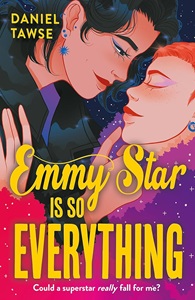
Title: EMMY STAR IS SO EVERYTHING
Author: Daniel Tawse
Pitch: After being dumped, Rocket Middleton decides it’s time for a new adventure at drama school. When he arrives, the school is awash with gossip; Emmy Star, the musician of the moment, is on campus. Rocket and Emmy meet, and sparks fly. But could a superstar really be interested in Rocket?
Find on Goodreads.
What do you think is special about UKYA?
Rebecca Anderson: A tough one to answer, but for me, I love the tone of UKYA, especially when it comes to humour. I may be biased, but I think that good old British humour is the best there is, and for me, there’s something so unique and entertaining about that dry, witty, borderline self-deprecating tone that UKYA does so well.
Jonathan Stroud: It’s got such infinite variety! It covers every conceivable subject, genre and perspective; it’s ceaselessly inventive; it understands the importance of a good story; it’s exploratory, experimental and unafraid.
Daniel Tawse: UKYA is incredibly diverse, with books about many different characters and experiences. I think this makes it terribly special, and I feel very lucky to take up space within this genre. Books can be a great way to explore the complexities of being a young person, and provide a safe space to do so too, which I think is something really important and special about UKYA.
What distinguishes a YA book from middle grade or adult? Why do you think it’s so popular at the moment?
Rebecca Anderson: I was going to say themes, but I’m not sure that’s entirely accurate, since some middle grade books do tackle serious and important topics. However, the way we approach these issues in YA is different. Writing YA often allows us to explore subjects in a deeper and grittier way. This doesn’t mean we handle these topics any less carefully or sensitively, of course. Through writing Officially Losing It, I’ve realised that you can address even the most serious and taboo issues effectively as long as you get the tone just right. It was a real challenge to find that sweet spot I was after – raw, honest and unfiltered, yet something publishable and appropriate for the readership.
Jonathan Stroud: Adults buy adult books; adults (very often) choose middle grade books for their children, too. In both cases, there’s a certain rigidity and predictability about the individual’s preference: they know who they are and what they like. But YA books are there to be chosen by young adults themselves – and that means they must be as fluid, flexible and myriad as their modern readers are. Standing by the YA shelf should be like standing at a crossroads, with innumerable paths leading onwards: the choice of books mirrors the choice of possibilities for the future you.
Daniel Tawse: YA has traditionally been seen as a bridge between middle grade and adult, and in some ways this is true, but I think it’s really com into its own as a genre in recent years, developing a distinguishable scope and voice. I think the YA audience are, now more than ever, turning to books for solace and maybe even guidance in their own lived experiences, and YA books have the rare ability to deliver strong messages to readers in a non-threatening way. In a world where everything is fast paced and loud, I can understand how a young person might feel overwhelmed. A book provides an opportunity to slow down. A book might be the only the only steadfast and reliable thing in a young person’s life, and so I can understand why YA is so popular at the moment. From my own experience growing up queer, I only wish I had access to the YA books that exist now. I think they would have really helped me in understanding my identity.
There has been a lot of talk about the adultification of YA and what that means for teen readers. What sort of balance do you think UKYA strikes between teens and older readers? Do you think this balance needs to shift in a particular direction and how?
Rebecca Anderson: Again, using my own book as an example, I’ve noticed that a lot of adults are reading and enjoying it, describing it as a nostalgic journey and a walk down memory lane – back to those days when emotions were intense and insecurities were high – which is great to hear. Although I primarily wrote the book for teenagers navigating this stage of their lives, hoping they’ll feel seen and not alone, the themes and feelings explored in the book are universal, no matter how old you are. In terms of the balance, I guess this goes back to the previous question and getting the tone right and appropriate for a younger audience. Although saying this, I’m more than aware that what is ‘appropriate’ is subjective, given what teens are often exposed to online in these days of the internet and social media!
Jonathan Stroud: I think there’s sufficient variety in UKYA that every reader will find books that offer the correct balance for them at any given time. Personally speaking, when I write a story, I try to create something that will appeal to me as a middle-aged adult, but which would also have appealed to me as a twelve- or thirteen-year-old. It’s a kind of double-focus, both objectives interlinking. If I can satisfy both versions of myself, I’ve a decent chance of satisfying a broad readership too.
Daniel Tawse: I think YA books, and specifically the diversity of their characters and subject matter, can help to guide younger readers. There is a duty of care when writing stories for young people, for sure, and this opportunity to help and guide is a responsibility I take very seriously. I think YA is unique in that the age range it covers – predominantly ages 12-18 – are, arguably, the years of a person’s life when the biggest change happens, certainly emotionally, and so the books available need to reflect this. I don’t think the balance needs to shift in a certain direction, rather it needs to spread to be as inclusive as possible. There’s room for all experiences, and so UKYA should reflect this.
How do you think UKYA will evolve in the coming five years?
Rebecca Anderson: I’m not entirely sure, but I hope that it will continue to address important topics. I also hope editors and publishers will take the necessary risks to tell vital stories and work towards creating a diverse collection of books where every reader can find themselves represented. One can but hope!
Jonathan Stroud: It will continue to mirror the hopes, fears, demands and dreams of its readers, which means it’ll be endlessly, beautifully enriched.
Daniel Tawse: You never really know. I think genres come and genres go – certain things have a moment, and then quieten down for a while. I think we’ll see more experimentation in crossing genres, I think we’ll see more mainstream titles that maybe even cross into adult audiences. I hope we’ll see more UKYA authors enjoying the same successes as our American counterparts.
For more interviews, check here and don’t forget to check instagram (here) for book recommendations from these authors and more!
 #UKYASpotlight
Leave a comment