
#UKYASpotlight is a month-long event across social media to promote YA books by British and Irish authors (resident and national). For more information, click here.
#UKYASpotlight might be officially over for 2024, but we thought it would be fun after a month of grilling authors on THEIR opinions on UKYA if we answered those questions ourselves.
Each year, we want our questions to interrogate the state of UKYA from authors’ perspectives, getting as many views on it as possible. This year, one of the biggest topics being discussed about YA in general is “adultification.” Therefore we built the interview questions around the subject of age ranges and how UKYA fits into that.
About Us

Sifa Poulton is a nuclear physicist by day, studying for a PhD with the University of Surrey and the National Physical Laboratory. By night, she is a book blogger, avidly devouring any book she can get her hands on. She is the type of autistic person who does genuinely like spreadsheets so undertakes a lot of the admin for UKYASpotlight.
.
.
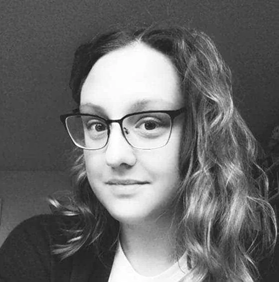
Creator of UKYA Spotlight, Beth Knight is a chronically ADHD Cat mama, who can’t stop buying books, and needs to finish many writing projects. She lives and teaches English in a boarding school in deepest darkest Yorkshire with her feline overlord void.
.
What do you think is special about UKYA?
Sifa Poulton: The community it has fostered. This collection of authors and readers across the UK and Ireland have welcomed us from the start. They have been such a big support of this frankly insane idea we threw ourselves into a few years back. And this project is about giving something back and also getting more people to discover it. There’s always an open door with UKYA.
Beth Knight: UKYA is a unique, supportive community generating brilliant stories that often gets missed in the wider market. It’s a massive shame because it’s a hotbed of creativity and tackle issues for Young People from a UKI perspective which is very different to USYA. Don’t get me wrong there’s loads of good USYA, I have a lot of friends in the USYA community but on a cultural level we’re fundamentally different and part of preventing us from becoming a homogenous mass is our literature, putting our perspectives out there, creating a something that kids in a British Secondary school or sixth form have a chance of connecting with – especially in the contemporary market. I remember reading the princess diaries and other USYA as a teenager, it was so exotic and I had to look up half the stuff they were talking about – it was a universe away from my experience in deepest darkest Yorkshire and it frustrates me that the situation hasn’t changed especially when there’s such a diverse range of incredible voices from every kind of background writing incredible stories.
What distinguishes a YA book from middle grade or adult? Why do you think it’s so popular at the moment?
Sifa Poulton: For me, the distinguishing feature for the age ranges is the emotional lens. How you process the world changes as you age and so the different age ranges mirror this with how they present the journeys their characters go on. A book’s age range is about that emotional frame of reference it happens within.
I think YA is so popular for a few reasons. The one I don’t think we talk about enough is the hope in YA. The world is a mess and frankly it can be hard to look it and find hope for the future. But in YA, the protagonists is often fighting back against some system of injustice – be it an evil fantasy king, a dystopian government, or a local school board. And they change the world. There’s something very powerful about that.
Beth Knight: YA books have to strike a very careful balance, they have to have a rich world, complex themes, well developed characters – teens are discriminating and have sophisticated tastes – but they expect pace. Everything has to move the plot on – Poe 200 years ago called it totalism – it creates a level of engagement and connection with story and characters that is harder in a 600 page book. There’s also a hope and positivity to YA, young people are hopeful, they still want to believe the world can change and that they can do it. A lot of adults – particularly adult men – sneer at the common tropes having become old and jaded and also unwilling to accept that one kid or a group of kids can change the world and for a lot of readers, even those 30-40 year old millennials who refuse to accept that they’re not young adults any more find greater joy in hopeful stories than the uncertainty and ennui of stories in General Fiction, teenagers are going through so many first it keeps something of the magic of those first times alive and teenagers find kindred spirits and tales and characters that are experiencing the same things and give them the chance to explore and navigate the world.
There has been a lot of talk about the adultification of YA and what that means for teen readers. What sort of balance do you think UKYA strikes between teens and older readers? Do you think this balance needs to shift in a particular direction and how?
Sifa Poulton: The interesting thing about seeing all the authors’ replies to this was realising how different people interpret the question. “Adultification” means something different to everyone.
For me, the term speaks to the fact that YA books are increasingly bought, edited, and marketed for readers who are not teens but are 20s-30s (aka our age bracket). This is because we have a greater purchasing power than said teens and publishing is a business. The consequence is that the emotional lens of this book can be very adult.
This is not to say that books for teens shouldn’t tackle big, difficult topics. They absolutely need to do so – being a teen doesn’t magically isolate you from the worst parts of life. This is why we need a teen/YA section: teens need to be able to go to the library or bookstore and find books where they can see themselves and their challenges. But crucially, to see this through the lens of someone their age, and I don’t think YA is doing that enough at the moment.
In terms of where I think UKYA is on this market spectrum, I think it’s doing much better at publishing books for that 12-15 (“teen”) range than the US. I have not read a USYA book in about five years that I would put in that part of the category, but I have read some in UKYA. I think we need to spotlight them more so these books reach their audience.
Beth Knight: Honestly YA shouldn’t be catering to its older readers, at 33 I am reading more books for grown ups because, loathed as I am to admit it, I am a grown up having grown up experiences. MG doesn’t cater to the adults who inevitably read it with their children, nor do picture books. Similarly, fiction of all genres above YA doesn’t censor itself – it assumes its audience. If you’re reading YA as an adult it should be to relive those years, to experience the joy and exhilaration of those firsts, if you want smutty YA as a grown up I have concerns.
However, the issue I think is that YA is an age category of change and the process of transitioning into adulthood and adult experiences and each experience is unique. Each parent has different ideas of what it’s ok for their kids to read at different ages. YA needs to be careful, YA needs to strike the balance of what is appropriate for both someone aged 12 and someone age 18 to read. Personally YA should not be explicit sexually, obviously teens in books do do it. Teens do it. But it doesn’t need to be on page in granular detail in a book for ages 12 and up. If a reader is ready to be engaging in adult activity they’re also ready to read adult books. Absolutely fade to black, 12 year olds, especially these days, aren’t stupid. Modelling healthy relationships and, if a relationship is toxic, addressing that. YA as a category, as Finn Longman put it in a recent tumblr post , requires hand holding the reader to a certain extent. Teens are still learning the world, still working it out. YA’s job is to reflect that, to aid that. And that’s the balance making sure you explore and touch in the real world adult issues that young adults are being impacted by and experiencing for the first time without giving the youngest likely reader more than they are ready for.
How do you think UKYA will evolve in the coming five years?
Sifa Poulton: The conversations around adultification are happening, and I think we are going to see much needed (but slow) change about it. We have already seen some imprints in the UK split their marketing into YA and teen, and I think this will continue. I also think that adult spaces are going to continue increasing their marketing of the more YA-esque titles (in terms of narrative style and pacing) in their catalogues. This should alleviate some of the shelf-space pressure on YA, opening it up for more teen books.
Genre wise, I think romantasy will continue to dominate for a few years. It will burst at some point, and personally, I am rather looking forward to it. Romantasy is fun and got lots of people reading and even after the bubble bursts it will persist for all these reasons. However, when this bubble bursts, it will allow SFF to once again show off the vast range of sub-genres out there. They deserve more love!
Beth Knight: UKYA is already delightfully varied and has great stories from huge range of authors reflecting a huge range of socioeconomic backgrounds and the racial melting pot of the modern UK. I would like to see more books targeted specifically at boys. Straight, cis, boys just don’t read. As an English teacher in secondary getting boys to read, or admit they read if they do is nigh on impossible. “Miss, I just want to game”, ‘Miss, reading is so boring”.
As I browse through the library the books for boys on topics boys enjoy are so sparse after MG. Every world book day it’s a fight to get them to pick something that isn’t Dogman, or Wimpy kid, or David Williams. There’s nothing wrong with reading middle grade, if you are middle grade age. I would love to see more Barrington stoke style age appropriate books for reluctant or dyslexic readers, I want to see students being able to access audiobooks from school libraries – audiobooks count as reading and if you can listen to it privately on your headphones you’re less likely to get abuse for it. It saddens me that this is where we’re at. I also want to see an evolution of publishers pushing good UKYA into supermarkets where kids and parents will see it instead of the same old US best sellers and MG titles. Supermarkets seem to think teens don’t read – well they won’t unless the provision is there and I guess we need to get the promotion into teen spheres like TikTok, getting bookstagramers and booktokers to engage with UKYA as well as the same few big booktok books.
For more interviews, check here and don’t forget to check instagram (here) for book recommendations from these authors and more!
 #UKYASpotlight
Leave a comment