The Annual Event is a month long celebration of all things UKYA, highlighting books by British and Irish authors (resident and national) and asking their views on topic affecting the community. All views are the author’s own.
About the Authors:
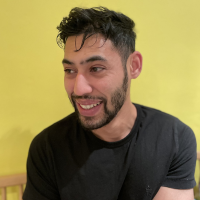
Nathanael Lessore is an author who has been tasked with writing a short bio less than 200 words. Challenge accepted! He is from Peckham, South London, and one of eight kids to Malagasy and French parents. Nathanael wants to show through his books, that growing up on an estate was fun, and the strong sense of community made it a wonderful place. Nathanael can’t dance, and he is a man of science and strawberries.
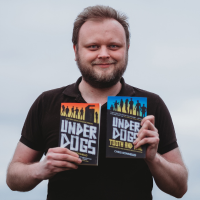
Chris Bonnello is an autistic advocate, award-winning writer and international speaker, also a novelist and a former teacher. Since 2015, his advocacy venture – where he speaks about the importance of neurodiversity from both a professional and personal perspective – has seen him deliver speaking engagements as far away as India and Sydney Opera House, in addition to attracting over 175,000 Facebook followers to his platform ‘Autistic Not Weird’.
Bonnello is the author of six books, including the Underdogs novels – a dystopia war series with heroes from a special school (the second of which was joint runner-up in The Guardian’s Not The Booker Prize) – in addition to neurodivergent children’s fiction and nonfiction.
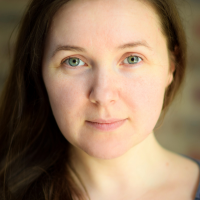
Raised on a healthy diet of fantasy and fairy tales, Bex Hogan has spent much of her life lost in daydreams. Writing her stories down was a natural progression and now she enjoys sharing her time between living in the real world and escaping to her imagination. A Cornish girl at heart, Bex now lives in Cambridgeshire with her beautiful family. She writes both YA fantasy (NETTLE, BLACK HEAT, VIPER, VENOM, VULTURE) and middle grade fantasy (BRONTE TEMPESTRA AND THE LIGHTNING STEEDS, BRONTE TEMPESTRA AND THE ICE WARRIORS, BRONTE TEMPESTRA AND THE WEATHER WITCH).
About their books:
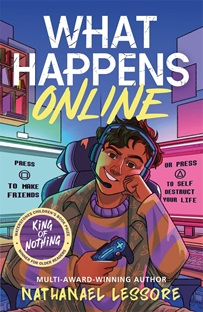
Title: WHAT HAPPENS ONLINE
Author: Nathanael Lessore
Pitch: Fred is an anonymous, popular online gamer. But at school and at home, he’s just Loser Fred. Sick of his bullies, Fred uses his online popularity to take them down, and build himself up. But navigating both worlds is tricky!
Find on Goodreads. Find on Bookshop.org (affiliate link).
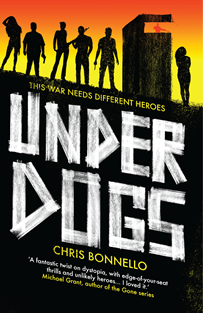
Title: UNDERDOGS
Author: Chris Bonnello
Pitch: Britain as we know it lies destroyed. The hope of a trapped nation lies in a tiny number of freedom fighters hidden in the abandoned countryside – most of whom are teenagers who escaped the attack on their special school. Seen as no more than misfits and ‘problem children’, this band of fighters could never have imagined the responsibility that now rests on their shoulders. After a lifetime of being defined by their weaknesses, the teenagers must learn how to play to their strengths, and become the best they can be in a world that has never been on their side.
Find on Goodreads. Find on Bookshop.org (affiliate link).
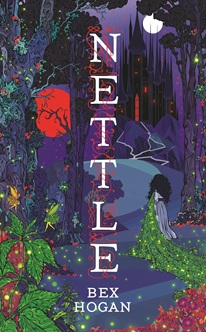
Title: NETTLE
Author: Bex Hogan
Pitch: When Nettle is stolen away to the faery realm one night, she meets the faery King who tricks her into making an impossible deal – if she completes three tasks for him, he will heal her dying grandmother. As Nettle struggles to complete her quest, she must also try and battle her growing feelings towards Conor, the human stableboy and Ellion, a shadow faery, both of whom help her along the way.
Find on Goodreads. Find on Bookshop.org (affiliate link).
In your opinion, how has social media helped foster the UKYA community?
Nathanael Lessore: Tiktok has played a huge part in how YA books are found and consumed. Young Adults are on social media, sharing thoughts and opinions, and that’s where books are reaching them.
Chris Bonnello: Among other things, it’s been useful for connecting readers directly to authors! Not only are readers able to form their own communities based around YA fiction that they love- they can follow authors, ask questions and leave comments- it’s made the world of YA a lot more accessible.
Bex Hogan: Social media, at its best, brings like-minded people together, creating real friendships. It allows people to connect over something they love, and share that passion. And it allows people to discover books they may not otherwise find.
In which ways do you think we can responsibly use social media to introduce YA titles to teenagers? How can we go beyond social media to reach them, given conversations in several countries around re-thinking current legislation on such platforms for minors?
Nathanael Lessore: Not sure. I guess keep doing what you’re doing, and rectify anything that might be irresponsible? Also, if the author is comfortable with it, have the author feature so people know they’re legit.
Chris Bonnello: One approach that could be taken may be using social media to share the joy of reading that underlies YA fiction. For example, if a book (like mine) involves war and death, there’s a level of responsibility in the promoting of it- however, if the focus is on the enjoyment (and in my case, the empowerment of neurodivergent heroes) there’s an opportunity to share positive messages about the value of reading.
Outside of social media, it may be time to think back and remember what we did before the age of social media: communicate with libraries and schools, and encourage more author visits to schools. But there will also still be opportunities to introduce adults to titles via social media (adults making a non-insignificant proportion of YA readers!), and perhaps there are routes there to encourage such adults to recommend the YA books they love to younger readers.
Bex Hogan: I would love to see more established accounts aimed specifically for teenagers that they can safely access, filled with books actually written for them. Beyond social media, the importance of school librarians has never been greater, as they know their students and can get the right books into the right hands.
How do you think the YA market is going to change thanks to emerging technologies like AI?
Nathanael Lessore: Probably not for the better.
Chris Bonnello: I’m not sure many people can answer this question with full confidence! Although we may see an evolution in the themes of the YA books that are written, and publishers thinking very carefully about how (or whether) to utilise AI in the production or even marketing of their books.
Bex Hogan: My fear is that eventually the market will be flooded with cheap AI produced work, that appears quickly and to demand. My hope is that readers will continue to want quality, human-created stories filled with heart. I think we may end up with a battle between the two.
What steps would you like publishing needs to take in response to the rise of AI?
Nathanael Lessore: Reject it wherever and as much as possible. It’s like a VAR, the negatives that come with it outweigh whatever positives. At the very least, understand where we are, and put laws/contract stipulations in place to protect people and creativity.
Chris Bonnello: Avoid altogether the type of generative AI that does work that artists, writers, cover designers and so on have previously been doing. They definitely want to avoid sending the wrong messages about the value they place on creative people.
Also, there will inevitably be authors attempting to use AI to write stories they intend to publish. It may be essential to become savvy about what this content may look like, so they know the authenticity of the writers they work with.
Bex Hogan: I’d love to see clauses in contracts protecting us authors from our work being used to train AI. I’d love to see our copyright upheld and defended. And I think more of an effort to bring down pirate sites should be focused on, as AI is using that content freely and with no consequences.
Thank you all! For more interviews, check here and don’t forget to check instagram (here) for book recommendations from these authors and more!
 #UKYASpotlight
Leave a comment