The Annual Event is a month long celebration of all things UKYA, highlighting books by British and Irish authors (resident and national) and asking their views on topic affecting the community. All views are the author’s own.
About the Authors:
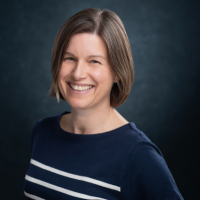
Nicola Garrard’s debut novel, 29 LOCKS (HopeRoad, 2021), was shortlisted for the Lucy Cavendish Fiction Prize and the Mslexia Children’s Novel competition, and longlisted for the Branford Boase Award 2022. It was picked by Suzi Feay (Financial Times) for their ‘Best Books of 2021’. Her second novel, 21 MILES (HopeRoad, 2023) was described by Aoife Fitzpatrick as ‘spectacular and unforgettable.’ Nicola has appeared at the Hay Festival of Literature and Arts, Chichester Festival and Petworth Festival Literary Week and is a regular guest on BBC Radio London. She was a speaker at the Hay Festival 2024 schools’ programme and the UKLA International Conference 2024. Her words and poetry have been published in The Frogmore Papers, Mslexia, The Guardian, the W&A Yearbook Guide to Getting Published and by IRON Press.
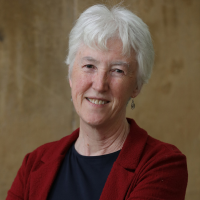
S. J. Baker teaches English in a secondary school in Hull. Stories loom large in her life: after a degree in English Literature she trained as a teacher in English and Drama, spending her career sharing her love of story-telling with young people. Reading aloud to her own children as they grew up confirmed her in the belief that we learn much about life and how to live well from the books that we read. She completed her debut novel on long train journeys to support elderly parents – journeys she came to love as guilt-free writing opportunities (she never actually missed her station, but came close once or twice). She lives in East Yorkshire with her husband and two exuberant black Labradors.
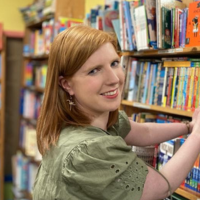
Méabh McDonnell is a writer and bookseller, specialising in children’s and YA books. Her works tends to reflect a combination of the books she wants to see on the shelf and the books she would have loved at that age. She live in Galway, Ireland with her husband in a house beside a castle (which provides no end of inspiration!)
About their books:
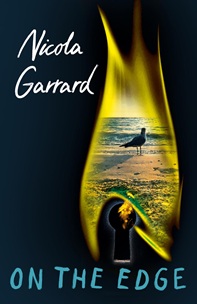
Title: ON THE EDGE
Author: Nicola Garrard
Pitch: What happens when the summer ends? Rhys lives in a small town on the Devon coast, where seasonal work dries up as winter storms hit, housing is hard to come by and livelihoods are threatened by distant bureaucrats. Life is much harder for Rhys and his two younger brothers than tourists can possibly know. It is only when surfing that Rhys finds solace in the beauty around him: the crashing waves, towering cliffs and sandy beaches. But when that solace is taken, his tinder-dry rage is soon ignited. Determined to defend his family from a life blighted by social neglect and poverty, Rhys is drawn to Dodo, a radical political activist. Before long, Rhys’ actions spiral out of control, with dire consequences for himself and those he loves.
Find on Goodreads. Find on Bookshop.org (affiliate link).
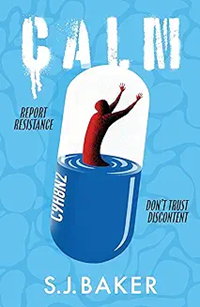
Title: CALM
Author: S. J. Baker
Pitch: In a near-future Britain, the state keeps control by drugging the nationʼs water supply. The result? A population lulled into apathy. But the drug has stopped working on Owyn. It never worked on Tiegan. Resistance is a crime, and they’ve been found out. Both are fighting for survival, in a society which will do anything for a quiet life.
Even kill.
Find on Goodreads. Find on Bookshop.org (affiliate link).
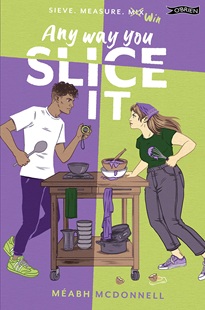
Title: ANY WAY YOU SLICE IT
Author: Méabh McDonnell
Pitch: For Carrie Quinn, baking is more than a hobby, it’s her future. So when her chances of winning the exclusive Castlecreagh Baking Competition are dashed by her (annoyingly handsome) sworn nemesis, Dara Harte, she knows she can never forgive him. However, when he comes to her with an opportunity for the two of them to work together, she realises she might just have a shot at getting that future after all. Will she be able to put her feelings aside long enough to give them both a second chance? The egg timer will tell…
Find on Goodreads. Find on Bookshop.org (affiliate link).
In your opinion, how has social media helped foster the UKYA community?
Nicola Garrard: It’s a wonderful place to find recommendations and connect with authors. I have bought more books by independent publishers as a result of social media, which has levelled the publicity playing field for small publishers.
S. J. Baker: It’s been a huge influence: I’ve made connections with YA authors all over the world, finding encouragement, insight and mutual support. I’ve been able to join regional groups such as Children’s Books North, and made contact with relevant podcasts. I’ve been alerted to books I’d never have heard of otherwise. As a debut author with a small independent publisher, it’s easy to feel very alone on the publishing journey; through social media, I feel part of a much bigger community and have picked up advice and opportunities, and been able to share experiences with other writers at varying stages of their writing career.
Méabh McDonnell: Social media has always been the realm of the young, for good or for ill. Book spaces I think are definitely among the good, driving young people who would often be lapsed readers or readers who wish to find more like minded folks, together. It creates a social space around book loving and reading, reminding the YA community that they are not alone, and creating the opportunities for in-person meet ups and long distance book clubs that would previously have not been afforded to young people.
In which ways do you think we can responsibly use social media to introduce YA titles to teenagers? How can we go beyond social media to reach them, given conversations in several countries around re-thinking current legislation on such platforms for minors?
Nicola Garrard: Perhaps some of the social media conversations and connections with young people – in a world with stricter legislation – can be mediated by schools and parents.
S. J. Baker: Such an important question, and I wish I had an answer. As a teacher, I have cleared my social media accounts with the safeguarding lead at school and given an undertaking not to follow any students who are following me, and not to post anything personal that is unrelated to my writing. My personal social media accounts have strong privacy settings so that students cannot find me. Thinking about going beyond social media: school librarians are a massive resource, and taking advantage of their networks and enthusiasm to introduce YA titles (probably something you already do!) could be very effective.
Outside of social media, it may be time to think back and remember what we did before the age of social media: communicate with libraries and schools, and encourage more author visits to schools. But there will also still be opportunities to introduce adults to titles via social media (adults making a non-insignificant proportion of YA readers!), and perhaps there are routes there to encourage such adults to recommend the YA books they love to younger readers.
Méabh McDonnell: I think – by and large – the targeting of teenagers can be problematic, however the way to get around this is to target the adult gatekeepers of teen reading. Target your children’s librarians, children’s booksellers and older YA reviewers and influencers. Put the power back in the hands of those who are used to directing teenagers and parents towards the next great read, without having to worry about directly reaching out to teenagers. It’s a return to an older model of bookselling and promotion but an effective one. It’s worth bearing in mind that Sarah J. Maas and Colleen Hoover made their debuts onto bookshelves prior to the heights of social media. Teenagers were directed to them by adult booksellers and librarians.
How do you think the YA market is going to change thanks to emerging technologies like AI?
Niicola Garrard: I don’t think AI will start writing the kind of diverse, original YA we have now. It will be a threat to respectful representation of minoritised groups, and is unethical owing to its intensive use of energy.
S. J. Baker: Oh dear. I fear that the market will be flooded with generic material, aping whatever has most recently been successful, created by lazy ‘writers’ and publishers with an eye for a quick buck. I hope that I’m wrong.
Bex Hogan: I would hope that the YA market will become more stringent about screening for AI covers, and content, as in the areas that publishing has control over. In terms of online spaces, I think we will likely see many more bot accounts, and perhaps as booksellers and buyers we will have to become more selective and discerning about the recommendations which will be coming our way. I would love to see a world where AI is condemned by the book community at large, however I believe that will be unlikely. At best, I hope that it does little to stifle the creativity of young writers who are coming up and that we will get to read all of their amazing books before long.
What steps would you like publishing needs to take in response to the rise of AI?
Nicola Garrard: I’d like to see copyright respected, and for publishers to promise readers that they are offering real human writers. After all, if a human hasn’t bothered writing a story, why should we ask a human to bother reading it?
S. J. Baker: Rigorous protection of author rights. Continuing the campaign for legal redress against Meta’s theft of authors’ works. As tight a control as possible over manuscripts to ensure that they have not been produced by AI.
Méabh McDonnell: I would like to see publishers lobby for stronger protections in copyright law against the use of generative AI in writing and particularly against AI that is informed by existing writings. I would also like to see publishing commit to not using AI generated covers or artwork in their books. AI is the genie that’s been let out of the bottle, however I believe if publishing stands strong against its use, collectively we can move forward in a world that does not use it to take work from human artists.
Thank you all! For more interviews, check here and don’t forget to check instagram (here) for book recommendations from these authors and more!
 #UKYASpotlight
Leave a comment