The Annual Event is a month long celebration of all things UKYA, highlighting books by British and Irish authors (resident and national) and asking their views on topic affecting the community. All views are the author’s own.
About the Authors:
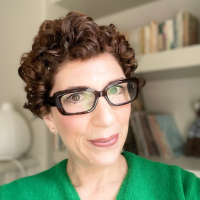
Joanna Nadin is a former broadcast journalist and government speechwriter. Since leaving politics she’s written more than 90 books for children and teenagers, including the UK #1 bestselling Worst Class in the World series, Joe All Alone, which is now a BAFTA-winning and Emmy-nominated BBC drama, and A Calamity of Mannerings, a Sunday Times Book of the Week. She’s been nominated five times for the Carnegie Medal and shortlisted twice for the LOLLIES prize among many others. She is also Associate Professor in Creative Writing at the University of Bristol.
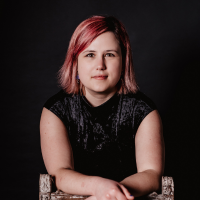
Siobhán F. Murphy is a Belfast-based freelance writer and editor with a specialism in fiction writing and in ELT and educational publishing. She primarily writes fantasy and dystopian fiction, educational video scripts and has also written a comedy short story for BBC Northern Ireland, and a body horror story for The Selkie. She has a degree in English Literature and Spanish, and is currently studying part time for a Creative Writing MA at Queen’s University, Belfast. She lives with one bad-tempered cat called Ianto. In her free time, you can find her playing Dungeons and Dragons, getting involved in amateur theatre, making folded book artwork, trying to learn new languages, and, of course relaxing with a good novel (usually about the end of the world, whatever that says about her).
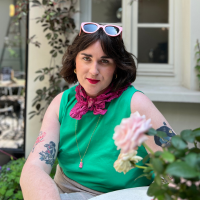
Bethany Rutter is the author of six novels, two for adults and four for young people. As well as writing fiction, she is a personal trainer and a Royal Literary Fund fellow. She lives in Southeast London with her husband and fat orange cat called Paddington.
About their books:
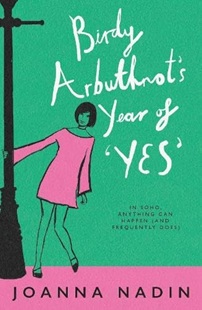
Title: BIRDY ARBUTHNOT’S YEAR OF YES
Author: Joanna Nadin
Pitch: 1960 is knocking on the door, and eighteen-year-old Margaret ‘Birdy’ Arbuthnot, presently of Surbiton, wants more than her current existence in the dull suburbs. She wants to LIVE – in capital letters! Could Soho, with its bright lights and dark corridors, hold the key to a life more novel-like and less… Surrey? (Even if Mummy thinks it is a square mile of vice, full of men with overly shiny shoes.)
Find on Goodreads. Find on Bookshop.org (affiliate link).
Title: HEDGE WTICH
Author: Siobhán F. Murphy
Pitch: Hedge Witch is a tale of two young women finding their power as they fight an oppressive regime. In the future, the art of magic has been rediscovered. However, the Government, terrified of its power, traps all the magic in the world behind a vast hedge. A cataclysmic event occurs, the Hedge is destroyed, and magic is released, destroying the world as we know it. The narrative focuses on Elise, who tries to piece together the life story of Malvada, a witch who grew up in the Hedge’s shadow, and who might know how the Hedge was destroyed.
Title: ASK ME ANYTHING
Author: Bethany Rutter
Pitch: A contemporary romance about a cute, fun, boy-crazy, fashion-loving plus size university student with an advice column who sometimes lets her romantic enthusiasm get the better of her…
In your opinion, how has social media helped foster the UKYA community?
Joanna Nadin: Social media has brought writers together and connected us to readers as well.
Siobhán F. Murphy: Social media offers young people opportunities to find communities and networks of people that share their passion. It’s an incredibly powerful tool that allows people to not only to reach out to one another, but also to discover new and emerging literature. Plus, I think it presses the idea that you are not alone in the things that you love, people all over the world share your perspective.
Bethany Rutter: It’s made authors more accessible to readers, and vice versa, as well as connecting readers with readers and authors with other authors. Breaking down those barriers helps to demystify the industry both to readers who are interested in how it works, and also readers who may want to be published authors one day.
In which ways do you think we can responsibly use social media to introduce YA titles to teenagers? How can we go beyond social media to reach them, given conversations in several countries around re-thinking current legislation on such platforms for minors?
Joanna Nadin: Keep on doing what you’re doing.
Siobhán F. Murphy: Social media, while a powerful tool, does contain inherent risks to the young adult community. Responsible use involves taking the time and energy to make sure there are moderators in place to ensure safeguarding. It’s also worth considering placing limitations on comments, having a clear code of conduct with segments aimed at ED&I, and penalties in place for violation. There need to be clear marketing channels, as well as resources and information for parents and carers to access. In terms of other ways to reach children and young people, there are opportunities in the regions of video, newsletters, local events and communications with schools.
Outside of social media, it may be time to think back and remember what we did before the age of social media: communicate with libraries and schools, and encourage more author visits to schools. But there will also still be opportunities to introduce adults to titles via social media (adults making a non-insignificant proportion of YA readers!), and perhaps there are routes there to encourage such adults to recommend the YA books they love to younger readers.
Bethany Rutter: This feels like a question that’s too big for me to answer! But beyond social media, I would love to see government funding for literary festivals instead of relying on private businesses, and creating real-life spaces where young people can engage with YA literature in their communities for free.
How do you think the YA market is going to change thanks to emerging technologies like AI?
Joanna Nadin: I hope it won’t, not as much as we worry. No one reads because they want to know what a machine thinks. They read because they want to know how humans think and feel.
Siobhán F. Murphy: It’s a big question! I don’t think anyone can really forecast where the AI road is going to lead. I’d like to think that there can be positive outcomes of applying such technology, such as freeing up creators’ time to focus on content and not having to worry about more menial admin tasks. However, there are valid and deep seated concerns around its use – we could find ourselves in a situation where the market is saturated with AI generated content, which will by default be cheaper and more accessible, even if off lower quality and this could risk the livelihoods and access possibilities of genuine creators. I’m not an expert, but it is a big concern for creators everywhere.
Bethany Rutter: Not for the better, that’s for sure! I would guess that all but the hugest names in any genre or age group are going to be re-writing AI-generated novels within a few years rather than writing original material.
What steps would you like publishing needs to take in response to the rise of AI?
Joanna Nadin: Keep lobbying the government against it, and bar its use in all forms – illustration, writing and translation.
Siobhán F. Murphy: For me, I think protection and moderation are two highly important considerations. Firstly, the publishing industry needs to investigate how copyright will be protected and how legal action can be pursued. Publishers need to put pressure on governments to make sure adequate controls are in place. There also need to be studies into how AI can be used as an aid to authors, not a hindrance. I think also that publishers should take pledges that they are not going to start mass producing AI-generated content, and ideally should be engaging in networking with young people and other readers to teach them, among other things, the benefits of real, human-created content, and skills such as recognising AI when they see it.
Also, there will inevitably be authors attempting to use AI to write stories they intend to publish. It may be essential to become savvy about what this content may look like, so they know the authenticity of the writers they work with.
Bethany Rutter: I would love all publishers to take a ‘hard no’ stance against AI. It feels strange to potentially be part of the last generation of actual authors.
Thank you all! For more interviews, check here and don’t forget to check instagram (here) for book recommendations from these authors and more!
 #UKYASpotlight
Leave a comment