The Annual Event is a month long celebration of all things UKYA, highlighting books by British and Irish authors (resident and national) and asking their views on topic affecting the community. All views are the author’s own.
About the Authors:
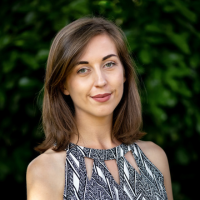
Jennifer Lane is an author based in Greater Manchester. As a journalist, she has written about nature and mental health for Vogue, The Guardian and the BBC. Her books include: The Wheel: A Witch’s Path Back to the Ancient Self, The Witch’s Survival Guide: Spells for Healing From Stress and Burnout,The Black Air and The Second-Hand Boy.
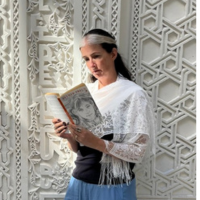
Rebecca Westcott is a bestselling children’s and teen author. She is also a Deputy Headteacher at a Special School.

Bruna De Luca grew up in a very Italian household in the Scottish Borders and reluctantly describes herself as a deep-fried pizza. This dual heritage is woven into every aspect of her life – from her studies at the University of Edinburgh, where she completed a dissertation on Italian fairy tales, to the years she spent in Italy teaching students to speak English with a Scottish twang. Bruna’s experiences as the child of immigrants deeply shape her writing.
About their books:
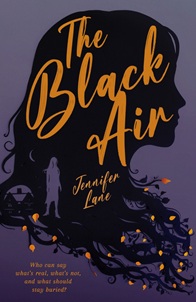
Title: THE BLACK AIR
Author: Jennifer Lane
Pitch: In a remote village overshadowed by a gruesome legend and ancient superstitions, who can say what’s real, what’s not and what should stay buried deep inside your head? The Black Air is a spellbinding contemporary novel with a dark mystery at its heart.
Find on Goodreads. Find on Bookshop.org (affiliate link).
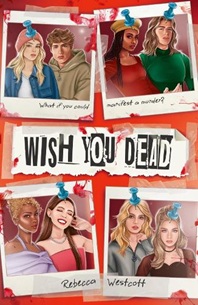
Title: WISH YOU DEAD
Author: Rebecca Westcott
Pitch: Sixteen year old Morgana Merrick is all about control. She’s the most feared and powerful girl at Avalon Academy and she’ll do pretty much anything to keep it that way. So when an encounter at a beach party turns ugly, Morgana turns to the universe to help her seek revenge. But when things start to go wrong, the question that has to be answered is this – what if the most popular girl in school could manifest murder?
Find on Goodreads. Find on Bookshop.org (affiliate link).
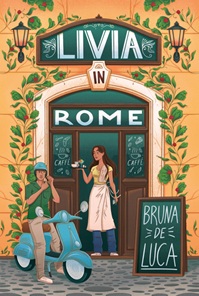
Title: LIVIA IN ROME
Author: Bruna De Luca
Pitch:Livia in Rome is a clean teen romance for readers 12+, perfect for fans of Love and Gelato and To All the Boys I’ve Loved Before. Sixteen-year-old Scottish-Italian Livia feels stuck between two cultures—and the last thing she wants is to be the cliché foreign girl who falls for a local boy. But as she navigates family drama, friendship, and her first messy crush, Livia realises she doesn’t have to choose one side or the other—sometimes belonging means embracing all of who you are.
Find on Goodreads. Find on Bookshop.org (affiliate link).
In your opinion, how has social media helped foster the UKYA community?
Jennifer Lane: The “findability” of your favourite authors and debuts has made it so much easier to connect with other writers, and to share joys, commiserations and to promote each others work in a way that wasn’t possible before.
Rebecca Westcott: Bringing books by unknown authors to a place where readers can find them.
Bruna De Luca: I’m not even sure YA was a thing when I was a teen—so from my point of view, it’s worked wonders. Back then, books were scavenged from friends and family, picked up from whatever was lying around at home, or hunted down in the tiny section of the local library. Now, the whole community—authors, readers, publishers—is chatting in real time. It’s brilliant for helping teens find their people, or stumble into niche corners they didn’t even know existed. It makes reading feel less like a solitary thing and more like joining in.
In which ways do you think we can responsibly use social media to introduce YA titles to teenagers? How can we go beyond social media to reach them, given conversations in several countries around re-thinking current legislation on such platforms for minors?
Jennifer Lane: I think we should use platforms like Substack to nurture reading habits and attention spans, rather than actively using platforms that have been proven to be damaging to young minds. By shifting attention away from more mainstream platforms and into the spaces where writers feel most at home (Substack’s longform blogging feature has proven to be very popular amongst the writing community), we are shifting attitudes towards reading, while still being able to promote our work to large audiences.
Rebecca Westcott: Teenagers are not moving away from social media anytime soon. For my last book, Like A Girl, I conducted research with over 1000 children and young people about their social media use and whether they felt that it was ultimately a positive or a negative experience. The overwhelming majority are using the internet to connect, to learn, to discover, to be entertained. They want to find like-minded people and talk about the things that they love – it can be a safe space for kids who maybe can’t find that kind of connectivity at school.
Bruna De Luca: As the parent of a tween who’s currently desperate to join the ranks of social media, I spend more time than I’d like explaining why it’s not that simple. Social media is a great way to reach teens – it’s their “happy” place. But for younger teens, it’s still a bit of a minefield when it comes to safeguarding. It’s made me think even more about how important those real-world spaces are. Wouldn’t it be amazing if there was someone in schools who actually knew the pupils, knew the books, and could foster a reading culture and all the benefits that brings? Someone like…a school librarian? Good luck to any algorithm trying to beat that kind of tailoring.
How do you think the YA market is going to change thanks to emerging technologies like AI?
Jennifer Lane: I hope it becomes outspoken against the use of AI in creative fields. So many authors are feeling defeated and are already scared of platforms that are actively stealing our work for “training” purposes, so publishers are going to have to stand behind their authors and keep the humanity in publishing if they want to keep authors’ trust.
Rebecca Westcott: I think that there are some very exciting, innovative ideas coming out of AI – but no matter how clever it becomes, it will never provide the heart to a story that a human author can bring.
Bruna De Luca: AI definitely isn’t a passing TikTok trend—it’s here to stay, whether I like it or not. And, as the parent of a tween who already thinks I know nothing about tech, I do feel a bit like the world got an update and I’m still buffering. But I do wonder how teens—who already have to navigate a world of filters, influencers, and curated lives—are meant to figure out what’s been written by a person and what’s been churned out by a bot. That said, and maybe I’m burying my head in the sand a bit here, I still don’t believe teens can be duped for long. They’re sharp. They can tell when something feels hollow. So maybe teenagers will do what they do best – surprise us when we are busy underestimating them!
What steps would you like publishing needs to take in response to the rise of AI?
Jennifer Lane: Transparent policies against the use of AI in creative works and the assurance that book publishing will not use AI to create new works.
Rebecca Westcott: I’m not sure. As a teacher, I can see the huge benefits in the classroom, especially when it comes to creating bespoke texts for individual students. For example, the market is woefully non-existent for books that will appeal to a 15 year old with a reading age of 5 – AI can create this and it is changing outcomes for our young people. So it would seem churlish of me to acknowledge the benefits but say that I don’t want my books being used to ‘train’ a programme. I guess we need to monitor the situation, not panic, and respond to the ever-developing landscape.
Bruna De Luca: I’m the first to admit I’m often on the fence with new tech (and most things!)—I can usually see both sides. But I’m still trying to get my head around the whole business of pirated books being fed into AI. It’s been everywhere—authors pouring out their anger and heartbreak over years of work taken without consent. It’s the kind of thing that still feels a bit too raw to even say out loud, but it’s impossible to ignore. I know AI’s here to stay, but I’d like to see publishers taking clear steps to protect authors. And more than anything, I’d hope they keep backing messy, brilliant, imperfect human stories—the kind written by actual people, with actual hearts.
Thank you all! For more interviews, check here and don’t forget to check instagram (here) for book recommendations from these authors and more!
 #UKYASpotlight
Leave a comment