The Annual Event is a month long celebration of all things UKYA, highlighting books by British and Irish authors (resident and national) and asking their views on topic affecting the community. All views are the author’s own.
About the Authors:
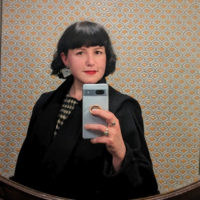
Melinda Salisbury is the four-time Carnegie nominated and bestselling author of multiple teen and young adult novels. When not writing, Melinda works as a writing mentor and development editor, and volunteers at a local independent cinema on the East Sussex Coast.
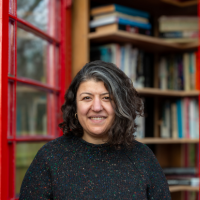
Ova Ceren writes bittersweet tales of heartbreak and magic, often inspired by Turkish and Ottoman folklore.
She earned a degree in Computer Science and a master’s that led her into a career in IT, taking her from Turkiye to Britain. After years of wrestling with algorithms in corporate jungles, she finally eloped with a debut novel instead. Ova now lives in Cambridge, UK, with her husband, son, and a spirited flock of runner ducks.
About their books:

Title: THE FOUNDATION
Author: Melinda Salisbury
Pitch: When keen gamer Ivy Finch ends up in a sticky situation with a “friend” she met online, her parents decide to send her to the Ash Tree Foundation’s Tech Detox camp. Ran by the enigmatic Dagmar Nilsson, the camp brings together teenagers who have an unhealthy relationship with technology. It promises to help them instead build social connections and hobbies offline, but there’s much more to the Ash Tree Foundation than it first appears, and Ivy is about to find herself trapped in a virtual nightmare
Find on Goodreads. Find on Bookshop.org (affiliate link).
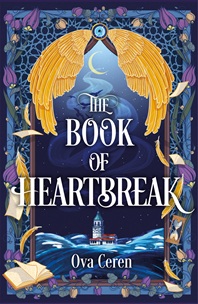
Title: THE BOOK OF HEARTBREAK
Author: Ova Ceren
Pitch: A girl cursed to die of heartbreak must find a way to save herself before she turns eighteen.
Find on Goodreads. Find on Bookshop.org (affiliate link).
In your opinion, how has social media helped foster the UKYA community?
Melinda Salisbury: It’s provided a space for readers to come together and talk about books, swap information about releases, celebrate launches, discuss plots and characters, and really get to know the UKYA scene. Reading is an infamously solitary pursuit, so having the space to build a community with like-minded people is so valuable. And I think especially for UK readers – we’re exposed to US releases that having a dedicated space to explore homegrown authors and books is essential.
Ova Ceren: I think social media has brought energy into the UKYA community. It amplified voices that might have been overlooked before and gave writers the encouragement to be wildly, limitlessly creative. It’s also built connections between readers, writers, and publishers. I genuinely believe some stories wouldn’t have found their people without the help of social media.
In which ways do you think we can responsibly use social media to introduce YA titles to teenagers? How can we go beyond social media to reach them, given conversations in several countries around re-thinking current legislation on such platforms for minors?
Melinda Salisbury: I’m honestly have no idea how social media can be responsibly used anymore! It feels like, for the most part, we’ve moved past a place of good faith and genuine love, into consumption and commodification, and a real emphasis on promotion, promotion, promotion! I think the last pure (and honest!) places left on social media for readers are the old school accounts that still blog reviews and post cover flat lays – accounts that are truly peer-to-peer, not author-to-fan, or publisher-to-customer. And as for how we go beyond social media, that’s where school libraries and librarians come in, and specialist YA booksellers. Word of mouth is still THE most powerful marketing tool available – it’s what social media marketing has always tried to capitalise on.
Ova Ceren: Social media is the perfect way to invent relatable ways of making reading cool again. It’s already a delight to see this happen organically on platforms like BookTok and Bookstagram.
Beyond social media, I believe schools, libraries, independent bookshops, and festivals have a huge role to play. Personal recommendations, author visits, workshops, and creative campaigns that encourage a love of reading can all make a real difference.
We can’t control legislation or the political landscape, but we can adapt with even more heart — always remembering that it’s about connecting young readers with emotionally empowering stories that make them feel seen, not about chasing numbers.
How do you think the YA market is going to change thanks to emerging technologies like AI?
Melinda Salisbury: I’m terrified in two ways. Firstly, that it’ll be flooded with AI generated slop, essentially because very few people outside of those who write, publish and read YA books actually see value in it! It feels like a lot of people still consider it a “lower” form of literature, and, in doing so, open it up to being devalued with AI generated, paint-by-numbers content that mimics genuinely good YA fiction in shape but not scope.
And secondly, I’m worried that readers are already losing the ability to concentrate, focus and think deeply about the things they read and that this is going to bleed over into the kinds of fiction that publishers will publish. My fear is eventually we’ll see human writers having to produce the kind of dumbed-down, simplistic content AI produces because anything else will be considered too complicated to be marketable or even readable. For so long the nature of reading a book was asking the reader to voluntarily immerse themselves in something new to them, to agree to get lost and to be challenged, to meet a story where it is and be prepared to do a little work to get something from it, but we’re losing those skills and the desire to develop them. We’re being primed for a diet of fast-food content; convenient, shiny and cheap with great marketing buzz, but devoid of anything nutritious or filling.
Ova Ceren: AI will definitely change the market, but it’s hard to fully predict how. It could certainly help as a tool: making book discovery easier by recommending highly tailored reads based on a reader’s tastes, helping smaller titles find their audience etc.
Will it eventually mine data, process bestsellers, and predict which manuscripts are most likely to sell more? Honestly, I find it scary to even answer, but I think it may. I’m more concerned about this aspect than I am about AI-assisted writing, because giving books a chance shouldn’t be defined by a machine’s statistic algorithm no matter how intricate it is.
Will the market be flooded by AI-generated books? Definitely. But there are already people doing what AI does: copying other templates/plots and filling them with words. And YA is a genre deeply rooted in feelings of identity, belonging, and growth, and I believe originality will only become more valuable in a market where imitation grows.
It’s the predictions of the machine that worry me most, not its ability to produce words, and how much value people will place on those predictions. I’m afraid of a publishing landscape shaped more by AI-assisted decisions than being flooded by AI-written books.
I have a pre-teen at home who already prefers communicating with AI over a real person. I find that far more worrying than AI itself, because AI is only what we make of it. If we use it as a tool, it will stay a tool.
Will my son be curious enough to read a book written by AI? Honestly, I’m appalled by the idea, but I think he would be very interested. Will he trust AI-based decisions one day? I don’t know…
Still, I want to be hopeful. I believe AI will push us to be even more creative. Readers will continue to crave real emotion, real connection, and real stories. AI is something that knows to learn and evolve. It never grew up. Growing up is the kind of phase that neither a machine nor any mechanical process can replicate. People will need human stories, the ones that remind teenagers they are seen, heard, and understood in ways no computer could ever truly create.
What steps would you like publishing needs to take in response to the rise of AI?
Melinda Salisbury: I would like to see much, much more effort in protecting readers and writers from AI generated stories and the fallout of them. For authors, loss of livelihood and income, and for readers, loss of a wide range of reading material, and the loss of the opportunity to develop deep reading skills.
Ova Ceren: I think traditional publishing needs to remember why it’s called “traditional” in the first place, because it protects and values the careful, beautiful, human craft of storytelling. In the rush to adapt to emerging technologies like AI, I hope publishers resist the temptation to automate what can never truly be automated: creativity, emotion, and voice.
Clearer legal frameworks and ethical standards are urgently needed. Protecting authors’ intellectual property, championing originality, and prioritising the rights of creatives — authors, translators, illustrators, and beyond — should be at the very top of the list. I genuinely hope publishers will embrace AI as a tool (that can make mistakes) to support creativity, not as a device to replace or replicate it.
Thank you all! For more interviews, check here and don’t forget to check instagram (here) for book recommendations from these authors and more!
 #UKYASpotlight
Leave a comment