The Annual Event is a month long celebration of all things UKYA, highlighting books by British and Irish authors (resident and national) and asking their views on topic affecting the community. All views are the author’s own.
About the Authors:

Curtis Jobling is the author and illustrator of numerous books and creator/designer of beloved children’s shows including the BAFTA-winning Bob the Builder, Frankenstein’s Cat and Raa Raa the Noisy Lion. His million-selling Wereworld series of epic fantasy horror novels has been published globally by Penguin Random House, the first novel, Rise of the Wolf, being shortlisted for the Waterstones Book Prize. Wereworld has been adapted into the major new Netflix animated series, Wolf King, with Curtis serving as lead writer and associate producer.
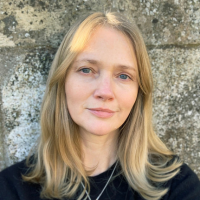
Jan Dunning has been a photographer, an art teacher, and even a nineties supermodel – but she now spends most of her time writing award-winning YA thrillers in her garden shed. Jan’s recent novel The Last Thing You’ll Hear was shortlisted for the Abingdon Schools’ YA Prize 2025, while her debut Mirror Me won the Oxfordshire Children’s Book Award 2024. Jan lives in Bath with her family and two decidedly unimpressed cats.
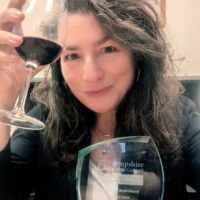
Rachel Delahaye is a children’s author, writing books for all ages. However, more recently she has have been concentrating on YA. Her YA sci-fi, Electric Life and her psychological thriller, Splinters, were both nominated for the Carnegie Award. She lives in Bath, but has the privilege of travelling all over, delivering school talks on the importance of reading, and why we should all embrace the genres of sci-fi and dystopia.
About their books:

Title: WYRDWOOD
Author: Curtis Jobling
Pitch: Wyrdwood is a folk horror for a teen and YA audience set on the Isle of Man. It’s a modern Grimm Brothers fairy tale for the Stranger Things crowd. Sticks and stones will break your bones…
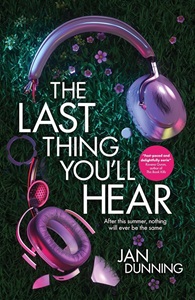
Title: THE LAST THING YOU’LL HEAR
Author: Jan Dunning
Pitch: Have you ever been so OBSESSED that you start to lose yourself? Musical siblings Wren and Lark are rivals first and sisters second – so when mysterious music producer Adam and his DJ prodigy, Spinner, arrive in their hometown seeking performers for much-hyped festival Enrapture, the game is on to impress. Lark is soon taken under Adam’s wing, but as she’s pulled deeper into his web, distancing herself from friends and family, Wren starts to suspect that Enrapture isn’t everything it seems… A pacy summer thriller and contemporary Pied Piper retelling that explores toxic masculinity and dangerous obsession,
Find on Goodreads. Find on Bookshop.org (affiliate links).
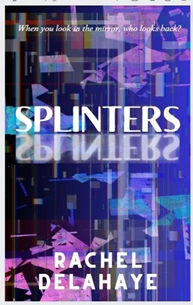
Title: SPLINTERS
Author: Rachel Delahaye
Pitch: Jean Sylvester’s life is falling apart. Friendships, family, love – it’s all drama and none of it good. On top of that, she’s moving into a house she hates. But something Jean discovers there encourages her to reflect on how life could be better. Only, the more she looks for a happy ending, the more she loses sight of who she is, and finding her way back will take one more electrifying drama. If it’s not too late… This is a thriller about how we form, claim and define our identity.
Find on Goodreads. Find on Bookshop.org (affiliate link).
In your opinion, how has social media helped foster the UKYA community?
Curtis Jobling: It’s helped readers find their tribe, whatever their fandom. Growing up in the eighties and nineties, I was in a vacuum when it came to finding folk who shared my love for my favourite authors. Social media – when it’s at its best – can unlock a world of like-minded folk for an individual.
Jan Dunning: My experience has been really positive. I have connected with so many other YA authors via social media, and many have become great friends. My view is that it’s mostly a joyful space of lifting each other up, sharing experiences, offering and receiving advice, promoting books and recommending good reads.
It can be difficult to get books in front of readers but the YA community is incredibly generous in its support – people like you at UKYA Spotlight, Shelley Mack and the team at @ya_bookjam, plus many others have been huge cheerleaders for my books and I appreciate it.
Social media connections have also led to lovely in-person encounters too! I met YA author Rachel Delahaye through social media where we happily fangirled over each others’ books – and this led to sharing a gorgeous book launch in real life! So social media is a lifeline and a release for me as a YA author, because otherwise writing is a very solitary profession.
Rachel Delahaye: There is so much that is sad and bad about social media, but a real boon is how it brings together enthusiasts and amplifies the joy. Readers and bloggers have found authors, and vice versa. And we have all made new friends and connections, and even collaborations in the social media space. With bright minds and electric covers filling our grids, it really is the best, most inclusive, celebration of literature, reading and story.
In which ways do you think we can responsibly use social media to introduce YA titles to teenagers? How can we go beyond social media to reach them, given conversations in several countries around re-thinking current legislation on such platforms for minors?
Curtis Jobling: I’m fortunate enough to travel the world talking to young people about my work as an author, illustrator and animation creator, and I find the same challenges wherever I go – navigating my way past the well-meaning but often woefully misguided gatekeepers such as hard-line conservative parental groups and government organisations. Festivals, conventions, moderated online forums, and public and school libraries – that’s where young people can discover books.
Jan Dunning: Social media is the main way that my teenage daughter looks for books. She follows different content creators and pops onto BookTok to get recommendations for her next read. Reading has a really high status in her friendship group, which is amazing to see, and something I wish I’d had as a teen.
But social media can definitely be a minefield. To use it responsibly, I think we need to support the online creators who offer safe, diverse, inclusive spaces for talking about books, and direct young people to their platforms.
As for how publishers could reach young people if legislation around social media changed, I’m not sure what that would look like. Publishers focus so much on social media for publicity and marketing these days. I guess they’d need to develop those safe spaces for book talk elsewhere. An obvious place would be in schools, and as a teacher, I wish schools could do more to promote reading for pleasure. Some do, but many don’t have funding to hire librarians, stock libraries and buy books that aren’t on the curriculum.
I’d also love to see more support and training for debut authors going into schools. It creates a massive buzz around reading and makes writing as a career feel accessible to young people – plus meeting real readers in person is one of the best parts of this job.
Rachel Delahaye: We can use social media to build book clubs, which I know is already being done. Live interviews, influencer collaborations: we need to make the most of what’s out there and what works, to make reading desirable. And consistently so. In terms of beyond social media, we need more effort in schools to promote YA books. Teenager years see a huge drop-off in reading, and often what pupils are studying in school are the only texts they see. And let’s be honest, not all school texts are page-turners. So we need to promote variety. We need book fairs, author talks, cover-design competitions. We need more noise about YA.
How do you think the YA market is going to change thanks to emerging technologies like AI?
Curtis Jobling: In an utterly negative way. I say this as an author who has had his eleven novels harvested for AI engines already, without permission or compensation. It’s hideous. It’s the death of creativity. And you’ll only find more people jumping up saying “Hey, I’m an author!” just because they’ve popped some prompts into an AI algorithm. AI cannot create – AI can only regurgitate what has already gone before. It’s without control, management, and is utterly lawless – the creative equivalent of the wild west.
Jan Dunning: The honest answer is, I’m not sure. I can only answer from my point of view as an author. I currently don’t use AI in any part of my process and I can’t see myself doing so. I value art that is made by humans.
The encroachment of AI within the creative industry scares and depresses me. While I can see the advantages of using AI to assist with tedious admin tasks, I am hugely against using AI for creative purposes. I think it’s unethical, harmful to the environment and destructive to the livelihoods of authors and artists. I totally reject it. Writing, making and communicating brings me joy, why would I outsource any part of that process? In my opinion, no computer can match the imagination, emotional depth, or critical thinking of a human being – and that’s what I’m looking for in the art I make, and the art I consume.
Rachel Delahaye: This is a tricky one. I think that there will be an explosion of titles which in one way is terrific – we all know how hard it is to be traditionally published, and many good manuscripts are rejected because they don’t meet the requirements of market trends or sales teams. But it does mean that finding good quality books will be harder. And good YA is such a balancing act between language and content, offering teenagers a safe space to feel and explore; with AI-written books there are no checks or safety barriers. And while an idea (prompt) might be good, the human to human connection will be lacking. Authors care about their readers.
What steps would you like publishing needs to take in response to the rise of AI?
Curtis Jobling: Holding AI companies to account for the manner in which they’ve effectively pillaged the work of so many creatives.
Jan Dunning: I’m not naïve, I know that despite my fears and those of others, AI use will continue to permeate every industry, including publishing. But I’m angry that AI models have been trained on copyrighted materials, and that my own work has been used without my permission – this is theft, pure and simple. So while I don’t expect publishing to reject AI technology entirely, I want to see transparency and clarity about the use of AI at every stage of the publishing process – that way, consumers are informed and can decide for themselves whether they want to support media created with AI. Linked to this, we need robust legislation that protects creatives, and I’d like to see the publishing industry as whole consistently prioritising real human contributions over productivity shortcuts.
Rachel Delahaye: I really think that it should be a law to state whether a book has been written using AI. It should be mandatory across the board, with heavy fines and penalties for failure to comply. No one should be buying a book not knowing where or how it originated.
Thank you all! For more interviews, check here and don’t forget to check instagram (here) for book recommendations from these authors and more!
 #UKYASpotlight
Leave a comment