The Annual Event is a month long celebration of all things UKYA, highlighting books by British and Irish authors (resident and national) and asking their views on topic affecting the community. All views are the author’s own.
About the Authors:
Chris Vick writes about the sea, danger and the wonder of magic and stories. He has written five books, published in several countries. Chris has appeared at many festivals including Hay, Bath Children’s Literature Festival and Mare di Libri (Sea of Books) in Italy, and has written blogs/features for the Guardian and Bustle.com. on YA issues. He lives near Bath, with his family.
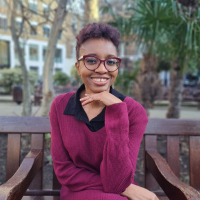
Kenechi Udogu is a Nigerian-born London-based writer and architect whose work centres on culturally diverse characters, particularly female protagonists in sci-fi, fantasy and horror genres who stand strong in challenging conditions. Her YA novel, Augmented, was the inaugural winner of Faber Children’s Imagined Futures Prize in 2023 and was published in 2025. She is a book contributor to Worldreader’s free digital library (a literacy global non-profit organisation). She loves singing with choirs, and hopes to one day figure out how to hibernate in winter.
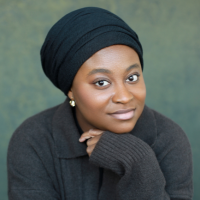
Aleema Omotoni is an award-winning British-Nigerian author. She writes novels that centre Black teens coming of age, falling in love, and navigating all kinds of contemporary and fantasy worlds. Her debut novel, EVERYONE’S THINKING IT, won the 2024 NAACP Image Award for Outstanding Literary Work – Youth/Teens.
About their books:
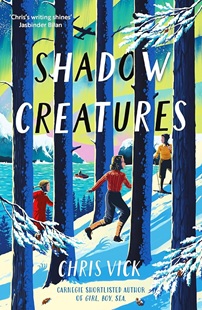
Title: SHADOW CREATURES
Author: Chris Vick
Pitch: Tove was 12 and Liva 9, when the Germans occupied Norway. They remember everything as if it happened yesterday. A middle grade story of bravery, resilience, rivalries and shadow creatures in the night.
Find on Goodreads. Find on Bookshop.org (affiliate link).
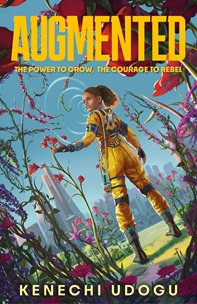
Title: AUGMENTED
Author: Kenechi Udogu
Pitch: In a near future London where extreme weather has depleted plant life, and teenagers are enhanced to ensure the survival of society, Akaego fights to prevent her new power to grow plants from being weaponised by a corrupt regime.
Find on Goodreads. Find on Bookshop.org (affiliate link).
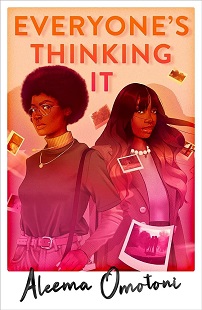
Title: EVERYONE’S THINKING IT
Author: Aleema Omotoni
Pitch: Mean Girls meets Dear White People in this big-hearted, sharp-witted UK boarding school story about family, friendship, and belonging—with a propulsive mystery at its heart. EVERYONE’S THINKING IT tells the story of Iyanu and Kitan, two Nigerian cousins at an elite English boarding school: Wodebury Hall. The week before the annual Valentine’s Day ball, the cousins are thrust into a school-wide conspiracy when all the student’s deepest secrets are splashed across the school written on the back of mysterious polaroids.
Find on Goodreads. Find on Bookshop.org (affiliate link).
In your opinion, how has social media helped foster the UKYA community?
Chris Vick: 100%. Spreading the word on releases, sharing opinions, reccomendations… and much more
Kenechi Udogu: I think social media has been great for the UKYA community, making it easier for there to be lively engagement between people in the UK and different parts of the world. It has also helped bring some books into the limelight which may have otherwise gone unnoticed.
Aleema Omotoni: In person events can be difficult for some authors based outside London/the South as most IRL events take place in these regions. Social media allows authors across the UK to connect and champion each other’s works. It also helps the community to share their experiences and things they’ve learned, especially with new/debut authors. It has made things so much easier to demystify the publishing industry; particularly traditional publishing.
In which ways do you think we can responsibly use social media to introduce YA titles to teenagers? How can we go beyond social media to reach them, given conversations in several countries around re-thinking current legislation on such platforms for minors?
Chris Vick: Be clear it IS YA, and where subject matter may need to be mentioned.
Kenechi Udogu: Author school visits (IRL and virtual), library events and book festivals (both large scale and in local communities) are still great ways to reach teenagers. I think we can rightfully rely a lot on social media for some aspects of book promos, for example with cover reveals and giveaways, but face to face interactive sessions can be more impactful than a constant barrage of images and videos.
Aleema Omotoni: This is a tough one. The ease of connectivity is exactly what makes social media so important in sharing titles with teens. But it’s a double edged sword. I believe all YA authors would agree that protecting children/teens is very important to us. So is allowing them freedoms and opportunity to find likeminded communities among their peers across the country that might, for example, love their favourite book because it’s helped them feel seen in a way people in their immediate life don’t. So it’s a balancing act.
At the same time, in person events are harder to navigate for teens who might not have the disposable income to attend different events or conventions. So, beyond social media, I feel a way we could do things would be through schools. Author visits are one thing, but perhaps we could try something more organised in a tour like fashion to connect with readers outside of social media.
How do you think the YA market is going to change thanks to emerging technologies like AI?
Chris Vick: I am not sure anyone knows. It could be books are ‘co-written’ by humans using YA. Not a good thing, but maybe inevitable.
Kenechi Udogu: I’m not sure how to answer this. Every writer is different in their approach to embracing technology, so inevitably some people will embrace what they see as positive advancements, while others will carry on as usual.
Aleema Omotoni: I hope we could find a way to maintain the integrity and safety of our community. This is a time when we all must come together to protect ourselves and our readers. Genuine stories matter, our voices matter, and deserve to be preserved.
What steps would you like publishing needs to take in response to the rise of AI?
Chris Vick: Be clear about where work is ‘human only’.
Kenechi Udogu: I think the use of AI to generate creative fiction raises a lot of ethical questions, but it will probably be impossible to stop the use of it completely with its growing popularity and ‘ease of use’. Publishers need to band together and hold strong to ensure YA books produced are original works and not plagiarised pieces. Unfortunately, this looks to be a wait-and-see phase for authors as it is impossible to predict how things will turn out with this.
Aleema Omotoni: Steps that safeguard authors and readers. Storytelling has stood the test of millennia and will continue to do so for many more when we do everything we can to genuinely preserve it.
Thank you all! For more interviews, check here and don’t forget to check instagram (here) for book recommendations from these authors and more!
 #UKYASpotlight
Leave a comment