The Annual Event is a month long celebration of all things UKYA, highlighting books by British and Irish authors (resident and national) and asking their views on topic affecting the community. All views are the author’s own.
About the Authors:
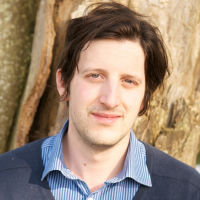
Philip Womack is the author of several books for the young, most recently GHOSTLORD and WILDLORD. Ghostlord was Sunday Times Children’s Book of the Week.

Sue Wallman is the daughter of a psychiatrist and grew up with an interest in human behaviour as well as a love for writing. She worked for a newspaper in Paris, and magazines in London before becoming a school librarian for several years. Now she combines writing with running workshops in schools. She won The Woman’s Prize for Fiction First Chapter Award in 2013 and has won many other awards for her Young Adult thrillers, the first of which, Lying About Last Summer, was selected for the WHSmith/Zoella book club. She has spoken at Hay Festival and Cheltenham Literature Festival. Her eighth novel, Watch Your Back, was published in March 2025.
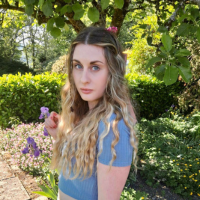
Monique Turner was born and raised in the cold north of England on a diet of strong brews and thick gravy. Whilst growing up, she struggled to find her place in the world, so she vowed to create stories where those who don’t fit in can finally feel like they belong. When she isn’t writing, she can be found roaming the southern coast.
About their books:
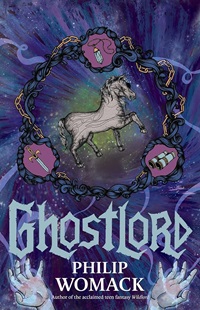
Title: GHOSTLORD
Author: Philip Womack
Pitch: A gripping teen fantasy about a girl uncovering an ancient evil.
Find on Goodreads. Find on Bookshop.org (affiliate link).
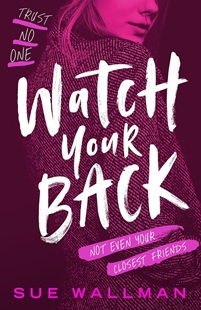
Title: WATCH YOUR BACK
Author: Sue Wallman
Pitch: Year Eleven has got off to a bad start for Kara. Her best friend Eden has a new boyfriend, joined the popular group and ghosted her. Kara is drawn into an uneasy friendship with Romilly, a girl who exists on the sidelines and has no friends. The more Kara hangs out with Romilly, the more unsettling, creepy things start to happen. Kara suspects Romilly is behind them but no-one is taking her seriously, and everything is about to get so much worse.
Find on Goodreads. Find on Bookshop.org (affiliate link).

Title: ISLAND OF INFLUENCERS
Author: Monique Turner
Pitch: Harper wants to be an influencer. Badly. She’ll do anything to be like her famous Tubeify-star cousin, Belle.
When Belle is the latest victim in a string of influencer kidnappings, Harper discovers the kidnappings are fake – ‘victims’ are put on an island for a new reality show.
Island of Influencers pits the greatest internet talents against each other, and Harper is added at the last minute. With the constant pressure of a live audience judging their every move, it’s not long before cracks begin to appear in the influencers’ shiny veneers…
Find on Goodreads. Find on Bookshop.org (affiliate link).
In your opinion, how has social media helped foster the UKYA community?
Philip Womack: I think it’s very helpful – it connects readers, writers, librarians and teachers.
Sue Wallman: Hearing about new books and gaining insight from other writers talking about their struggles and successes is massively helpful when you’re part of the UKYA community, but I do think it’s harder at the moment with the fragmentation of social media.
Monique Turner: Social media helps highlight important bodies of work that are often overshadowed by big names and massive marketing campaigns. The UK market is tiny compared to the US, so us Brits can easily be drowned out by the noise across the pond. Social media gives every creator (whether traditionally published or independently published) an equal opportunity to be seen by their target audience. What we’ve done within the UKYA community is create these specific corners on social platforms where authors are able to promote their work to potential readers who’ve trained their algorithms to filter in the niche they’re interested in reading.
In which ways do you think we can responsibly use social media to introduce YA titles to teenagers? How can we go beyond social media to reach them, given conversations in several countries around re-thinking current legislation on such platforms for minors?
Philip Womack: I think school visits are really important; also we need more coverage in the mainstream media!
Sue Wallman: Social media is in a weird place right now and I think plenty of teenagers are finding it toxic and exhausting. I’m looking forward to the rise of new platforms. Schools are on the back foot now in lots of ways but they need to be more aware of the dangers and difficulties of AI, and engage more with publishers and authors. There should be more high-quality, fun collaborations.
Monique Turner: Social posts are visual and teenagers are visual beings. Eyes always gravitate toward the diagram in a text book (at least mine do). So, bright, attention-grabbing social posts with minimal but snappy text to get the book’s concept and theme across is one of the best way to introduce teenagers to new YA titles online. You can’t throw a block of text at someone and expect them to read it if you haven’t already given them a reason to be invested through a visual hook first.
Beyond social media, the best place to reach them is in the place they spend the majority of their time: an educational setting. Teenagers have no choice but to be in school or college six hours a day, five days a week. And when they’re not in class, learning, where are they? They’re in the playground, talking. So, we need to meet them where they are and get them talking, because nothing is more influential than word of mouth recommendation.
How do you think the YA market is going to change thanks to emerging technologies like AI?
Philip Womack: This is a tricky one. I would hope that distinct voices remain a draw, and that readers won’t want things written by AI.
Sue Wallman: A Year 8 boy asked me recently in a school visit, “How long do you think it’ll be before AI takes your job?” I asked him what he thought and he reckoned ten years. My view is that human creativity will rise to the challenge. I think we’re in for a messy few years though with books written by AI already flooding Amazon.
Bex Hogan: I love this question because Island of Influencers (and the subsequent books in my series) touches on the rise of AI. It’s been at the forefront of questions from students at my school events, so it’s clearly an area of interest for teenagers. I believe we’re going to see more books based around the topic in the coming years, as artists in every sector grapple with the relentless rise. AI is a muddy area and is sparking some real concerns about online safety. It’s terrifyingly easy to use AI to fake images and conversations, putting everyone who posts online at risk. As writers, it’s our duty to educate through our work, and we need to find entertaining ways to do that so that others can be prepared and safeguard themselves against things that can be damaging.
What steps would you like publishing needs to take in response to the rise of AI?
Philip Womack: I’d like publishers to make sure that AI companies pay their way fairly. And also that they recognise the skills involved in writing good fiction.
Sue Walman: Publishing needs to stand up for its authors in terms of compensation. There also needs to be a whole lot more clarity and transparency around its use.
Monique Turner: There’s been a shocking increase in the amount of books pirated in order to train AI and publishers need to crack down on it, hard. I’d like to see the industry as a whole be more proactive in protecting the work of their clients; scour the internet and don’t be stingy with the take-down notices. To spend years crafting a piece of art and then to have that work stolen so that someone else can use AI to make their own version of your art, is utterly heart-breaking. Trying to make a living as an author is a tough gig as it is, we don’t need to be battling against AI alone too.
Thank you all! For more interviews, check here and don’t forget to check instagram (here) for book recommendations from these authors and more!
 #UKYASpotlight
Leave a comment