The Annual Event is a month long celebration of all things UKYA, highlighting books by British and Irish authors (resident and national) and asking their views on topic affecting the community. All views are the author’s own.
About the Authors:
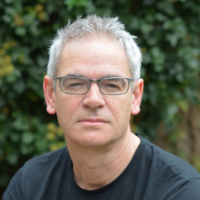
Cliff McNish’s fantasy novel The Doomspell was translated into 26 languages, and his YA ghost novel Breathe was voted in May 2013 by The Schools Network of British Librarians as one of the top adult and children’s novels of all time. His many YA novels have won or been short-listed for numerous wards in the UK and the USA.
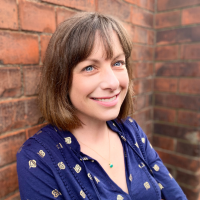
Alison Weatherby is a YA and teen mystery writer who lives outside of Dublin, Ireland. Her first book, THE SECRETS ACT, was published after winning the Chicken House Books Open Coop competition, won the Redhill Academy Trust YA book award, and was shortlisted for the Young Quills Award. When she’s not visiting schools to teach kids how to write murder mysteries, she enjoys reading, running, or taking out her aggression in the boxing gym.
About their books:

Title: WHAT HAPPENS ONLINE
Author: Cliff McNish
Pitch: A teenager girl, Holly, escapes with her family to a holiday home by the sea after her brother dies. But the home is not empty. A little girl begins to appear in the garden. No-one knows here she comes from and she is not answering questions. Strangest of all, Holly’s father is takes such a strong liking to her that his own family is becoming less important to him. Who is this little girl? Is she what she seems at all, and and what is her terrifying agenda?
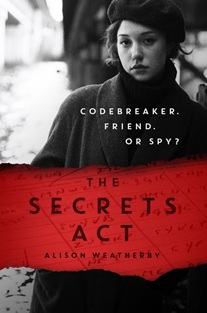
Title: THE SECRETS ACT
Author: Alison Weatherby
Pitch: Pearl and Ellen work at top-secret codebreaking HQ, Bletchley Park. Pearl is a messenger at sixteen. She’s untidy, lively, bright, and half in love with the wrong boy, Richard. Her circle of friends overlaps with his – the dashing young men on their motorcycles who courier the secrets that Bletchley deciphers. Ellen is a codebreaker. Reserved, analytical and beautiful. She never expected to be friends with Pearl – or fall for a chap like Dennis. But when tragedy strikes, their logical world is upended, with both friends caught in a spy plot that rocks the very heart of the war effort.
Find on Goodreads. Find on Bookshop.org (affiliate link).
In your opinion, how has social media helped foster the UKYA community?
Cliff McNish: Most young adults are using social media constantly, so it is is vital that authors reach out to them though this. Social media has also become the main means by which young people recommend books to reach other and talk about fiction.
Alison Weatherby: Social media has helped me really connect to the UKYA community. Because my book launched during Covid, I didn’t participate in the traditional in-person events but instead met amazing fellow debuts in online events that brought together authors from all over. While social media definitely has its downsides, it has been great for breaking down any sort of accessibility barriers, connecting authors and readers who might not have been able to travel or attend events otherwise.
In which ways do you think we can responsibly use social media to introduce YA titles to teenagers? How can we go beyond social media to reach them, given conversations in several countries around re-thinking current legislation on such platforms for minors?
Cliff McNish: By far the best way to introduce teenagers to fiction they might find interesting is first to stimulate their visual interest, via all the relevant platforms like Instagram and Pinterest that do this. Of course influencers play a part too.
Alison Weatherby: I do a lot of school visits in Ireland and co-teach a teen writing class in our local library. I am always shocked at how quickly teens stop reading when they reach secondary school. There are a lot of reasons for this – more activities, academic pressure, distractions in the form of devices and social media – but when kids get access to books that speak to them and their experiences, they’re more likely to read. Ireland has a huge issue with a lack of school library funding and while many teachers do their best to encourage reading, we really need more funding for school libraries and librarians in secondary schools across the country. Connecting with librarians and local booksellers and encouraging more events and activities focused on teen reading, in all genres including diverse books, can help keep kids reading.
How do you think the YA market is going to change thanks to emerging technologies like AI?
Cliff McNish: Given that FANFICTION is as popular amongst teenagers as standard fiction and its popularity rising, ultimately I see (and possibly within the next decade) teenagers primarily writing their own fanfiction much more extensively with the help of AI. I also see them writing for themselves and each other books using AI, rather than relying on traditional adult authors. Fiction for teenagers will be in their hands, rather than the adults who think they know what they want.
Alison Weatherby: This question scares me, honestly. As much as I’d like to say it won’t change and we’ll be able to continue writing and reading human-created works just like before, but we’re already seeing more AI-generated design work and I’m sure AI is being used to generate ideas, edit, or (ugh) even more. There is a fascination with AI, which makes me hopeful that we’ll see a resurgence in Sci Fi and dystopian novels for teens. But we need clear rules and regulations from publishers to ensure that we don’t outsource the creation of these novels and design work to AI.
What steps would you like publishing needs to take in response to the rise of AI?
Cliff McNish: It certainly needs to find ways to recompense authors and publishers where AI has abused copyright. At the moment, it is difficult to know what further steps may be needed or appropriate beyond that, given that AI writing models are improving exponentially faster than publishers and their writers and lawyers can react. I suspect that trad publishers and most writers will simply become obsolete, reduced to a niche industry, mainly composed of adult literary and other genre readers who want to be certain a human not an AI wrote a book. I suspect, once they are co-opted by advanced AI into writing their own fiction, almost all teenagers and children will not worry whether their stories are largely computer-generated or not as long as they can input to the stories at a level and depth they enjoy personally.
Alison Weatherby: As I said above, publishers need to create strict rules and regulations that they and their authors and artists must abide to as far as the use of AI. In a perfect world, we’d only allow human artists to continue creating stories and designs for teen books, but I worry that won’t be possible. If AI is used, it’s very important that it is made clear how and where it was used so the reader can be fully informed.
Thank you all! For more interviews, check here and don’t forget to check instagram (here) for book recommendations from these authors and more!
 #UKYASpotlight
Leave a comment