The Annual Event is a month long celebration of all things UKYA, highlighting books by British and Irish authors (resident and national) and asking their views on topic affecting the community. All views are the author’s own.
About the Authors:
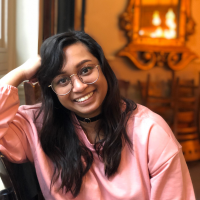
Anika Hussain was born and raised in Stockholm, Sweden, and currently lives and writes in Bristol, Somerset. She is a graduate of the Bath Spa MAWYP. Not having seen herself in the books she read as a teenager, she writes YA novels with South Asian characters at the heart of the story. She is the YA Book Prize shortlisted author of This Is How You Fall in Love, Desi Girl Speaking and Heartbreaker. In her free time, she rewatches Love Island, listens to too many true crime podcasts and sings pop-punk songs loudly around her apartment.
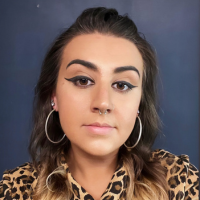
When Amie Jordan isn’t writing she spends much of her time knitting. Her other talents include solving Rubik’s cubes, getting hard knots out of string, and quoting Lord of the Rings start to finish. Her most prominent personality traits are her dogs, and her recent foray into grass seed growing.
About their books:
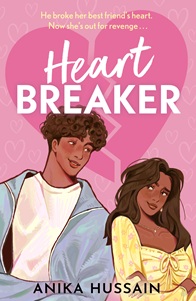
Title: HEARTBREAKER
Author: Anika Hussain
Pitch: When her best friend gets ghosted by school bad boy, our headstrong main character Saachi has no choice but to take him down. But humiliating him by pulling a prank on him won’t do. No, she’ll date him, make him fall in love with her, and break his heart the way he has many others. May the best heartbreaker win…
Find on Goodreads. Find on Bookshop.org (affiliate link).

Title: ALL THE LOST SOULS
Author: Amie Jordan
Pitch: Sage and Oren are sent to investigate rising tensions between witches and werewolves in the Jura Mountains. After dealing with murder, this case feels tame. Neither expects to find traces of old magic, tortured lost souls and a deadly fog that kills everything it touches.
Find on Goodreads. Find on Bookshop.org (affiliate link).
In your opinion, how has social media helped foster the UKYA community?
Anika Hussain: Through social media we are more aware than ever about the wonderful books that are being published – whether they are traditionally published, indie or self-published. It’s made us able to also connect with these authors and follow along with them as they navigate their author journeys. It’s been good as an author as well to have a community that understands the ins and outs of what it means to be a YA author!
Amie Jordan: immensely. The teen target audience of YA is the generation of the online. This is THE way to connect the youth of today. This is where they get their news, their reviews, their recommendations, and where the world has evolved. Without it, authors simply wouldn’t have the same reach.
In which ways do you think we can responsibly use social media to introduce YA titles to teenagers? How can we go beyond social media to reach them, given conversations in several countries around re-thinking current legislation on such platforms for minors?
Anika Hussain: School and library partnerships have to be key when it comes to UKYA as a whole. Now more than ever we need YA book clubs in community spaces, especially as some teens may not have access to digital decides or environments or online spaces may not be conducive to positive engagement.
It would be brilliant if efforts could be targeted at rural areas with pop-up libraries or mobile libraries so that they aren’t left out of the brilliant books being currently published but beyond that it would be great to see a push on audio content as well. There is so much focus on reading but there is something to be said for listening to books. I can’t tell you how many books I’ve finished through audiobook alone—I don’t think I can get through the day without listening to at least one chapter as I’m going for a walk or even cooking. All in all, we need to balance social media with real-world engagement. It’s the only way in which we can reach the very teens UKYA is writing for.
Amie Jordan: I think you’d still have to stay in the online sphere that isn’t necessarily social media, such as newsletters and blogs. Things still accessible on a mobile phone.
How do you think the YA market is going to change thanks to emerging technologies like AI?
Anika Hussain: I think readers may not be as prone to discovering books in shops as they used to but will more likely be fed hyper-personalized recommendations through algorithms. I find this to be a shame as there is something magical about simply browsing a bookshop, not knowing which book you might pick up, and falling in love with something you might otherwise not have picked up had you not walked into the shop.
Amie Jordan: I actually think that it perhaps isn’t? I think that there is so much uproar within publishing, so much anger over it all, that there is and will continue to be a concerted effort not to let it invade our space. I think that actually things may not change so much out of an intentional, forceful decision not to let it.
What steps would you like publishing needs to take in response to the rise of AI?
Anika Hussain: I think publishers need to be transparent and disclose if AI has been used in writing. There’s nothing worse than being a reader and feeling like you’ve been tricked into reading fiction by a computer when you were simply looking for human connection. Publishers need to be proactive and principled and commit to preserving the human aspect of storytelling which means not running towards computers to replicate an authentic voice. The human experience is one that cannot be cloned, both storytelling wise and editing wise. The relationship between an author and editor isn’t one that a machine can learn and publishers need to understand that if they choose to create books with AI that readers will lose the emotional connection they once felt and if that is the case, what is the point of writing then?
Publishers also need to update author/illustrator contracts to include clauses about AI use to protect these creators from their work being used with compensation or their awareness.
Amie Jordan: To be totally honest, right now I feel a bit hopeless and can only answer this with, ‘what can be done?’ I think if publishing could take action, it would. But as for right now there are just not any laws to prohibit the invasion of AI, so publishing is limited in what it can do. It’s simply cannot take on some of the big companies stealing our work. All it can do for now is be outspoken in raging against it, so not to normalise it. And not offer up our work for the training of their machines.
Thank you all! For more interviews, check here and don’t forget to check instagram (here) for book recommendations from these authors and more!
 #UKYASpotlight
Leave a comment