The Annual Event is a month long celebration of all things UKYA, highlighting books by British and Irish authors (resident and national) and asking their views on topic affecting the community. All views are the author’s own.
About the Authors:

Femi Fadugba is an EdTech CEO, sci-fi writer and Dummett Fellow at New College, Oxford. He has given talks to over 10,000 students on topics ranging from time travel physics to the process of writing his debut novel, The Upper World (Coming to Netflix soon!). In prior lives, Femi worked as a science tutor, management consultant and solar salesman, having studied at UPenn and Oxford, where he published in the field of Quantum Computing.
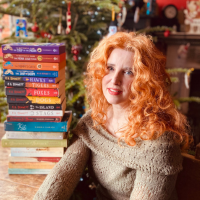
M. A. Bennett was born in Manchester to an English mother and a Venetian father. She was raised in Yorkshire, the home of English Gothic. She loved literature so much she studied it at four different universities, (including Oxford and Venice). She then studied art and worked as an designer, actress and film reviewer. Now she has her dream job of being a writer and her books have been translated into more than 20 languages. She lives in London with one husband, two children and three cats.
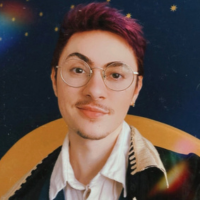
Hari Conner is an award-winning author and illustrator based in Scotland. They usually write fantasy, historical and queer romance – sometimes all at the same time.
About their books:
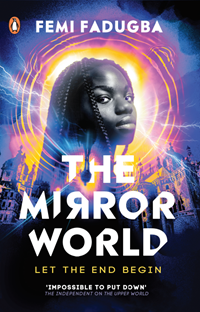
Title: THE MIRROR WORLD
Author: Femi Fadugba
Pitch: A quantum toast to the death and re-birth of civilization.
Find on Goodreads. Find on Bookshop.org (affiliate link).

Title: NO ESCAPE
Author: M. A. Bennett
Pitch: Estranged twins Mabel and Kai each receive an unexpected invitation to stay for a week at their grandfather’s Parisian chateau. Neither remember meeting their grandfather, and neither had any idea that he was still alive. The author of a notoriously difficult puzzle book, their grandfather is bed bound and dying. His last wish? For Mabel and Kai to solve it. The prize: unimaginable riches. The catch? They are trapped in the house until one of them wins … or dies trying.
Find on Goodreads. Find on Bookshop.org (affiliate link).

Title: I SHALL NEVER FALL IN LOVE
Author: Hari Conner
Pitch: I Shall Never Fall in Love is a rom-com graphic novel inspired by Jane Austen romances and real queer history. Three friends all coming of age all realise they might not want to find rich husbands after all, and seek their own kind of happy endings. The story follows George as they try to ignore their complex feelings for their best friend Eleanor, save the failing family estate, and the fact they secretly prefer dressing in men’s clothes secret, before it all ends in disaster.
Find on Goodreads. Find on Bookshop.org (affiliate link).
In your opinion, how has social media helped foster the UKYA community?
Femi Fadugba: Young adults spend a huge share of their time on social medial. The greater contribution of that mindshare that books occupies (generally) the better.
M. A. Bennett: I think social media has been enormously beneficial to the YA community. Often physical books are pitted against screens but I think the two can work in tandem. BookTok in particular has been a great boon to YA readers. Online book clubs, reviews and readalongs can actually foster the love of books. I’m all for it.
Hari Conner: As a disabled author who can’t go to book events in person, being able to find other UK YA authors and graphic novelists on social media is a big way of connecting with other writers and find books I’m interested in!
In which ways do you think we can responsibly use social media to introduce YA titles to teenagers? How can we go beyond social media to reach them, given conversations in several countries around re-thinking current legislation on such platforms for minors?
Femi Fadugba: Working through librarians (public and school), teachers and schools administrators is key.
M. A. Bennett: I think directing age appropriate content to different platforms has to be the way to go. Due to age restrictions, only ‘clean’ YA should be directed to platforms for younger readers, and books like Colleen Hoover’s (for instance) should be restricted to spaces for older readers. Going beyond social media, I’ve always found that the ‘gatekeepers’ of reading, such as teachers, parents and librarians, can be used as a great conduit for getting the message out for different titles. If you can get those cohorts on side, then you’re golden!
Hari Conner: I think recommendations from YA-specific review sites, librarians and authors designed for teen readers can be a good way to share new titles online without being tied to a particular social media platform.
How do you think the YA market is going to change thanks to emerging technologies like AI?
Femi Fadugba: More short form content. More fan fiction. A greater divergence (both financially and sales-wise) between books that focus on quality vs. books that focus on filling the glut for consumption. Not sure which one will come out on top, though…
But most of all, a shift whereby every stakeholder (whether writers, readers, journalists, outlets, influencers or publishers) is integrating AI more into their workflows… to the point that we don’t even ‘see’ it anymore. The same way silicon semi-conductors have penetrated almost every facet of modern life, but most people couldn’t tell you what they are.
M. A. Bennett: Inevitably there will be books written entirely by AI, if there aren’t already, which is quite depressing! Hopefully there will always be a desire for ‘real’ books by real authors. AI could be used effectively to log trends and direct marketing though, so it’s not all bad I guess.
Hari Conner: GenAI is just another tool being used in a wider trend of devaluing the creatives and workers who actually produce the books, flattening the diversity of individual voices, and trying to make people churn out lower-quality work for less money. The most important part of art or books to me is fostering connections between actual people, which machine-generated text can’t replace – and while I can’t predict the wider market, no writers, artists or editors I know are changing their process personally.
What steps would you like publishing needs to take in response to the rise of AI?
Femi Fadugba: No answer.
M. A. Bennett: The publishing industry needs to protect its authors. Books are already being scraped to train AI, and the intellectual property of writers needs to be protected.
Hari Conner: When we’re talking about genAI, it’s both fundamentally unethical in terms of workers’ rights, plagiarism, and environmental damage from literal server banks (from causing water shortages to physical lung problems to residents in the areas these servers are built). But the lack of intentionality in books using machine generation would also be, I think, an insulting disservice to young readers, who deserve high-quality books (and editing, and covers) with thought and care put into them. I think it’s important to recognise, despite tech company pressure, that adopting machines to generate, summarise or edit text, or make audiobooks or covers, is not by any means an ‘inevitable’ process, but a choice – one that can be resisted and defended against.
Thank you all! For more interviews, check here and don’t forget to check instagram (here) for book recommendations from these authors and more!
 #UKYASpotlight
Leave a comment