The Annual Event is a month long celebration of all things UKYA, highlighting books by British and Irish authors (resident and national). Having spent last month asking over 80 authors their views on topics affecting the community, we only felt it fair we were made to answer them too.
About us:
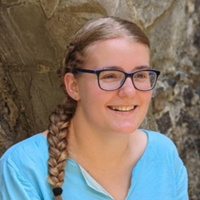
Sifa Poulton is a nuclear physicist by day, studying for a PhD in radioactive gas measurements for nuclear fuel monitoring. By night, she is a consumer and creator of words. She is autistic and is obsessed with medieval history, castles, and infrastructure.

Beth Knight is a teacher of English and MFL at the boarding school she lives in in deepest darkest Yorkshire with her feline overlord voidy boy, Artemis. When not teaching or wrangling her temporary children, she sits in her library and hopes the ADHD hyperfocus will allow her to lose herself in fantastic worlds as she reads and writes YA.
In your opinion, how has social media helped foster the UKYA community?
Sifa Poulton: It brings people together around a central theme – books made here in the UK and Ireland. It lets readers and authors find one another despite the distance between them, making it so much more accessible.
It’s such a warm, welcoming community – we’ve seen that first hand with how readily people have embraced this rather insane project of ours. The community has given us so much time and support to get this off the ground and make it grow.
Beth Knight: Social Media is key to the UKYA Community as it allows bookish people from across the UK and Ireland to find one another and discover new stories, new books, new perspectives as well as making a diverse range of connections making literature, particularly YA more accessible than ever.
Personally, the UKYA community is amazing. Warm, friendly, and accepting. It’s amazing to see the love my little temper tantrum has garnered. The feedback we get from the community about UKYA Spotlight is what keeps us slogging away behind the scenes.
In which ways do you think we can responsibly use social media to introduce YA titles to teenagers? How can we go beyond social media to reach them, given conversations in several countries around re-thinking current legislation on such platforms for minors?
Sifa Poulton: Responsible social media use is something I believe everyone should be thinking about when they use social media. This means thinking not just about what you’re posting but how and why, and what boundaries you are enforcing to protect yourself and consumers.
As for what we can do to introduce teens to books offline, the answer is libraries – school libraries and local libraries. These are amazing founts of information, a brilliant resource that is underfunded and underappreciated – and under attack. They are virtually free to use (perhaps some reservation fees but these are pennies) and with increased library sharing agreements, readers can access more than ever before by signing up.
We need to do better at signposting them to the teens in our lives and also support libraries more. This means using them more – if we don’t use them, we will use them. If you can volunteer, give an hour a week. Write to your local council and your MP, demanding they protect the vital services libraries provide (it goes well beyond books!) Donate good condition middle grade and YA books to a local school library.
With regards to legislation, we need to watch the countries who are debating and bringing in stricter rules. There are lessons to be learnt from them – Australia’s ban hasn’t come into force yet but already there are several take aways from their experience.
Beth Knight: Speaking from a professional standpoint, the incoming legislation is a long time overdue, there is too little regulation of Social Media companies and they are simply about profit and I have seen first hand the damage it can do. I also know the incredible benefits it brings in terms of finding your people. I also think our legislation and it’s execution are deeply flawed, gives sensitive data to private companies, and is easily circumvented.
As to getting books into the hands of teens IRL, there needs to be a real push to bring literacy to the forefront educationally and culturally. Reading is fundamentally, “not cool” to teenagers and some kids find it difficult. I wish school libraries had better access to audiobooks and were able to lend them to students – you’d think in a digital age it would be easy enough! I think adults/teachers have a responsibility to model good reading too, regularly talking about what they’re reading or what they’re reading with their children. Additionally, I think compulsory reading lessons right up to the end of GCSE should be a thing. Allowing students to choose material they want to read, be it a novel, a graphic novel, or magazine articles on something they enjoy. Unless we fully demonstrate the value of reading, teenagers are going to continue walking away from books.
Supporting local libraries and proper bookshops is also key. Libraries are so important to the community beyond just reading but people going into libraries is so important. And like Sifa said, donate good condition YA books to school libraries, they are all under massive budgetary constraint, so the librarians are always grateful.
How do you think the YA market is going to change thanks to emerging technologies like AI?
Sifa Poulton: I think it already has, but perhaps not in the headline grabbing ways we might expect.
We’ve seen the enormous change to publishing thanks to the rise of social media. Facebook then twitter then instagram and now TikTok shifted marketing strategies. What sells now is very much calibrated to what will work in a TikTok pitch, for example. I have no doubt AI tools are being applied now to marketing because being able to see which strategies are working fast is important, and AI can generate and analyse faster than we can.
The headline grabbing stuff is, of course, generative AI being used in book writing. We’re definitely in for a bumpy few years here. Unfortunately there are people who are going to use it (and already are) to write books and then are going to try and publish them. This is going to stretch a (frankly broken) system even worse. Publishers are struggling to read all their submissions and make the decisions on what to buy. Agents are struggling to read the books from authors who are seeking representation.
Now throw AI-generated books into the mix and it makes it so much worse because there’s even more stuff to wade through. We’ve already seen this happen with short and flash fiction magazines who got so overwhelmed with entries thanks to people basically spamming them with AI-generated tales that many have had to radically reduce how many submissions they will take.
The reasons publishing is in this mess are complicated and not going to be fixed any time soon because it requires a lot of structural changes.
However, I hope this is only a temporary blip. The people who are using the AI and don’t care about the art side of writing (just erroneously think it’s a chance to get rich quick) are going to lose interest when they discover it won’t work as a get rich quick attempt.
The problem is how many actual authors we will lose along the way – the ones who stop writing because they can’t sell books and have to give it up because of monetary troubles. The authors who never get published because they get disheartened by the delays.
And it’s not just the authors who are going to get hit. Audiobook narrators and cover artists and the many other necessary jobs to get books made. People are already trying to replace them (it’s cheaper) and the vocal parts of the readership are pushing back, so I doubt they will stay in the traditional publishing sphere for long, but how many of these narrators and artists will be lost too?
There is, of course, the ethical side to AI in publishing. The training of large language models (LLMs) on books without authors’ consent or compensation (and the fact some courts are saying this is OK!?) The environmental concerns over energy consumption because GenAI is so resource intense. I am, personally, against GenAI for these reasons (I will say, scientific machine learning is very different to GenAI, both in terms of how it’s trained and how it’s used, and I don’t oppose that.)
Beth Knight: AI is already changing the publishing landscape. It’s already manipulating social media algorithms and you have to have been living under a rock not to know the incredible impact Booktok and Bookstagram have had on sales.
I know the day is coming when they publish a fully AI generated book and it will inevitably do well, because people will be curious and that will open the floodgates for AI authors. I worry for ghostwriters who currently write celebrity books or the big children series who will inevitably be replaced by AI and will lose their livelihoods.
The issue is that LLMs (Large Language Models – They are not truly AI as there is no true sentience there) cannot make commentary, cannot weave themes and exploration of humanity and the human condition it can only churn out what it has been fed. What’s going to happen when all it is fed is the same tropey material formulaic with out any spark of what makes a human book unique? Worse still are the environmental impacts. AI data farms destroy drinking water supplies and cause blackouts in poor communites who don’t have the resources to fight big tech out of their areas. Not to mention the exploitation of humans and natural resources in strip mining for the server components.
There are no positives to the current “AI” LLMs. Creativity is uniquely organic and it is what makes us human. Tech should be used to assist us in the menial time consuming tasks, not to maximise profit at the expense of humans, their intelligence, creativity, and quality of life.
Companies have already stolen work of countless authors: trad, indie, fanfic, and unpublished, without compensating them and I can only see that getting worse since the US Supreme court ruled in favour of big tech against authors who brought a lawsuit.
It’s not just authors who are going to suffer either. The publishing industry is a hot bed of creatives: cover designers, illustrators, audiobook voice actors, mixers, sound designers, and musicians. Why bother hiring any of these when GenAI can churn out something it stole from the people it replaced? It’ll keep going; advertising and SM platforms run entirely by GenAI. Instead of editors, AI. Instead of acquisitions teams an AI bot that runs the submitted MS against a profitability algorithm. How long before AI does away with agents? Until all that’s left is the senior management, the IT department and the minimum wage workers required to box and ship physical books? When the point of AI is to maximise profit, where will they draw the line? And when will you become replaceable?
What steps would you like publishing to take in response to the rise of AI?
Sifa Poulton: I would like to see strict lines drawn against the use of AI in the creation of books (including covers and narration and beyond). This needs to be firmly written out in contracts as that’s the only way to hold publishers to it – legally signed documents.
We also need the publishers to lobby governments for stricter upholding of copyright law. The US is going to struggle there (due to the recent ruling) but the UK can push on with it. Make it much harder for books to be scraped and used, and with harsh penalties for those who do.
Beth Knight: We need legal frameworks and enforced regulation now. We need robust legal protects foe all creatives and a complete review of copyright laws. We need full protections written into contracts that the any company found scraping authors’ or artists’ work for LLMs/GenAI with out prior consent or proper licensing will face legal action and be force to reset their model to the last point before they took the work. This unfortunately would only work within big traditional publishing where the houses have the legal teams able to bring these suits on behalf of their authors, so the question then remains how to protect small presses and indie.
Unfortunately, I suspect the the US Supreme Court ruling has set the precedent. Ultimately, our governments are cowards and will always cave to the biggest wallet and, in this case, that’s the tech industry. It’s shameful and disgraceful but politicans have only ever reacted when the optics are the best and too many people have fallen for the AI Propaganda.
I see it in my lessons as a teacher where I have handed out full afterschool detentions for students who simply gave their homework or projects to ChatGPT and were unable to actually explain any of the content. They protested because they had “done” the work and yet they hadn’t; they’d spent 5 minutes typing the taskinto the LLM and then handing in the result. If companies start flooding the market with GenAI books written in 10 minutes, it will erode the will to sit down and spend months crafting a world, characters, a story you or anyone else should give a damn about.
As such I would hope that publishers commit to ethical publishing. That the big five and existing smaller presses take a stand and say we will not publish AI. No books written by GenAI, no books that used GenAI in the drafting process. That they will not use AI to generate covers or audiobook narration. That they remain commited to human creativity, expression, and true intellectual discourse.
Thank you all! For more interviews, check here and don’t forget to check instagram (here) for book recommendations from these authors and more!
 #UKYASpotlight
Leave a comment