About the Book:
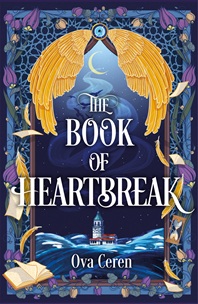
Sare Silverbirch has already had her heart broken three times. A fifth heartbreak will stop her heart forever. Such is the nature of the curse she was born under, which forces her to live a life without letting anyone get too close.
When her mother dies unexpectedly and her heart breaks for the fourth time, Sare begins to urgently question the curse. Where did it come from? Why her? And rather than accept it, could there be a way to break it?
Her questions lead her to Istanbul where she meets Leon, a seer who helps her track down the mysteries of her mother’s past. But Sare’s heart is a fragile thing and their blossoming romance poses a great risk to her survival. Especially when she discovers that her fate is in the hands of celestials beyond this earthly realm.
Now the heavens are stirring, for they have a stake in Sare’s destiny—and they don’t like their plans being overturned.
Add this book to your Goodreads shelves here. Find on Bookshop.org UK (affiliate link). Read Sifa’s review here.
About the Author:
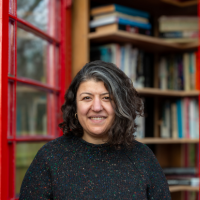
Ova Ceren is the creator behind the highly popular BookTok and Instagram channels @excusemyreading, where she shares her love for books, cosy views of her garden library and adventures from her daily life.
Half woman, half book, she was born and bred in Izmir, Turkey and now lives in Cambridge, UK.
Ova never forgets a heartbreak. She writes to put the pieces back together and wishes her magical stories would give people hope.
Interview:
As the title suggests, this is a book about heartbreak, about loss and grief, but it is just as much about forgiveness in the face of betrayal. It’s a very powerful juxtaposition and a hopeful one too. How did you go about ensuring there was a thread of hope in the midst of all the pain and anger Sare is experiencing? Was it hard to strike the balance in certain sections?
When I started planning The Book of Heartbreak, I knew I wanted to write something that was both sad and funny. Because in life, laughter and tears often arrive at the most unexpected times and I’ve always cherished the people who welcomed those moments with me without asking for explanations.
For Sare, though, there’s really only one person who shares that space with her: Munu. This is why I gave Munu this big, colourful, bold persona so I could counter Sare’s loneliness, but it was definitely a challenge to find the right balance. In earlier drafts, Munu came forward too strongly and sometimes overshadowed Sare. It was a lot of work to get it right.
But the ultimate “fun” part of the book for me was writing the angels — with all their ridiculous arrogance and total obliviousness. I hoped they would lighten some of the bleaker moments and bring contrast to Sare’s grief, and also make people think, perhaps, the afterlife isn’t so scary?
The book is steeped in Turkish folklore and customs, bringing the reader to modern Istanbul alongside Sare. Were there any myths or practices you wished you could get into the book but ultimately couldn’t fit in?
Absolutely! There are so many bits of folklore that I could happily write ten books and still not cover them all. One I really wanted to include was Nasreddin Hodja — a folkloric figure known for his wit and wisdom. His stories are funny, clever, and sometimes bittersweet, which would have fit beautifully with Sare’s journey, but there just wasn’t space to explore him properly.
I also thought about weaving in more everyday customs — like coffee fortune-telling or the rituals around everyday objects — but in the end, I had to be selective so the story didn’t become too crowded. I’m leaving the door open to explore more myths in future books!
Names hold so much importance in this book. Several characters use multiple names, either by choice or having them forced on them. Was there anything that particularly inspired this element of the story or reasons you wanted to explore the power of names?
This is such an interesting question. I love playing with names in my stories, and maybe that comes from my own life. Ova Ceren is actually my first and middle name — I didn’t want to use my surname (which is as long as a freight train, a little frightening, and entirely my husband’s fault!).
I was Ceren in Turkey and became Ova in the UK. Ceren is pronounced “Jeren,” but here it was often said as “Seren.” Ova felt shorter and more practical, so I swapped my names after moving.
I genuinely believe names hold power. By using Ova, I stepped into a different version of myself. My family still calls me Ceren, though — they like it better!
Sare’s chapters are interspersed with internal emails between angels and cherubs in the heavenly administration. What prompted you to include these snippets of bureaucracy – and the greater internal battle within heaven’s administrative divisions?
In the very beginning, I had a mysterious ‘bureau’ who was managing the curses. There was only one angel and Munu, but there were no emails.
My grandmother’s fear of death is the reason I included so much “angelic activity” in the book. She was dying while I was writing it. She wasn’t terminally ill, just old, and her organs were failing. She didn’t want to go. She clung to life until the last minute because she was terrified of going to hell.
I was in the UK, she was in Turkey, and we spoke over video calls. My mum and my younger aunt cared for her at home until the very last day — which is the mainstream Turkish way, since end-of-life care in hospitals is rare.
My grandmother often cried, afraid of eternal punishment. It deeply affected me. She was illiterate, couldn’t read or write, but for years she went to the mosque and listened to sermons. My mum didn’t believe in that way, so her words didn’t soothe her. My aunt was uncertain. I personally believe in the afterlife, but not in a mainstream religious sense, so my reassurances never carried the same weight as an imam’s. For her, everything she heard at the mosque was unquestionable. No matter how much we tried to challenge it, she never truly listened.
Because of this, I wanted to expand the afterlife element in my book. I wanted it to feel mundane, even silly at times, but ultimately hopeful. I wanted people to think: maybe it isn’t all doom and gloom. I wish I could have changed that fear for my grandmother. I couldn’t. But I hope that somewhere, for someone, my story will offer a little hope. We’ll all meet… somewhere.
If you ended up having to work for this heavenly bureaucracy, which rank and department would you be?
Oh I’m definitely the Cherub! For years, I worked in IT, most of the time the only woman in the team. I was a cherub between some male egos!
Each chapter begins with an extract from the journals several characters are after. Are there any traditions or pieces of literature you drew on to help craft them?
I was inspired by Evliya Çelebi’s (Ottoman explorer) journals when I came up with the idea, although of course his writing is in a very different style. For mine, I focused on matching each extract with the themes of the chapter it introduces. It was such a fun element to play with!
Please can you recommend a UKYA book you think readers will love?
THE DAGGER AND THE FLAME* is an utterly captivating YA fantasy, full of high stakes, gorgeous writing, and characters you can’t help but root for. Catherine Doyle blends myth, magic, and heart so beautifully — and the City of Fantôme will stay with you long after you’ve turned the final page.
Thank you, Ova!
*(Bookshop.org UK affiliate link)
 #UKYASpotlight
Leave a comment