About the Book:
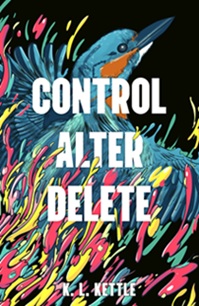
What would you choose – a beautiful untrue life, or a broken true one?
Hal is living a fairy tale – almost. Thanks to tech genius Francis Knox and her company’s pioneering work building the perfect World 2.0, the universe is available at a swipe, and Hal has everything she wants. (Except for her family, which fell apart after her dad’s disappearance years ago.)
Except, perhaps, winning the notoriously competitive Knox Cup. That’s a dream even World 2.0 can’t fulfil, not when Hal doesn’t have the funds to enter.
Then out of the blue Hal’s guardian challenges her to prove herself, arranging for Hal to compete. It’s an opportunity she can’t waste. If she wins, she’ll meet Francis Knox herself – then all of Hal’s deepest, secret wishes might really come true. But as the competition progresses, Hal discovers decay hidden beneath the world’s perfect veneer – and, as the cracks begin to grow, she is forced to make a choice about what it is she truly wants.
Find this book on Goodreads. Find on Bookshop.org UK (affiliate link).
About the Author:
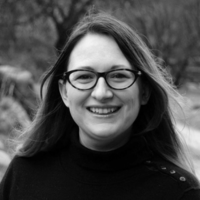
Kathryn lives and works near London, having moved from her native Birmingham. Her YA debut THE BOY I AM was a winning shortlist entry in the Society of Children’s Book Writers and Illustrators (SCBWI British Isles) Undiscovered Voices 2018.
Interview:
Pitch your book in 10 words!
Saving reality means choosing broken truths over a beautiful lie.
This book feels intensely personal. What was the spark that brought it to life? Was it an idea or a character?
I generally end up writing books neither because of a character or an idea but a question I need to answer in myself. My first book was centred very much about my journey coming to terms with my gender and my position as a feminist, this was very much about my journey as a mother and a technologist. I’ve spent over twenty years working in technology, with all the excitement of a child with a magic wand. I used to dream of travelling back in time and showing my grandmother my iPhone, and have always been fascinated about the line between technology and magic, how one can seem like the other. I love working in tech but also have become increasingly aware of what the systems we are building to help us quietly ask of us in return. I wanted to decide if I should be afraid, or retain that wonder and hope as our attention, our creativity, even parts of our identity get lost in the machines.
If you had a character in the Alter, what skin would you choose?
It sounds really tragic but I would probably be very boring and not use one. It’s taken a long time for me to like who I am and what I look like and so I would try to be as honest as possible. Every time I use a filter on most social apps my stomach does a flip and scares itself. I would more likely be one of the early people who disconnected by choice and go live on a farm and knit. OK, but let’s say I wasn’t going to be boring … the fun answer, I would probably be a Pixar version of myself because I think inside my skin I’m mostly Disney with a bit of a rebel streak.
Hal’s life is tragic at the start of the book, but her arc becomes the engine of the story. How soon did you know this was her book, and what do you hope readers take from her?
Hal never arrived on the scene alone; I always seem to end up with characters that sit either side of the question I’m managing. When I wrote there was always a voice from humanity and a voice from ‘inside’ the machine (no spoilers here who that is). In finding Hal as the centre of the story, I found her isolation first, her grief later, and then her desire to escape while remaining in love with this perfect world, afraid of disconnecting. It felt like the most honest way to explore my questions. The world may be speculative, but the emotional core of the story comes directly from experience. A lot of the early drafts were written during Covid, when I was not able to leave home as was designated a ‘vulnerable’ person by the government (I was pregnant) and the isolation of that, while being hyper connected to the world, and impotent was a big influence.
What I hope readers take from her is not a neat message about resilience, but permission to be imperfect. Hal’s strength comes from learning how to live with grief, to find hope, let go and leverage others. She survives not by becoming fearless, but by choosing to keep going while reality is crumbling. I think that’s a skill we all need to rely on more and more.
Which was your favourite game to create in the world of the Alter, and which would you most want to play?
My favourite game to create was 100% Altercation, so no surprise that it’s Hal’s favourite too. It is a blend of some of my favourite games and is meant to be a place where you can do anything and be anyone, where the game revolves around you. If you want to ‘win’ it, there’s a way, but I’ll let you decide if it is actually winnable. I love sprawling RPG open world feel games, huge places to explore, a deep skill tree, and endless side quests. I am a ‘completist’ when it comes to games and will do every last mission before I leave it. Altercation borrows from games people spend years inside, levelling, optimising, and mastering systems that never quite end.
The idea of a game that adapts to you, distracts you from the finale, which is something incredibly simple – a rest, a nice drink on a sunny beach, heaven – also felt like a fun analogy for life. Adulthood in particular, which can be busy, overstimulating, strange, and somehow still very ordinary.
Although Hal calls them Go, the character also have a second name, Elpis, taken from Greek mythology. Why did you choose to embody Elpis so literally and metaphorically in this story?
Way before I wrote the book I was obsessed with the analogy of Pandora’s box (or jar) and how the technology we use, and where it is evolving in the 21st century, feels like it resonates with that story. In Greek mythology, Elpis is the ‘hope’ that remained in the box/jar when everything else had escaped. But in the story does that hope remain or is it trapped? Does it mean we always have hope, or that we are always kept from it. The wonderful thing about stories is that it can be both. We need hope so much these days, and we have to fight for it daily. It’s a struggle that I know well, battling with personal demons, as well as the ones outside my influence.
For a long while the importance of hope, and the character Go, were not connected. Go took many forms in the edit as I found them, and Hal. It wasn’t until I realised Go’s connection to Hal’s ability to hope, and perhaps more, that the whole story came together and made sense.
As writers we often anthropomorphise our demons in our stories, but we’re in a world now where I think it’s more important to anthropomorphise our hopes and do what we can to nurture them.
In CONTROL ALTER DELETE, it was important for me to write hope not comforting, passive or even something that could be held in one place. It is heavy, inconvenient, and sometimes painful. By having Go embodying Elpis, hope could not stay abstract. They have to fight, they have an opinion, they refuse control, demand care, responsibility and choice.
CONTROL ALTER DELETE is not straight science fiction, blending fantastical elements into the endgame. How challenging was it to get that balance right?
It was one of the hardest parts of writing the book, and I’ll never be sure how well I did. It took so much trial and error to get to a place where I felt the balance was in place, but it was important to me. What was essential was having an amazing team of editors to help me with the balance. For me the world of tech is magical itself; the things we can do, create, influence, so it was so important to embed that feeling into the book. But I set myself a rule that emotional truth had to come first, the technology second. The fantasy elements needed to feel plausible, baked in real myths, legends and philosophy and able to express things technology alone cannot: grief, memory, belief, and hope.
Whenever the balance tipped too far in either direction, the story lost its grounding. Finding that line took time and a great deal of rewriting, but it was essential to making the world feel both immersive and meaningful. There is a real fight we have on our hands at the moment to find the right balance between the natural world, the intangible, and the future of technology – we need to find a new balance and will be encouraged to get further away from understanding how the machines we use are built, influenced, coded. I’m sure one day the tech we create will slip into a place where we can neither control nor understand it, when that happens it will feel as magical as the myths which inspired our ancestors. We need to hold onto the difference.
If you were to forge a component yourself, what shape would it take and why?
The components in the story are core and necessary to existence. They represent, for example, memory, reality, and the systems that quietly hold everything together. The idea for them came both from my background in studying politics and philosophy, and from my nerdier side, thinking about the core computational parts of a computer. Things like memory in RAM, processes running underneath what we see on the screen, and the idea that if those core functions fail, everything else collapses.
If I were to forge a component myself, I would probably create the only one that I intentionally avoided adding to the story – a component to control Time. As a massive Doctor Who fan my gut would be to tie the power to something related to that – a little wind-up TARDIS that I keep on my bookshelf perhaps? However, it wouldn’t be personal enough to hold the power. It would need to be extremely personal, an emotive object. It would have to be a watch my grandmother gave me just before she passed.
Please recommend a UKYA book you think readers will love.
THE MIRROR WORLD*, by Femi Fadugba
Thank you, Kathryn!
*Affiliate link
 #UKYASpotlight
Leave a comment