About the Book:
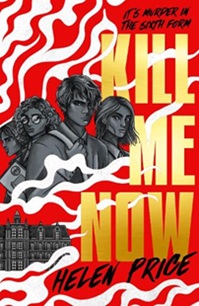
School golden boy Riley North is found dead. The funeral director’s son, Guy ‘Reaper’ Mortimer is accused.
Determined to clear his name, Reaper teams up with spiky new girl, Samira; Riley’s loyal teammate, Bunsen; hot-headed Snake; and the ever-innocent Betty. They unravel the twisted layers of school, where secrets hide and deception is rife.
But someone knows the truth and is determined to expose it – one deadly sin at a time.
Find on Goodreads and Bookshop.org UK (affiliate link).
About the Author:
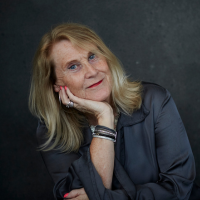
After studying languages at university, Helen built a career in international HR and change management, writing mainly boring stuff like corporate speeches, handbooks, and communications, until fiction lured her in. She honed her craft by studying at The Golden Egg Academy and completed its mentorship program. Originally from the historic city of Norwich, she now lives in a field in West Berkshire. A black belt in karate, she loves chocolate, her dog, and anything thriller-related, both on and off the page.
Interview:
Pitch your book in 10 words!
Seven secrets. Seven bodies. It’s murder in the Sixth Form!
What was the inspiration for KILL ME NOW?
In the first instance, a conversation with a stranger. A young woman told me she’d found faith but had been rejected by her local church. That contradiction stayed with me.
Around the same time, I watched a news report about young people being radicalised, and it made me think about what happens when something intended to guide or support becomes a means of control. When belief, of any kind, is twisted to serve an agenda.
That’s when the seed of KILL ME NOW took root. Not as a book about faith, but as a story about control – about who gets to shape the narrative of a town and the lives of its young people. Add secrets, everyday teenage pressures, and a body count . . . and the story soon took on a life of its own.
How much of the whodunnit solution did you know when you first started crafting the book?
I always know who the antagonist is and why they did it before I start writing. I can’t start a mystery without knowing how it ends. For me, it’s like setting off on a road trip without a destination. I don’t always know how I’ll get there, but I do need to know where I’m heading.
That said, during the editorial process, I rewrote the ending entirely. My editor used the phrase, “Invest in the evil!” This was music to my dark thriller ears and, as a result, the “who” definitely evolved and their motivations deepened. It was absolutely the right call. The twist became sharper, and the story is now stronger for it.
Mysteries are notorious for creating interesting search histories. What’s the strangest thing you had to research for KILL ME NOW?
Ha! Great question. Let’s just say… if anyone checks my browser history, I’m in trouble. I do have an anecdote about ending up on a watchlist, but perhaps I’ll save that for another day.
For KILL ME NOW, there was a lot of research into, ahem, dead bodies. I also looked into toxins, poisons, weapons and funeral practices. But not everything is available online, so in the interests of authenticity I went behind the scenes at a local police station, funeral parlour and crematorium. Yes, I know. The last two always raise eyebrows.
But readers notice when details are guessed at. They feel it when a story lacks weight or credibility. And it matters. YA readers are sharp. If something feels off, they’ll spot it instantly.
So I asked the difficult questions and went behind closed doors in places most people would shy away from. And yes, I saw dead bodies and looked Death in the eye. But it was important to portray it honestly, not sensationally.
The hyper-religious nature of the community intensifies the claustrophobia in the book. What led you to set the book in a pilgrimage site?
A lot of YA mysteries are set in schools, and with good reason. But I wanted a pressure cooker environment – a school that felt sealed tight, but where the tension simmers far beyond the gates.
And so Langbury was born.
It’s closed off, insular and emotionally charged. Like (early-seasons) Riverdale, it’s a character in its own right. Langbury is beautiful, historic and steeped in ritual… but also delightfully suffocating.
Creating a fictional pilgrimage town allowed me to push that claustrophobia to its extreme. Yes, faith exists as part of the backdrop, but at its heart, KILL ME NOW is about secrets and the very personal reasons we have for keeping them. It’s about hiding who you are and what happens when perception matters more than truth.
In a town where the pressure is always on to confess your innermost thoughts, KILL ME NOW explores what happens when that truth finally comes out.
High pacing and tension are hallmarks of mysteries. What tips do you have for writers to incorporate these into their own tales?
Enter scenes cold and leave them hot. Or vice versa. That emotional temperature is everything. Get the contrast right and the rollercoaster takes care of itself.
Pacing isn’t just about short sentences or chapters. It’s about escalation. Ensure every answer raises a new question and every reveal destabilises something.
Allow your reader to breathe between major twists. Again, tension only works if there’s contrast.
Use semiotics and world-building to layer in clues, and don’t save all of your reveals for the final act. Drip-feed them throughout so your reader is constantly reassessing who, or what, they think they know.
And finally, plant your clues fairly. The goal isn’t to trick the reader. I like to give them at least one reveal they can guess. But it’s also good to make them gasp.
Why do you think schools are such compelling environments for mysteries?
During your school years, every decision already feels as if it’s life-or-death. That makes school the perfect place to stage a murder mystery.
Hierarchies, power dynamics, loyalties, betrayal, first loves, first heartbreaks, identity, reputations and secrets are all competing within the same confined environment.
Disrupt that already heightened emotional mix and everything intensifies. One small change can upend the entire landscape, turning it into a playground for secrets, lies and the damage they can do.
Several characters are known by nicknames rather than their given names. Did you always know their nicknames, or did that come to you later in the process?
Nicknames reveal how a peer group sees someone, and sometimes how that person sees themselves. They’re fun and great for character building in YA novels.
For this reason, I love playing with names and I can’t start writing a character until I know theirs. It’s only when I’ve named them that they take on an identity and become real to me.
Bunsen (Mungo Burns) and Snake (Jake Pyethan) appeared immediately, like two sentries flanking Riley. Jake’s surname jokes wrote themselves. And as for Guy ‘Reaper’ Mortimer . . . well, as the son of the funeral director, his just felt right.
Please recommend a UKYA book you think readers will love.
This is sooo hard.
Amie Jordan’s ALL THE HIDDEN MONSTERS*. Just an awesome series and I can’t wait until next month, when the last one in this brilliant trilogy is out.
Thank you, Helen!
*Affiliate link
 #UKYASpotlight
Leave a comment