About the Book:
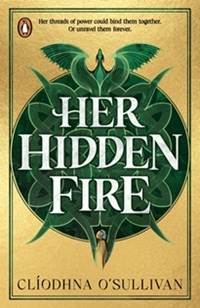
If he has the ability to wield magical powers, everyone will rejoice – especially the girl who loves him. But what happens when they realize she has the gift?
In a world where dragons stalk the skies and magical abilities are an elite privilege, the ruling family of Ailm’s Keep is on a knife can Ionain, the heir apparent, channel magic, or will the family be cast out and replaced by a cruel master from a neighbouring land?
So when Éadha, a servant girl who loves Ionain, discovers that she can draw power, she finds herself in grave danger. It’s extremely rare for a girl to have this talent, and certainly never outside the great families. At Ionain’s moment of truth, Éadha makes a desperate gamble to save him, Ailm’s Keep, and ultimately herself.
As Éadha and Ionain enter a whirlwind of patriarchy, class, heartache and jealousy, they learn about power’s terrible cost – a price others willingly pay to maintain theirs. How far would you go to empower the one you love?
Find this book on Goodreads and Bookshop.org UK (affiliate link).
About the Author:
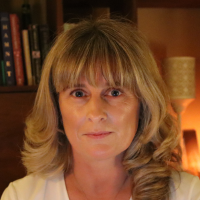
Clíodhna O’Sullivan is a writer based in Co. Louth, Ireland. She works part-time as a legal counsel. In the last few years, she has taken part in several writer events, including as a panel moderator at a Terry Pratchett conference in DCU and panellist at the Cymera festival in Edinburgh. She’s reasonably fluent in German and plays in a band, Molasha (you can find them on Spotify!). She is married with three children, one of whom is autistic, as well as far too many cats and a dog.
Interview:
Pitch your book in 10 words!
It’s searing, sexy & if you’ve ever been exploited I hope it makes you feel seen…(sorry, a bit over 10!)
This is a book about rage at unjust systems but it’s a rage that is at times deliberately drawn back to a simmering undertone rather than screaming outburst – and that moderation gives the rage a more pervasive power. How did you go about balancing that rage dynamic with the other emotions in the book?
One thing I’ve been struck by in Goodreads reviews, is how differently some people think Éadha should respond – that she should immediately fight back with her power. It’s made me think a lot about the culture I was raised in, in Ireland, and how I was taught that my only option was to endure the bad stuff. I grew up poor, with an alcoholic father and depressed mother, and a fair bit of volatility and deprivation around me. How Éadha responds, is how I was raised to cope as a powerless teenager – by withdrawing into yourself and enduring. I also think it makes sense for her character as well. She’s a servant who wasn’t raised to have any expectations for herself – so I think it makes sense for it to take a while for her to realise that endurance, and swallowing your rage, is not the only option.
I also think it’s important to show that anger isn’t all-consuming; because to me that’s another way to let the bad guys win, when you let your (justifiable) anger take over your life. That you can be angry at being exploited but also in love and also wrestling with your attraction to the handsome new apprentice who’s far too perceptive…
Throughout the book, we see many small acts of resistance (like the dress). Why do you think it’s so important we highlight and celebrate these smaller acts as much as the big moments more commonly centred in narratives?
For me, small moments of resistance like the dress are really important, because they’re more realistic. Most of us don’t have magical power to draw on or a bond with a dragon, so all we get is the occasional fist wave at a system that otherwise dominates our lives. So we need those moments to help us keep going and show it doesn’t wholly own us. I also think it’s accurate though, that even small acts of resistance can have disproportionately terrible consequences, as happens in the book – because the abuser sees in them the possibility of greater resistance if it isn’t immediately snuffed out.
Across the book, Éadha is drawn between two boys – her childhood sweetheart, Ionáin, who represents the status quo and ideal within the system, and new boy Gry, who represents challenge and investing in herself as much as others. How did you ensure there was chemistry with both and that the reader could understand why both appealed to her?
Again, I’ve been struck by some people insisting Éadha should give up on Ionáin, as soon as he starts to act in a more lordly way towards her. To me, her loyalty is part of who she is. She’s not going to give up on the one person who’s been her best friend since she was a small child: she’s going to give him the benefit of the doubt first, and try to make it work. Honestly, I think that’s how most of us are in real life: we’re loyal to the people we have a deep history with, even if they drive us nuts sometimes – because in life there are often very few people who’ve known you for so long.
At the same time, I think family, or childhood friends, can sometimes have a settled view of who you are, to the point it becomes a barrier to them seeing how you’re changing as you grow or master new skills. So in Éadha’s case, she’s changing as she comes into her power but Ionáin is slower to see it partly because he still thinks of her as the girl he grew up with – while Gry, who doesn’t have any of that history, is quicker to see who she’s becoming, and how amazing it is.
So yes, the conflict for Éadha comes from the fact that different parts of her are drawn to Ionáin, and to Gry – one is stability, and loyalty and home, the other is power and recognition, but also loss of control and the unknown, which scares her.
There are many shows of power – flight and illusions and battles. Which was your favourite to write? Were there any that were particularly tricky to get right?
Éadha’s first flight was my favourite ‘power’ scene to write – when she sneaks out to the Lady’s Well to try out her new gift and finds herself first flying, and then spinning in the air in the centre of the tower, ‘whirling until the stars became streaks of light she was outrunning’. It’s lovely to be able to write about the sense of wonder you’d feel, at suddenly being able to do something that was impossible before. If I’m honest, whenever I’m asked what would your superpower be, it’s always flying. When I was younger, I used to have such vivid dreams of flying that when I woke up it’d take me a few minutes to realise those dreams weren’t actual memories of flight – and I’d be so disappointed because for those few minutes, I really thought I could remember flying.
Stories change a lot over the course of edits. Is there anything you tried to keep in that ultimately was a darling that had to be killed?
The first chapter of Her Hidden Fire originally started with Ionáin and Éadha as young children. Lord Huath comes to Ailm’s Keep and taunts Ionáin about whether he’ll be gifted, and Éadha stands up to him. I personally like stories that show you protagonists as children first, as a way of showing you the deep roots of a relationship or a conflict. But in the end it had to go as it was just that bit too leisurely a start – though in my head, that original chapter still colours how I see the relationship between Éadha and Ionáin.
It’s not too long until we get to continue Éadha’s story in HER RISING FLAME. Can you give us a hint about what to expect?
At the end of Her HER HIDDEN FIRE, the three central characters make life-altering choices. HER RISING FLAME* is about the consequences of those choices for them and for the people they love, because the Masters are vengeful and relentless (The Terminator was a big influence on me!). The book splits out into three points of view as it follows Ionáin, Gry and Éadha through the aftermath of those seismic changes, with their stories splitting apart and intersecting again. It means you’re getting the story from Ionáin and Gry’s perspectives, as well as Éadha’s, including how they each feel about the increasingly tangled relationship between the three of them. I really enjoyed writing the different perspectives: it’s fun to show how two people can be in the same scene and taking completely different things from it.
Please recommend a UKYA book you think readers will love.
BLACK SWAN GREEN* by David Mitchell. I’d read pretty much anything by David Mitchell and while many of his books (such as Cloud Atlas) are written for adults, Black Swan Green as a YA crossover that’s a beautifully written coming of age tale, set in 1982 as Jason deals with a stammer and bullying while his parents’ marriage is also disintegrating. I’m very much a places person, and I loved the evocation of the village itself, Black Swan Green, as much as Jason’s own story.
Thank you, Clíodhna!
*Affiliate link
 #UKYASpotlight
Leave a comment