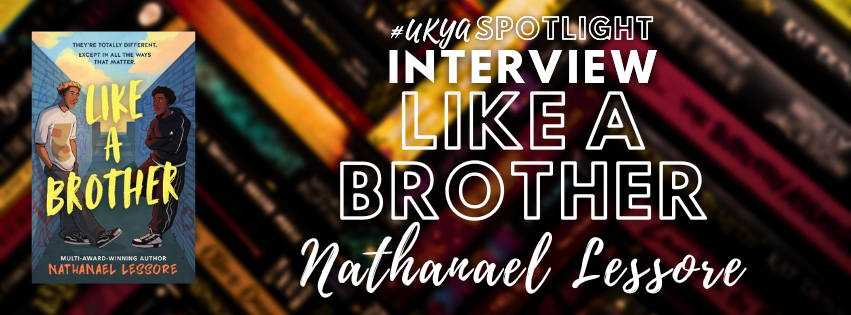
About the Book:
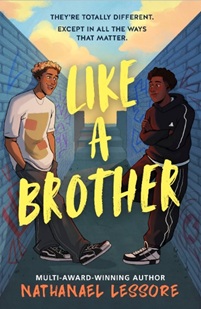
Owais lives a chill life. He’s well-liked, funny and everything’s a breeze – until his estranged cousin shows up.
Loud, unpredictable and one bad decision away from serious trouble, Abass crashes into Owais’ laidback world like a picking fights, ruining parties, disappearing without explanation and clogging toilets in places he absolutely shouldn’t.
But as the boys get to know each other and their bond deepens, Owais starts to see there’s more to Abass than the chaos – and more to himself than just being the popular guy who coasts through life. Because sometimes, the person who turns your world upside down is also the person who helps you figure out where you’re really meant to be . . .
Find on Goodreads. Find on Bookshop.org UK (affiliate link).
About the Author:
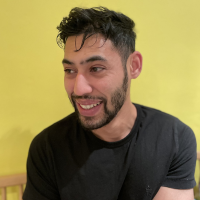
Nathanael Lessore was born in Camberwell, South East London, as one of eight children to French and Madagascan parents. Although he has spent most of his life in Peckham, Nathanael has also lived in Paris, Strasbourg and Singapore.
He writes stories that show his South East London childhood as the funny, warm, adventurous world that wasn’t always represented as such.
Interview:
Pitch your book in 10 words or less
I promise there’ll be something to make you laugh
Every character in the book is so vivid and unique. What helps you to really grasp who they are when you’re writing?
The characters in these books are an amalgamation of people I know very well. And because I know each of them individually, all I needed to do is picture how they’d react around each other.
Also, I make it a point to “interview” my characters before every book. I ask questions like “what are you afraid of? What is your greatest achievement? How many siblings do you have? What kind of house did you grow up in?” I then answer in the voice of my characters, so that by the time it comes to writing them, every interaction and reaction comes naturally.
A lot of bonding between characters happens over food. What is your emotional support meal/takeaway order?
I love a beastly kebab if I’m ill or on my day off. Donner meat and chips, swimming in chili and garlic sauce.
Or for a treat, if I’m celebrating something, peppered steak with rice and dumplings. The blessing of growing up in south London, is that there’s food from all over the globe.
The story looks at what’s privilege in different contexts, starkly contrasting Owais’ warm, loving but poor family, with Abs’ abusive parents, and then again with the wealthy, white, arrogant Teddy. How do you think we can better educate boys to recognise the struggles of others without diminishing their own emotional and physical struggles?
By teaching boys to talk about their struggles openly, and without bravado or ego that feels ingrained at that age. They’re taught to see vulnerability as weakness.
I know mental health is spoken about more frequently between adults, but teenage boys need to be shown that they can rely on each other more often. I frequently point out the emotional intelligence that comes from reading, and I feel like a lot of boys can benefit from that. It would save lives in the short and long term.
Abs and Owais start off diametrically opposed; Abs is a classic anti-social roadman bad boy, whilst Owais is a chilled joker but both feel disaffected and disenfranchised. How do you think we can help engage working class boys of all backgrounds with their education and communities?
A lot of time, there is help for people who seek it. They might just need help seeking it. I’ve seen and been a part of several community initiatives, and local charities, aimed at helping people who are Owais and Abass’ exact demographics. In Like A Brother, it’s an art project. In reality, it can also be a library event, a live podcast recording, open mic, community theatre, support group, youth club, 5-a-side, therapy, writing workshops, or any extra-curricular activity that offers a place of belonging.
Also, we need more positive male role models online, as that’s where a lot of teenage boys spend their time now. Find and project male influencers who don’t spread hate and ridiculous messages. They exist!
Owais absolutely should be in the PUNitentiary for his terrible jokes. Were there any you really loved but had to cut in edits?
Firstly, LOL. And yes there were dozens of options for so many of the jokes. I tried to find my favourite deleted puns, but had trouble finding the right edits. But these are some cut sections that I did find:
“I’m giving my mum a foot rub and she got corns on her cob.” – Finlay
“Abass has the calmness and composure of a husky with its head caught in a paper bag” – Owais.
“You ever been so broke you had to wear one shoe at a time?”
“No. And I don’t think that’s a thing.” – Abass and Owais.
At the heart of both Owais and Abs’ issues is a lack of self-worth . What advice do you have for anyone struggling with their place in the world?
Start with the basics. As difficult as it can sometimes be, do one good deed. It gives a healthy purpose to the day. If one isn’t enough, do two. If your only purpose is spreading joy, and that’s the only thing you do today, then that’s a wonderful thing.
In order to find your people, you need to be brave. Take a leap. And if/when you get shut down, take another leap. One line in the book is “you can’t be a nobody if you’re already somebody to someone”.
Please recommend a UKYA book you think readers will love.
GLASGOW BOYS* by Margaret McDonald is powerful, and can help disenfranchised teenage boys see themselves. I hope my books have the same impact.
Thank you!
*Affiliate link
 #UKYASpotlight
Leave a comment