About the Book:
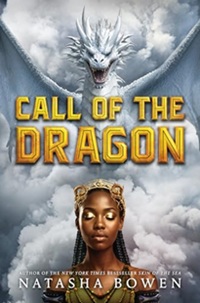
The people are calling and the gods will answer.
Moremi has only ever known of two dragon gods watching over the prosperous Kingdom of Kwa. It is thanks to the great dragons that an unspeakable evil is kept at bay. But when someone tries to claim the gods’ power for their own, the process goes dreadfully wrong and the world’s darkest shadows are released.
Overnight, Kwa’s ancient tales of monsters become all too real. After realising a strange affinity for both God’s Moremi is now Kwa’s only hope for restoring their full strength.
But will Jagun, the mysterious prince, let her anywhere near the gods? And how does her childhood friend, Nox, feel about it all? In any case, if Moremi fails her quest, then she risks the earth caving in and the sky crumbling down. . . .
Find on Goodreads. Find on Bookshop.org UK (affiliate link).
About the Author:
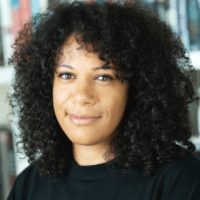
Natasha Bowen is a New York Times bestselling author, a teacher, and a mother of three children. She is of Nigerian and Welsh descent and lives in Cambridge, England, where she grew up. Natasha studied English and creative writing at Bath Spa University before moving to East London, where she taught for nearly ten years. She is obsessed with Japanese and German stationery and spends stupid amounts on notebooks, which she then features on her secret Instagram. When she’s not writing, she’s reading, watched over carefully by Milk and Honey, her cat and dog.
Interview:
Pitch your book in 10 words!
Girl chosen by dragon gods faces destiny, magic, and danger.
Moremi sets off on a quest to restore her dragon gods and bring peace to her world. Why do you think the quest trope is such an enduring staple of the fantasy genre?
Quests help us to navigate unknown worlds even when the landscape, culture, and politics in the fantasy are completely new. They provide a familiar and recognisable core structure where the journey often mirrors an internal one. Readers instantly recognise the stakes in a quest… and there’s always a reason to keep on going.
Her companions are her best friend Nox (who she has feelings for but she’s not quite acknowledging!), her enemy from among the novice priestesses Zaye, and the alluring son of the man responsible for the mess. How did their dynamic evolve over the course of writing and editing?
I start with character work before the plot and so the dynamics evolved after working on who each one was as an individual. This actually then informed part of the plot because of how they would behave and interact with one another. I love exploring relationships, platonic and romantic. There are so many angles!
CALL OF THE DRAGON is set in a secondary world, a contrast to your debut duology SKIN OF THE SEA, which is more historical. What were some of the challenges and delights of creating an entire world?
The challenges involved the creation of a totally new world! Developing this alongside a new religion and magic system that are intertwined was complex but also enjoyable. The delights were that I didn’t have the weight of representing a time and a topic that is extremely significant. With COTD I could have whatever came into my mind!
Moremi and much of the rest of the cast are members of religious orders. While parts of their faith are tested, their core beliefs are not. Why did you choose to focus the book around religious orders?
I have a fascination with religion and power. And also, with the variations of beliefs that stem from the same core and worship the same thing but with variations. I believe that God/spirituality is in us all… and in COTD that manifested as the dragon gods’idan (magic). The parallel of wars fought because of religion and power is also an inspiration.
Moremi does not begin the book wanting a divine blessing, content instead with her place helping others through non-magical means. Why do you think we’re drawn to characters who do not want greatness but then gain it (and then struggle with the lure of such power)?
I think their humbleness is a balm to the greed we might feel and the greed we see around us. The fact that they reject it is often the right thing to do but not the common thing to do, and there’s a fascination around that. That said, to be offered that power? It’s seductive. Especially if the person doesn’t want the power but they want what they can do with it.
The book is full of magical creatures from African mythology ranging from the guiamalas (giant giraffe-camels) to izulu (birds that nest where lightning strikes. Which was your favourite creature?
My favourite creatures are the nundás. I mean, cats with tiny wings? I love!
Can you give us a hint about the sequel?
While the first book focused on the Kingdom of Kwa, the second opens it all up and we get to explore Carew. And where Kwa was inspired by my Nigerian heritage, Carew is inspired by my Welsh. We see an explosion of love, aggression, and dragons! And we explore other beliefs of the gods and what that leads to.
Please recommend a UKYA book you think readers will love.
I love Darren Shan. His Zom-B* books were the perfect horror YA cross over.
Thank you, Natasha!
*Affiliate link
 #UKYASpotlight
Leave a comment