
About the Book:
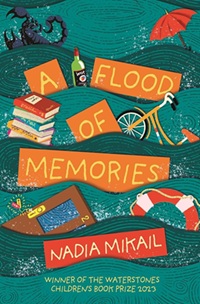
It’s raining in Sarawak, Malaysia – a lot – and Leila, now living in Kuala Lumpur, must go home to help her Mak before the floods become serious. But she hasn’t been home since the death of her father – and she’s not quite ready to confront what’s waiting for her there. Life with Pak was complicated.
But Arthur is in Sarawak, the boy she’s thought about ever since they first met at school – Arthur, who offers her support, care and love, but at a cost perhaps too great for Leila. As the floodwaters rise and her family and home become threatened, can Leila confront the enormity of her own past in order to move forwards properly in her present? A beguiling and meaningful novel which explores the fine line between care and control, between love and abuse in families, and shows that it is possible to move on to a brighter future.
Find on Goodreads. Find on Bookshop.org UK (affiliate link).
About the Author:
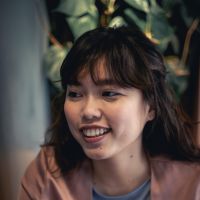
Nadia Mikail is a Malaysian writer based in London, where she also works as a lawyer. She lives with two cats she is terribly allergic to and is trying to survive them day to day.
Nadia’s debut YA novel, THE CATS WE MEET ALONG THE WAY (Guppy Books) was awarded the Waterstones Children’s Book Prize 2023 (winning in the Older Reader’s category before taking home the overall prize) and was shortlisted for the 2023 YA Book Prize.
Interview:
Pitch your book in 10 words!
As floodwaters rise, Leila confronts grief, love, and home.
Leila’s struggles with her memories are mirrored by the way the waters of the ride and monsoon are sweeping through her home state. Why did you decide to pair this journey of facing the last with a natural disaster?
It was always going to be a story about a flood. I began writing it based on one memory that came to me in the midst of a rare heavy downpour in London. I smelled the rain and I heard the roar and suddenly I was eight again, watching the floodwaters rise over my kampung. So much comes to a head in times of emergency: families fracturing to breaking point, people realising what matters most to them. The rest of the story came from the memory of that one event. It’s also fitting that we’re talking about a flood that’s come back, because when we talk about climate change – these aren’t going to be the fringe events of your childhood anymore, or something that happens to someone far away on the news. The flood that rose once every ten years in your village? That’s coming again, then again and again, unpredictably and worse.
A FLOOD OF MEMORIES is a moving story of recognising and beginning to heal from domestic abuse. What advice do you have for writers tackling heavy topics in their writing?
I would say to be honest. When I first started writing this book, writing about the abuse and alcoholism and grief in it, I wanted to be so careful about every sentence. I wanted to handle the themes with kid gloves and make sure they were written about as responsibly as possible for readers of any age group. I overdid it to the point where my editor, Bella Pearson, said you’re being so distant in your narrative, a reader can barely see what’s going on. She was right. I still hope I have handled the themes responsibly, but in the finished manuscript I have trusted the reader to take on a set of complex truths and know that they can all be true at the same time. That the people you love can hurt you deeply. That they are wrong for doing this. That you can still have so much love for them. But that ultimately, you need to start living for yourself. I hope there are people who come out of it with more empathy for situations they might not have known about before, and there are other people reading who think I’m not alone.
Leila’s life has been determined by her father’s Plan for her future, one decided to give her stability and a good life according to his outlook, but Leila is interested in journalism. Was her subject of choice always journalism? What guided the decision to make reporting her dream as a contrast to her father’s?
A lot of the story shows Leila growing up in the house, getting steadily more claustrophobic and restricted as the list of rules gets longer and her father’s drinking habit gets nastier. He doesn’t want her to go out with friends. He doesn’t want her to leave the house. Throughout all this she’s desperately thinking I need to see the world. Seeing the floods come for her home and community gets her thinking I need to do something to help with this. Journalism – travel, new people, spreading awareness – is a natural marriage of the things that shape her growing up.
Leila has great friends old and new around her, a community who love her. Do you have a favourite member of the cast to write about? Was anyone particularly hard?
I loved writing Poppy, Leila’s best friend. She’s fun and sweet and brave, and she has a very loving relationship with her little brother. Leila’s mother, Ren, was one of the hardest. I am so sympathetic towards her, and Leila is too, but she stayed with Leila’s father and allowed the abuse to continue for years. At the same time – that’s what happens with abuse victims! They stay! That’s what the horror of abuse does to them! But I needed to write that complexity as truthfully as possible: Leila loves her so much, but when Leila was growing up she just couldn’t show up for her in the way Leila needed.
Leila first meets Arthur at a play – she’s overheard critiquing some of his acting choices! – and he gives her a prop key that becomes like a talisman. What inspired their first meeting to be related to a play? And what inspired the prop key?
A large part of Leila’s life, to this point, is spent pretending, when she is at home. Her response to her father’s anger is fawning, an understandable trauma response: always accommodating her father’s moods, rushing to clean up and keep the house tidy, saying and doing all the right things to keep him happy. Everything feels so fairly unreal that years later, even when he is gone, she encounters an especially difficult trigger and still feels like she’s saying lines from a script. I liked the idea of something genuine and good and real coming out of her watching a real-life play, when so much of her life feels like acting.
A FLOOD OF MEMORIES is set in Sarawak, Malaysia, one of many regions of the world impacted by climate change. How do you approach balancing the reality of climate change’s impacts while ensuring there is hope to encourage people to act?
Climate change can often feel overwhelming because the scale of it is almost incomprehensible, and it often feels like there’s not much one person can do. One of the things I wanted to be clear about in FLOOD is that the characters consistently choose to support each other and their communities – I wanted to centre the help that comes from neighbours and friends and family to survive and rebuild, which will be so important in the near future. Our choices still matter, will always matter – to volunteer, to vote, to change things with our own hands.
Please recommend a UKYA book you think readers will love.
THE ETERNAL RETURN OF CLARA HART* by Louise Finch – a gorgeously written time loop tale that I think will really help young adults reevaluate the toxic masculinity prevalent around us.
Thank you, Nadia!
*Affiliate link
 #UKYASpotlight
Leave a comment