About the Book:
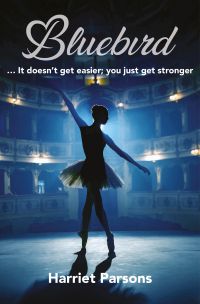
It’s 1991; at a Russian ballet school, ballet is everything – beauty, perfection, endurance, sacrifice…
When Dublin girls Hope and Emily are chosen to study at the famous Pavlovgrad Ballet School, they think all their dreams have come true, but the challenges they face will be harder than they could ever imagine.
Daily life in the Soviet Union is like stepping into another world – freezing winters, sugar shortages, boarding at school with the other ballet students – but the chance to learn from the best, and the chance to become the best, makes all the sacrifice worthwhile. Or does it? For Hope, adopted from Russia as a baby, returning to the country of her birth to fulfil her dream of becoming a ballerina uncovers secrets buried deep…
Find on Goodreads. Find on Bookshop.org UK (affiliate link).
About the Author:

HARRIET PARSONS once dreamed of becoming a ballerina. Her dream came true when she was accepted to study at the Perm Ballet School in Russia. When she graduated from the school, Harriet danced with the Chelyabinsk Opera and Ballet Theatre, and then Moscow City Ballet. Bluebird is inspired by her time at ballet school in Russia. When she hung up her pointe shoes, Harriet trained as a psychotherapist, and now works for Bodywhys, The Eating Disorders Association of Ireland. She lives in Dun Laoghaire with her family including her dog, Alfie, and Maine Coon cat Maggie.
Write what you know
Ballet taught me perseverance and determination, which I needed to survive in the world of writing.
Write what you know and write the book you would want to read are two bits of writing advice any aspiring writer will have heard many times. The book I wanted to read as a ballet-obsessed teenager who dreamt of going to a full-time ballet school so I could dance professionally, was a ballet book with characters I could relate to, who were doing ‘proper’ ballet. Not just tutus and tiaras, but the gritty reality of surviving in a ballet school, with teachers who are ferociously dedicated to perfection and require the same sacrifice from their students.
That’s the book I wrote. And the subject was something I knew, because when I was sixteen years old, I was lucky enough to be accepted to a Russian ballet school and had to learn to survive to achieve my dream of dancing professionally.
I had always wanted to write about the adventure I had but I didn’t know how. I had started to write my story many times, but I would always get to a point where I felt uncomfortable writing about myself and my friends. And then, one day, about twelve years ago, I was sitting on a bus going into Dublin city centre, when a young girl appeared in my mind’s eye. Her name was Hope, Nadezhda in Russian. I saw her as a baby abandoned in the midst of a Russian winter, on the steps of an orphanage. I imagined the story of Hope being adopted by Irish parents, growing up in Dublin, and being a ballet fanatic. What would happen if Hope got the chance to study ballet in the country of her birth, to fulfil her dream of becoming a professional ballerina?
In 1991, when I travelled to the Perm Ballet School, on the edge of the Ural mountains, there were no mobile phones, no internet, we couldn’t even call home without booking that call through the post office in advance. And so, we wrote letters. And our families wrote letters to us. Thankfully, my mother kept all my letters, and I kept all hers. With Hope in mind, I brought all my letters and diaries down from the attic and started remembering; the school boarding house, the ballet studios, the other students, the disgusting food, the fierce teachers, the theatre and the amazing adventures we had as teenagers, miles from home, with no parents, and dollars in our pockets.
I wrote every day, allowing my imagination to wonder what would unfold for Hope in this world. I filled notebooks with memories and stories, creating a new world, inspired by the reality. At that time, I didn’t know how to write an entire story. I got out my childhood novels and studied them for structure, plot and dialogue. I read books on writing, did workshops, and started making connections with the writing world.
As I became more serious, I transcribed my notebooks and listened to the advice that said, ‘just write it’. I took time off work and wrote every day for two weeks, when finally, I was able to type the words ‘The End’ on my first draft. It was 150k words. Now I had something to work with and I had experienced the highs and lows of writing; the fear of the blank page, getting stuck, writing rubbish just to get to the next part, and the joy of finding out key storylines as they unfolded on the page seemingly unbeknownst to me.
Twitter was then a place where opportunities could be found. A comment about the Times Chicken House competition caught my attention. Now I had a goal and I started editing. ‘Kill your darlings’ they call it. I was ruthless, deleting huge chunks of text that I loved but that were superfluous to the story. I edited and cried, edited and hit walls, edited and read aloud, until finally I had something shorter. Covid had hit, and I sent my draft into the competition, allowing my imaginings once again to get me through the summer of the pandemic.
Hallelujah! An email arrived telling me my submission had been longlisted. A couple of weeks later, a UK number came up on my phone and I answered. The voice was that of Barry Cunningham OBE. My book, then called ‘Waiting in the Wings’, had been shortlisted to the final five. Joy of joys!
Bitter disappointment followed when my book wasn’t chosen. I realised that writing, like ballet, is a deeply personal and subjective endeavour. Rejection of one’s writing, like being cut from an audition, cuts deep.
All was not lost, and I got the opportunity to work on the manuscript with Kesia Lupo and Rachel Leyshon of Chicken House. From that work, another character emerged on the page; Yulia, a Russian ballerina, in her thirties, daughter of the school’s terrifying director. Yulia, unlike Hope, wants nothing more than to escape the world of Russian ballet. With Hope and Yulia’s voices living in my imagination, I rewrote the book, putting it into first person present tense to allow their voices space to tell their stories.
I started editing again, killing more darlings, tightening up the storyline, all the time embarking on the painful exercise of trying to find an agent. I did all the things; made a spreadsheet, sent out queries in batches, listened to every podcast and scoured every helpful website and blog that claimed to hold the key to the perfect query letter. I worked on my pitch, found my comps, researched agents, personalised queries. All was met with rejection. And like auditioning, every rejection toughened my skin a little more.
I sent queries to publishers who would take unagented submissions. Silence and rejection. I was ten years in at this point and beginning to think that I should listen to the advice which said write something else. Work became busier, children were dealing with school issues, and everything else in my life started taking up precious space in my imagination.
My ballet training was working overtime. I still dreamed of seeing my book on the shelves, of ballet girls and boys reading it. I gave myself one last chance. I had sent a previous draft to The O’Brien Press with no joy. My story was now very different to the one I submitted. What did I have to lose? I sent it in with no expectation of a response. This submission was for me alone. At least I could say I tried everything.
And suddenly, ten days later an email landed in my inbox. Do I have any more of the manuscript? Do I what? Absolutely. I sent the full draft. And waited. Two weeks later a phone call. THE call. The one ‘yes’. We want to publish Bluebird.
I cried and celebrated. A dream come true. And now I am holding my book in my hand. It is the book I would have devoured as that teenager. And while the characters are fictional, the grit, determination and joy at the heart of the story are real. My wish now? To inspire all those teens out there to follow their passions, to know that when we combine steely determination, hard work, self-belief and a sprinkling of luck anything is possible.
Thank you, Harriet!
 #UKYASpotlight
Leave a comment