About the Book:
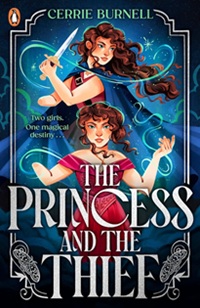
In the Kingdom of Venetia subjects can wield magic, but its power depends on their standing in society. Most magic is good, but there are also extreme rare dark enchantments, only to be used in the most desperate of times. . .
Fifteen years ago, two babies were born to very different families. Both girls were born without their right hands, and now their long dark hair, sparkling green eyes and disabilities make it tricky to tell them apart.
Neva grew up to be a talented thief, able to cast incredible enchantments with magic she shouldn’t be able to access. She also longs to be an opera singer, but lacks the confidence to step into the spotlight.
Princess Aria is the last remaining member of the royal family. Few know that she has lost almost all her magic, and can only access one royal, golden strand of it. She’s a brave young woman, but without her magic the palace is vulnerable to foes.
Though Aria and Neva lead very different lives, a chance encounter one midsummer night entwines them in a thrilling adventure that will change their fates forever…
Find on Goodreads. Find on Bookshop.org UK (affiliate link).
About the Author:
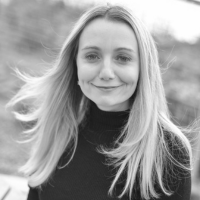
Cerrie Burnell is an author, actor and ambassador. During her time on CBeebies she broke down barriers, challenged stereotypes and overcame discrimination to become one of the most visible presenters on children’s TV. She has been listed by the Observer as one of the top ten children’s presenters of all time.
Cerrie is the author of thirteen children’s books including her first non-fiction title, the award-winning I Am Not a Label; Snowflakes, which she adapted for the stage; as well as the Harper series, which was selected for a World Book Day title. She also wrote and starred in the play Winged: A Fairytale, as well as creating the one-woman show The Magical Playroom, which premiered at the Edinburgh Fringe.
In 2017 Cerrie was awarded an honorary degree for Services to Media from the Open University. She is a patron of Polka Theatre and has been an author-in-residence at Great Ormond Street Hospital.
Since leaving CBeebies in 2017, Cerrie has appeared on television in Doctors and made the eye-opening documentary Silenced: The Hidden Story of Disabled Britain. In 2021 Cerrie joined the BBC’s Creative Diversity team as one of their new Disability Ambassadors.
Interview:
Pitch your book in 10 words!
Darkly enchanting, disability positive, renaissance romance, moonlit heist, identity swap!
Before this novel, you had written for younger children. What made you decide now was the time to also write for teenagers?
Whilst I love being a children’s author, I have always felt the capacity for emotion and magic is completely unstoppable in YA. Being a teenager can be so tough, but also incredible. There is no other transition like it, when you step away from the soft enchantment of your childhood, but haven’t quite arrived at the gateway of adulthood. It’s such a moment for exploration, discovering who you deeply are, choosing which beliefs you bring with you and which you let go of. Finding your confidence, identity, style, views and passions. It’s truly wild and I love being able to tap into all of that and combine it with enchantment.
This book draws on the fairy tale The Prince and the Pauper, but your girls are neither related to one another nor fully swapping places in the tale. Why did you want to step away from this well-known narrative?
The story does lean loosely on The Prince and the Pauper but also on the Barbie: the Princess and the Pauper, which I was mercilessly subjected to by my lovely daughter, when she was little. I think there are so many amazing identity- swap stories that exist already where the girls are related – such as the phenomenal TWIN CROWNS* by Katherine Webber and Cat Doyle. I didn’t want Aria and Neva to be actually be sisters, nor look entirely identical. The thing which makes them instantly recognisable as each other their matching limb-differences. They are the only two young women in Venetia to have an upper limb difference . It’s the disability that makes the swap possible.
Aria and Neva are very similar in appearance, but different in character; Aria is bolder and Neva is more creative, but they both have a generosity of spirit. How did you approach developing their characters to ensure they were distinct when their actions often rely on passing as each other?
Aria and Neva are completely different people, from very different backgrounds. Aria is royal, but without great wealth or magic. Neva is from the world of theatre and criminality. It was really exciting to explore their separate worlds and experiences. They are both powerful in their own way and I wanted each of them to reflect an aspect of how being a disabled teenager can feel. I remember my own teen hood really vividly. Being a girl with one hand in a small seaside town in the 90’s wasn’t the easiest path, but it was certainly creative. I both embodied Aria’s confidence and Neva’s self doubt- on different days. So it felt really freeing to express this in two different characters, whilst giving them very separate desires and dreams.
The two girls gather a group of, at times unexpected, allies around them. Were there any members of the group who surprised you with how important they were to the story?
I love the motley crew that Aria and Neva end up pulling together, and in fact some of the characters, such as Cam and Florence, originally were in more scenes, but the amount of people on the page was getting confusing. So they will get their moments more in book 2!
The magic of this world is split into different threads all with their own attributes – though mages can access most of them. How did you come up with the magic system? Did it change over edits?
I’m someone who writes from my heart more than my head. I wanted the strands of enchantment to be very sensory, so you’d catch a scent or glimpse a colour or ignite a memory as you were weaving them into a spell. Originally there were seven strands of enchantment and the family, neighbourhood or social class you were from, decided which strands you could access – legally. But of course it soon got really complicated, once different characters abilities or criminal behaviours were woven in. So luckily my beloved editors worked their magic and it makes more sense now.
Venetia is clearly inspired by Venice. What drew you to this setting? What do you think gives the City of Water its enduring appeal?
Venetia is indeed inspired by Venice, and in particular Aria’s home is based upon the Lido island, a glorious, fairly secret island you catch a boat to from Venice. I fell completely in love with it on holiday. I think there’s something deeply enchanting about the combination of art, theatre, architecture and sweepingly romantic history – and the ice-cream and coffee, and midnight opera houses all seemingly floating on the water. Venice at night is just magical. The thousands of little bridges leading over a shining maze of canals, it just feels like you’re stepping into a story.
Aria is the first member of the royal family to publicly have a visible disability and Neva is trying to become the first visibly disabled opera singer. Why did you want to follow two different characters as they fight to challenge perceived norms as “the first”? How do we as the wider community help support those who are “the first” to ensure they are the first of many?
Aria is the first Italian or Italine royal to refuse to hide her disability, even though she was encouraged to cover it up. Neva is from a different social class so the pressure wasn’t as great to ‘hide’ her disability, though she still has a lot of insecurity around it. She has long held a dream of becoming an opera singer, but it’s only through witnessing Aria’s authenticity to own her disability that Neva believes her dream can come true. For me – having been the first actress and presenter on children’s television with an upper limb difference I know very well how resilient and ambitious you have to be as the first. But also how important it is to support and champion every one else who follows, so that real lasting change can be accomplished. Everyone can support this by generosity of spirit and supporting Deaf, disabled and neurodivergent authors, artists and actors. Buy their work, see their shows, scream about their brilliance online as much as you can.
Please recommend a UKYA book you think readers will love.
Connie Glyn – THE CURSED MELODIES* – I loved this sweeping magical, brooding world, where flowers whisper and trees sing of history, especially to Astrid and Jonas. Twins with a rare, forbidden magic, who must unite with ( delightfully, sensitively written) Bloom, blood Gwen, to fight the rising darkness.
Thank you, Cerrie!
*Affiliate link
 #UKYASpotlight
Leave a comment