About the Book:
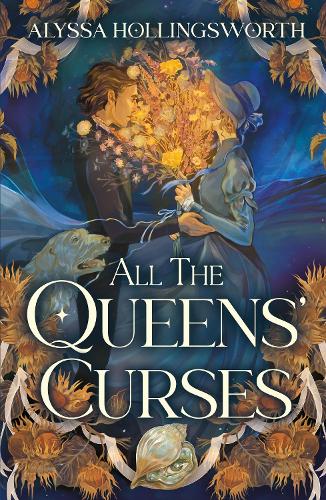
Kit has been cursed into a body that isn’t her own. Idris has been cursed to dance to death. If they want to break their curses, they’ll need to work together.
Kit and her step-sister Catharine have been close ever since their parents’ royal marriage brought them together. But living under the king’s roof is not safe for Kit, and illness is spreading through her joints. Her mother tells her it is a When a woman in their family is hurt, they fall into a wasting sickness. When an enchantment switches Kit and Catharine’s bodies, Kit must find a way to make things right. But can she really bear to go back to her wasting body?
Idris has learned a dark secret about his family and a crime they committed generations ago against the Hidden Folk. When he gets the chance to atone, he takes it—even though it means he will be danced to death. But it is one thing to agree to be a martyr, and another to watch his choice destroy his family. Can he find a way to bring justice and still live?
If Kit and Idris want to survive, they will need to work together. But lines blur as the two grow closer. There are few ways to break a curse, and there may not be enough magic left to break them all.
Find on Goodreads. Find on Bookshop.org UK (affiliate link).
About the Author:
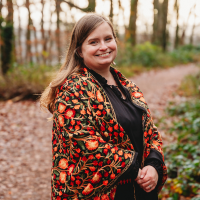
Born in small-town Milton, Florida, life as a roving military kid soon mellowed her Southern accent. Wanderlust is in Alyssa’s blood, and she’s always waiting for the wind to change but stories remain her constant.
She received my BA in English with an emphasis in Creative Writing from Berry College. before getting her MA with honors in Writing for Young People and my Ph.D in Creative Writing from Bath Spa University .
She loves crafting, cozy video games, and going on adventures with her nerdy husband and mischievous dog. She now lives in the magical land of Wales.
Bringing Chronic Illness into a Fairy tale
My fantasy debut, ALL THE QUEENS’ CURSES, is a retelling of a rare Scottish fairy tale. The original involves a princess’s head being swapped with a sheep’s, stepsisters who are best friends, and a prince being danced to death for mysterious reasons. There’s plenty to explore in the story. But I wanted to explore trauma and chronic illness.
Why bring these topics into a book for young people?
Because I was that young person.
At 17 years old, exactly three days from moving off the street where my abuser lived, I woke up with pain in my hands. I couldn’t bend my right thumb. It took over a year of medical tests across the paediatric specialities before I got the correct diagnosis: I had Rheumatoid Arthritis.
I remember the refrain I heard over and over again through that year (and the ones that followed), “But you’re so young!”
Eventually, I started answering, “So I’ve been told.”
People (and Hollywood) often claim that your teens are your best years (not true, by the by—I’d take my 30s over my teens any day!). I would sit with my swollen joints and aching hands, struggling to hold a pencil, and wonder if this was it for me. If this was the height of my life, how was I going to survive the rest?
I turned to books. I loved Young Adult fantasy, but I didn’t see myself in many of their protagonists. I didn’t want to see myself, explicitly—it was hard enough living with the rollercoaster of my new life and I didn’t want to be confronted by it in my escape. Yet I was looking for stories that could hold me together, all the same.
Lord of the Rings became my lifeline. The way Tolkien writes hope—as “joy like swords” and a place where “pain and delight flow together”—spoke to wounds in me I hadn’t even started to name. I was comforted, in a strange way, by Frodo, a protagonist who never actually heals in his homeland.
Lord of the Rings taught me that you can’t always wash the grief out of your hope, and that’s all right. Ella Enchanted was another favorite of mine around that time (and earlier in my youth). It probably doesn’t take a psychiatrist to guess why a girl like me would be obsessed with a story about a young woman cursed to be unable to give consent who then uses love and wits to break free.
When I sat down to write ALL THE QUEENS’ CURSES, I wanted to capture something of what these two books gave to me when I was in my darkest places. I wanted to find a way to do it with tender honesty, the way I would have liked to receive it as a teen.
Writing about chronic illness, especially when it is framed alongside trauma, requires a special kind of balancing act. Chronic illness in real life doesn’t act like illness in much fiction. It doesn’t rise steadily into a climax and then resolve itself. The unpredictability and open-ended nature of it is part of the challenge.
I think back to the nurses/doctors/strangers who told me I was “so young” when I recited my diagnoses. “Too young” is the implied meaning.
Adults feel the injustice of sick children and I think sometimes we are too quick to try to comfort away the difficulties they face. We don’t want to live in a world where young people are in pain or where nightmares torment your dreams before you’ve even had a first kiss. I don’t want to live in that world.
But we do.
And teens know it—are actively learning it—with all the fierceness of a heart that hasn’t yet gone numb.
So, I’m sorry to say to my writer friends, chronic illness has no easy cure. A happily ever after that involves a full return to health would ring false to readers who are in the trenches. And teens, especially, know a false premise when they see it.
But the solution also isn’t a sort of zen acceptance. I remember reading a disabled character who overcame his struggle by essentially just letting go of control and embracing all the sensory overload that had previously overwhelmed him. Voila—his disability is now a superpower. I came very close to throwing the book.
The solution also isn’t despair. People with chronic illness live good lives. They just might have some hard chapters. But then, we all do.
Chronic illness isn’t:
- A plot point to be solved
- A battle to be overcome
- A moral failing
- An old person’s problem
Chronic illness is: - A shapeshifter that can feel different every single day
- A tightrope of survival and self-care
- An opportunity for honesty
- A perspective-changing, life-refining blessing-curse.
I hope that readers will find ALL THE QUEENS’ CURSE a representation that hits that sweet spot of tender honesty and sharp-sweet hope.
Thank you, Alyssa!


Leave a Reply