About the Book:
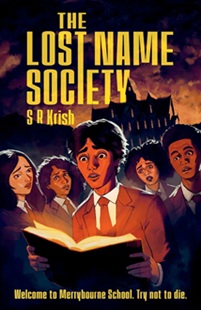
In the heart of the Cotswolds, your name isn’t just an identity. It’s a target.
Five strangers arrive at boarding school expecting the usual academic grind. Instead, they find a headmistress who is anything but human and a curriculum designed for survival. The rules are simple: compete in a series of twisted, deadly games, or be erased.
With nothing in common but their unusual names, this misfit group must navigate a landscape where the supernatural meets the cut-throat.
As the body count rises, they realise the only way to survive is to stop playing by the demon’s rules. In a world where fitting in means losing yourself, they must reclaim the power of their names, the ones they were born with and the ones they’ve chosen, to tear the school down.
Winning is everything. Losing is eternal.
Find on Goodreads. Find on Bookshop.org UK (affiliate link).
About the Author:
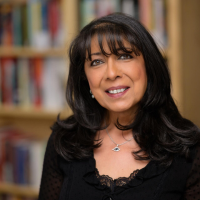
Savita Kalhan was born in India, but has lived in the UK most of her life. She graduated from Aberystwyth University with a degree in Politics and Philosophy. She was a Batik artist before going to live in the Middle East for several years where she taught English and began to write.
Now living in North London, she spends her time writing, playing tennis and growing veg and super-hot chillies on her allotment.
Savita regularly visits secondary schools where she gives talks about the power and the pleasure of reading, and runs creative writing workshops for budding young writers. She runs a teen reading group at her local library, and is a member of the SAS, the Scattered Authors Society.
Interview:
Pitch your book in 10 words!
Supernatural thriller where Dark Academia, horror and Squid Game collide!
Everyone thinks school is hell at some point but Merrybourne, both the school and the village, is literally run by a demon – how did you come up with your setting?
I’m sure we’ve all thought school was hell at some point! I loved school, but there were definitely some challenging times.
The original setting for THE LOST NAME SOCIETY came from Jasmine Richards at Storymix – there really is a real state-run boarding school in the Cotswolds – a very diverse school with pupils from different ethnicities but it was surrounded by very white villages with little or no diversity. I did a day of author talks at a similar school – it even had its very own castle. And so Merrybourne School was born! It’s an intriguing setting with so much scope to play with. For the book, the school had to go darker, more gothic, with gargoyles and towers and turrets set around a Pentangle, which gives the book so much character, atmosphere and mood. The setting almost becomes a character in the book – it exudes its own malevolence.
The Merrybourne Charter is the crux of the narrative and not signing it with their full name is the reason the Lost Name Society are able to fight back. What inspired it?
For people like me from Asian or Black backgrounds, our names have often been changed, whether it’s by a teacher who can’t pronounce our names, or we have anglicized them to fit in, so we are not mocked or humiliated by our peers. I remember Jasmine saying that no one in the US could pronounce Kamala Harris’s name properly, even her own name was often misspelt, as was mine. When I was growing up, I was often called Bournvita or Ryvita – and my name is very easy to pronounce – it was upsetting as a kid.
So names have power.
I read lots of fantasy, my first love, and often in fantasy knowing the true name of a person or a thing gives you control of it. We see this in the great Ursula Le Guin’s Earthsea and in The Name of the Wind by Patrick Rothfuss ( I wish he would finish that trilogy!!)
So it made sense that in THE LOST NAME SOCIETY the teens would ultimately discover the power of their names and how to use that power against the demon.
Andy, Jane, Murk, Ford, and Belle are all from ethnic minority backgrounds and all have chosen to give up their proper names for various reasons – not least of all discrimination – in favour of a diminutive but by the end of the story they all reclaim their full real name. What, for you, makes a name so important?
Your name is your identity.
Fitting in often means losing something of yourself. In THE LOST NAME SOCIETY, the five teenagers’ names have been changed by others or adapted to fit in with their peers. But ‘fitting in’ can mean losing your real name, your background, your heritage, where you came from, where you belong in the world, and ultimately who you are.
Teenage years are formative years where you’re finding your place in the world, forming your unique identity, discovering so much about yourself and the world around you. So to feel you must change your name, or for it to be changed for you, is a big deal. It’s a really interesting theme to explore in YA fiction.
What better basis for the crux of THE LOST NAME SOCIETY to be about teens who have lost their names and lost their power. What better way to give them their power back?
The students have to face 5 deadly games, designed to kill the weaker students leaving only one winner. Which hurdle would you fall at were you unlucky enough to attend Merrybourne in a reaping year?
(Beth would die immediately because she’s dyscalculic!)
That’s a great question! Which one? Well, it wouldn’t be the word game, as I’m pretty good at word puzzles. The timer on all the games is the real killer – would I be fast enough to beat the countdown?
I think the hurdle I would most likely fall at would be the first game at Adder House, although the incentive to get through that one might make me try to solve the maths equations faster!
I’m allergic to wasps, so if I somehow managed to get through the earlier round then I might fall at the Oak House games if I got stung by wasps, or those dreaded murder hornets…
Which character did you enjoy writing the most and who surprised you the most as the story developed.
Andy, Anirudhha is the main character, and I loved writing the book from his point of view. I’ve written three books from a boy’s point of view, and I’ve always really enjoyed exploring a book from a boy’s POV. I think it comes quite naturally for me.
All five of the main characters, Andy, Murk, Belle, Ford and Jane, grew as I wrote the book, with all with their unique identities and characteristics, strengths and weaknesses and foibles.
But the person I absolutely love, the one who stole my heart, is Murk. As I was developing her character, she took on new depths. She’s a tough cookie, bold and sassy, she knows her own mind, she’s firm in her beliefs, she’s unique and doesn’t kowtow to anyone, she’s loyal and she will always have your back. So I would say she is the one who definitely surprised me the most as I was writing the story.
The novel is fast paced, with the breaks between games almost worse than the games themselves as Aniruddha finds himself separated from his friends, or the awful events of the escape attempt. How do you keep the prose so tight without losing any of the tension or characterisation?
Thank you! I guess I’m used to writing thriller type books full of suspense and intrigue, with cliff-hanger endings for each chapter. I write for teens and young adults and it’s always uppermost in my mind that the story has to be intense and gripping to keep them engaged and committed to the story and the characters. The format of the book really leant itself to this – with all the different games adding their own high intensity white-knuckle moments, when in each game losing means being erased, so the stakes could not be higher.
As I wrote the book each character developed and became a real person for me. I think I always hear the character’s voice first and that’s exactly what happened with this book too. So it makes me so happy that I’ve got the tension and the characterisation just right! As you get to know each of the five main characters, you can’t help but root for them, you’re so invested in what happens to each of them. Will Andy survive that game? Will Murk make it through? Will Belle fall at the next hurdle? Will Jane lose her footing? Will Ford be turned to stone?? All of that adds to the frisson of excitement and dread in the book!
There is an obvious theme of reclaiming your identity, culture, and heritage whilst being pressured to conform to a system built to benefit and keep power limited to the white, wealthy minority. Why is it important that we get kids of all backgrounds reading diverse books?
In one word – EMPATHY. Growing up as an Asian girl in the 1960s and 1970s was tough. There was very little understanding of Asian culture and at the time it was all about assimilating as fast as possible. For my parents books and reading were synonymous with education, and as we couldn’t afford to buy books my parents did the next best thing and took us to the library every week. The library was where we discovered the world, different voices and backgrounds, characters and stories.
But not our own.
I didn’t see a single Asian kid in any book I read, or even any Asian authors. I didn’t see myself – and my white English friends at school didn’t see kids like me in books either. That sense of ‘other’ remained. That lack of understanding and seeing things from a different cultural point of view continued. Underneath it all we are all part of a community that shares so much and where different backgrounds should be embraced and celebrated and understood, because essentially we are all the same in so many ways.
Stories should reflect children’s identities. Books often act as a portal into different cultures, and illustrate the challenges that face kids from different backgrounds. So reading a range of stories with diverse characters helps children connect to different backgrounds and cultures and brings into play an understanding, even kindness, as the unfamiliar becomes familiar rather than simply different or strange. And that’s why I firmly believe that it is so important in the world we live in today that ALL kids not only see themselves in the books they read – but for ALL kids to read those stories too.
Please recommend a UKYA book you think readers will love.
This is such a tough one! It’s almost impossible to pick one book, but I will give it a go.
I have always loved the books by Frances Hardinge, so I will recommend her new book – TRAITORS NEST*, which promises to be as brilliant as her other books for YA readers. Hardinge writes with flair and with aplomb, with character and story always at the forefront of her brilliant tales. There is always a weaving of magical realism and fantasy, of something dark lurking below the surface, and unique original ideas that make her writing so compelling.
Thank you, Savita!
*Affiliate link


Leave a comment