About the Book:
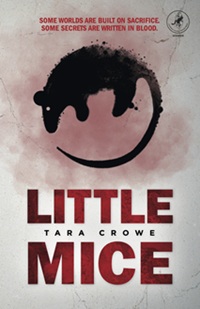
Each citizen must contribute to society. If a citizen fails to find a suitable objective, one will be assigned.
In the Canopy Complex, no one grows old. Age is for the little mice, the donors far below who bleed so the privileged can thrive. Seventeen-year-old Astra Fairwood has never questioned the system. Why would she? As the daughter of the Chief Enforcer, her future is secure – a life of parties and privilege. Until everything is taken from her.
Cast out of the Canopy and condemned to the Donor Zone, Astra is forced into the very world she was raised to fear. She meets a girl who challenges everything she thought she wanted and soon learns the Canopy taught her to fear the wrong thing. The real threat was never the Zone.
With tensions rising and the people she loves most in danger, Astra must choose between the life she was promised and the truth she can no longer ignore. Does a world built on the blood of others deserve to survive?
Find on Goodreads. Find on Bookshop.org UK (affiliate link).
About the Author:
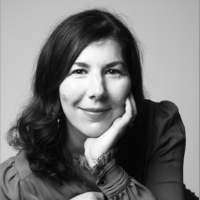
Tara Crowe spent her childhood with her nose buried in a book and loves all types of fiction, from historical epics to futuristic dystopia, devouring anything that transports her to another world.
After university, she spent a decade in publishing sales at The Guardian and New Scientist before moving into early years education, where she taught phonics using storytelling, puppets, and a fair amount of enthusiastic (if questionable) singing.
She lives in South London with her husband, teenage children, an adventurous cat, and a spectacularly lazy dog.
The real science experiment that inspired my debut novel:
Two living creatures, sewn together. It sounds like the stuff of nightmares, doesn’t it? But these experiments really happened, some very recently, and they inspired my YA dystopian novel, LITTLE MICE.
I’ve always been drawn to dystopian fiction – the way it holds a mirror up to the world and takes one idea, one obsession, then follows it to its darkest end. In LITTLE MICE, that obsession is youth and beauty. And the science behind the story is real. For seventy years scientists have been sewing mice together – old to young – in their efforts to understand and combat ageing.
When I first heard about the experiments in a news segment, I was working for a company that makes collagen supplements. We were running a double-blind, placebo-controlled clinical trial, so I was already fascinated by the science of rejuvenation. The increasingly clever ways we can trick the body into looking and feeling younger.
But the mice experiments were something else entirely. The first ones to study ageing date back to the 1950s and took place at Cornell University in America. Researchers discovered that when two mice were surgically joined, their blood vessels would begin to merge, allowing blood from the younger mouse to flow into the older one – and vice versa.
The outcomes in the older mice were striking. They developed thicker fur, became more agile and showed improvements in cognitive function. There were complications, though, and the research fell out of favour. Until this century, when it came roaring back.
As recently as 2023, little mice were sewn together in the name of science. And the researchers reported that having been exposed to young blood, the older mouse didn’t just appear rejuvenated. Once disconnected, it also lived measurably longer. The opposite was true for the younger mouse, who suffered from receiving the influx of old blood.
And it got me thinking… because if blood can make an old mouse seem younger and live longer, what happens when you take that idea to its logical extreme? And that is where the nightmare steps out of the lab.
The idea of buying youth has attracted some very wealthy believers. Hundreds of millions of dollars have been invested in companies attempting to make this a reality. A biohacker called Bryan Johnson made headlines when he paid a clinic in Texas to transfuse his teenage son’s blood plasma into his own veins.
For a while, you could even buy young blood plasma commercially. That is, until the regulators stepped in. For the moment at least, the science for humans is unproven. But the appetite is not.
And that appetite is what I built a trilogy around. The question isn’t can we do this, but what happens if we were ever able to do it at scale? What happens when youth itself becomes a commodity: extracted, priced, bought by those who can afford it and sold, willingly or not, by those who can’t?
Who volunteers? Who is volunteered?
That’s where my novel, LITTLE MICE, begins.
Thank you, Tara!
*Affiliate link


Leave a comment