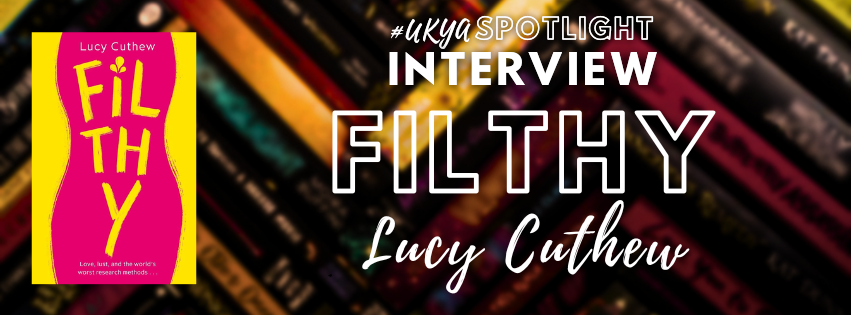
About the Book:
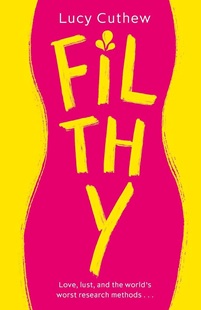
Joss has never had sex. But suddenly, it feels like everyone else has.
From dolphins to bonobos to her annoyingly confident older sister Edith, the entire natural world seems to be getting some, and Joss is starting to wonder what she’s missing.
The problem? No one actually explains how any of it works. And David Attenborough has a lot to answer for.
Then she meets Griff. Mysterious. Hot. Not from around here. And, most shocking of all, he doesn’t see her as “vanilla.”
Determined not to be clueless, Joss turns to the only educational resource that seems readily available: the internet. But late-night “research” comes with unexpected consequences. Embarrassing ones. Ones that might just scare off the best thing that’s ever happened to her.
Find on Goodreads. Find on Bookshop.org UK (affiliate link).
About the Author:
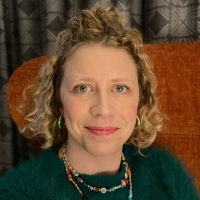
Lucy Cuthew has published over thirty children’s books, including picture books, educational titles and non-fiction, and she regularly speaks on the subject of children’s books for the BBC. She was a children’s editor for over ten years, both in-house and freelance, and graduated from the MA in Writing for Young People at Bath Spa in 2019. Her debut novel, Blood Moon, was nominated for the 2021CILIP Carnegie Medal.
Lucy likes TV written by funny women, science podcasts, mountains and croissants. She lives in Cardiff with her husband and young twins.
Interview:
Pitch your book in 10 words!
Girl meets boy. Girl watches porn. Porn sex bad. Real sex good.
I’m sorry that’s 12, but I think it was worth breaking the rules for. K
At the heart of FILTHY is the impact porn is having on teens today. Everyone knows teen boys watch and use porn – since the days of dirty magazines. FILTHY also tackles the ways girls access and use porn, and how it remains taboo and untalked about even among close friends. Why did you want to explore this topic?
The advent of online porn is probably the most powerful force shaping the sex lives of teenagers today, but because it’s so taboo to talk about, it goes under-discussed. I think people see porn as a male problem, but the research reflects that girls access it at similar rates as boys, meaning any negative effects of it might be even less discussed with them. When I was a teenager, the moments that shaped my developing sense of self (and the moments that stopped shame from taking route) were the funny and candid conversations I had with my girlfriends and sisters. I wanted to depict how that might play out in a world with online porn, so that young people might see themselves – confused, curious, questioning – and see what it might look like to talk to a friend about the thing they feel ashamed about.
Given its prevalence today, what should we as a society be doing to try and mitigate some of the harms that unfettered access to mature content has done, especially, as you wonderfully illustrate in the book, the Online Safety Act isn’t fit for purpose?
I think first and foremost, we need to be more open about it, face what’s really up there, open channels for young people to talk about what they might see online. We need to not place shame on young people, who are simply curious and learning about the world. Porn is part of the SRE curriculum, and there are amazing sex educators out there, but the provision is unfortunately patchy. In terms of regulations, we do need to do much more. The Online Safety Act was a start, but there is porn on so many platforms, it hasn’t protected children from explicit content. Platforms should be held to account far more for their content. We could regulate for that, and although there are some efforts to do so, it’s frustratingly slow. We also have poor regulations in place for porn site content. Those are largely unregulated. Unfortunately the majority of porn online is violent, degrading, depicts extreme sex acts or is literally evidence of exploitation or abuse. We know that violence against women and girls is increasing, and we should be looking at the contribution online porn makes to that landscape. I recently read about a group of girls in England who are campaigning to ban school uniforms because one of the most watched porn categories is school girl porn, and they feel uncomfortable wearing their uniforms. (Link to The Print)
Like Joss’ mum, many parents are very reticent to discuss safe sex and what healthy sexual relationships look like rather than facing up to the reality of how easily accessible it all is for kids and how young they’re being exposed to it. How do we reassure parents and get them to allow their teens to engage with healthy conversations and media rather than have them panic like Joss’ Mum?
Yes, this is familiar territory to me. I was lucky because my mum was very open about sex and relationships, but I know it doesn’t come naturally to everyone, even if you want to be open. Kids also aren’t always comfortable talking to a parent. I think being honest is a good solution here – if you feel uncomfortable, awkward, embarrassed or even ashamed talking about sex, saying as much might be a good start. Books are a good source of information too. I have thoughts on abstinence specifically, but I’m going to talk about that in answer to your next question.
What was the most interesting and/or concerning thing you learned whilst researching for FILTHY?
Researchers found that the Netherland’s has the lowest rate of what’s termed ‘unwanted first sex’ in the world – ‘unwanted sex’ is sex is distinct from rape and can be thought of as sex which the person didn’t feel completely comfortable with at the time and later regrets, wishing it hadn’t happened. The USA, by contrast has the highest rate of unwanted first sex. In the Netherland’s, it is normal for first sex to happen at home, their SRE education focusses on safe sex, consent, and bodily autonomy. In the USA, many states SRE is limited to teaching abstinence. Those states have the highest rates of unwanted first sex. Teaching abstinence doesn’t work and as you said above, only serves to shame young people for being sexually curious. I would love to tell you so many other things I learned; the research was fascinating. Maybe I’ll just sneak in one more bonus thing. Arousal lowers disgust, meaning people can feel aroused by something they would ordinarily be appalled by.
Whilst sexual relationships are at the heart of FILTHY, one of the big themes is Joss’ relationship with her friends, particularly her best friend Cadi who is in a very loved up relationship. As the only single, Joss feels alone, isolated, and jealous, which impacts her self esteem. Why did you feel it important to explore this side of Joss’ relationships as well?
Adolescence is a time where being like your peers matters like no other. For the teenage brain, the safest thing to do, is to what your peers are doing. I wanted to show how much peer pressure impacts young people’s decisions compassionately.
Whilst Griff is Joss’ first boyfriend, he’s not her first sexual experience. You show her experience with Iolo, his objectification, the gossip about her, and the pressure she faced in that moment. Why did you want to include this incident?
I felt it was important to put Joss into context, to show how her feelings towards sex, her own sexuality, towards relationships, have been shaped. Hers is a disappointing and underwhelming patchwork of sexual encounters that don’t include abuse, but show how her pleasure hasn’t been in the picture at all, show how boys might use pressure to get girls to do things. We live in a society that objectifies woman, commodifies them, makes sex about conquest. Sex should be about connection. I cannot recommend Peggy Orestien’s Boys and Sex enough, if this idea resonates with anyone reading, and they’d like more on this subject.
Later in the story, Joss ends up watching Lady Chatterley’s Lover with her mum and gran, which is both a positive and cringe experience. What was the most embarrassing movie watching experience you had with your parents?
This is a great question. I vividly remember watching that full-body condom scene in The Naked Gun but one of my sisters was so embarrassed by it, I think she actually fell off the sofa and commando rolled out of the room to get away. With all that going on, I managed to stay invisible.
After several aborted attempts, and a disastrous first time that neither enjoy, Joss and Griff actually talk about what they want and have a much more open communication style. Why is it so important to model this?
As humans, we are remarkably bad at knowing what other people are thinking. We might second guess people, fill in thoughts and feelings for them that aren’t accurate. Communication is the key to connection and connection is the key to healthy relationships, so I think talking about it was the only way Joss and Griff were ever going to be able to get through this.
Please recommend a UKYA book you think readers will love.
I recently read and loved S.F. Williamson’s A Language of Dragons*. We did the MA in Writing for Young People together at Bath Spa. It’s so imaginative, subtle, political, thought-provoking.
Thank you, Lucy!
*Affiliate link


Leave a comment